King pigeons: breed, looks and care
King pigeons are a large meat breed. In meat production, what counts is the weight of the young birds, the health of the flock and a well-organized loft, not show looks. We explain what the breed looks like, how it performs and what it needs.
verifiedFrom the team that has organised work on poultry farms for years.
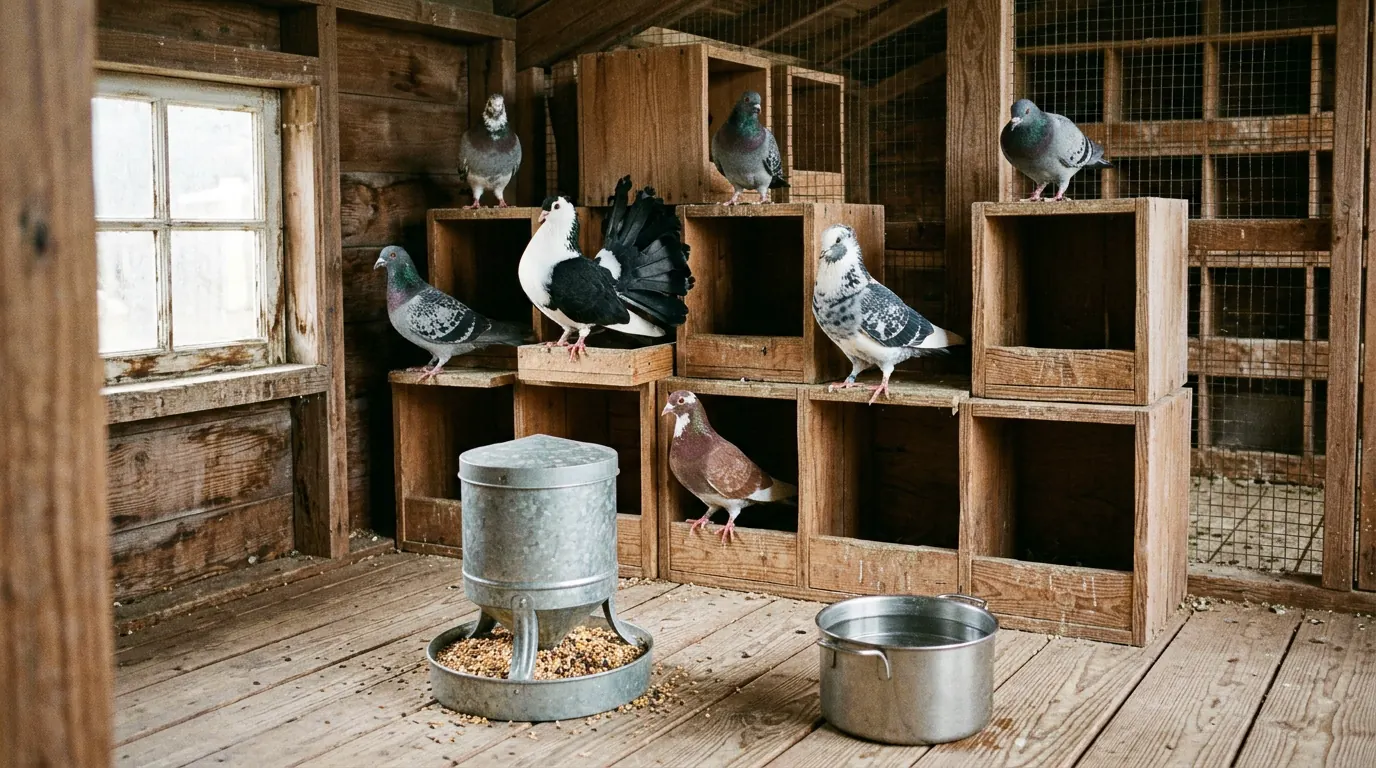
King pigeons are a large utility breed, kept mainly for meat. Meat keeping differs from keeping fancy birds: what counts is the weight of the young, their growth rate and the condition of the flock, not how well a bird matches the show standard. Kings are heavier than most breeds, so they need more space, feed and ventilation than decorative pigeons. For a general overview of breeds, see our overview of pigeon breeds.
Where the breed comes from and where to find the standard
Australia is regarded as the home of the king breed, where it was kept as a meat pigeon. The breed standard is described by pigeon breeders' clubs, and its current version is the basis for judging birds at shows. If you plan to start a flock, ask the breeder for a printed standard and for information on the birds' origin. Pedigree records make it easier to choose pairs and judge offspring later. Do not buy birds without papers, because without them it is hard to judge health and breeding line.
Build and colors of kings
Frame and body weight
Kings have a broad, heavily muscled breast and a short, compact neck. The legs are short and strong, and the body is carried level. Adult birds reach a much higher weight than typical utility pigeons, which you can feel as soon as you hold one. When you assess the flock, weigh the birds regularly instead of judging by eye. Differences in weight between birds in one group are a sign that some birds may be fed worse or may have health problems.
Colors and varieties
White kings are the most common, but other colors are also allowed depending on the standard. Plumage color matters mostly at shows and is secondary for meat production. When you buy, check that the seller names the color according to the club's current standard. Note each bird's color in your records. This helps you plan matings later and tell birds apart in the flock.
Production traits and breeding
Young for meat and growth rate
King pigeons are kept for the meat of their young, known in the trade as squab. Production value depends on the growth rate of the squabs, their weight at slaughter and how even the whole batch is. Batches become more even when the parents are well fed and when pairs are chosen for production traits, not only for looks. Record the weight of the young on set days of life and compare results between pairs. This quickly shows which lines grow best in your conditions.
Breeding and care of the young
Pigeons are monogamous and usually take turns sitting on the eggs. A pair usually lays one or two eggs per clutch. The parents feed the squabs with crop milk, so their condition directly affects how well the young grow. Pairs that start new clutches too often may weaken, so limit the number of clutches and watch each pair separately. Record laying, hatching and weaning dates to get a full picture of breeding.
Loft and feeding for kings
Loft and space
The loft must be dry, airy and free of drafts. The large frame of kings needs more room on perches and in the pen than small breeds. Put nests and nest bowls in a quiet spot, away from doors and noise. We describe ready solutions and a full list of items in our article on loft equipment. Change the litter regularly and check the floor, because damp quickly leads to health problems.
Feeding and water
Pigeons need constant access to clean water and a grain mix suited to the age and condition of the birds. Give feed in clean feeders and remove leftovers so mold does not build up. Change the diet gradually, because a sudden change causes diarrhea and loss of appetite. Agree the mix and feeding method with a vet or a feeding adviser who knows your conditions. Record how much feed the loft uses, because a sudden rise in use is often the first sign of disease.
Prevention and treatment in the flock
Treatment and withdrawal period
The medicine and dose for pigeons are always chosen by a vet who knows the state of the flock. Do not give medicines from random sources or on your own. After every treatment a withdrawal period applies: the time during which you may not sell meat or eggs from treated birds. The length is given in the medicine's documentation and in the vet's advice. Record each treatment, the product name and the date the withdrawal period ends, so you do not mix up dates. Treatment and withdrawal records help with this.
Biosecurity and wild birds
The key rule is to limit contact between your flock and wild birds and strangers. Limit entries to the loft, use separate footwear and disinfect equipment at the door. Report any change in the flock's health to your vet without delay. Current guidance on protecting poultry is published by the Chief Veterinary Inspectorate (Główny Inspektorat Weterynarii). You can prepare your own house rules in the biosecurity plan generator.
Registration and flock records
Registration and notifications
Registration duties for poultry, including pigeons, come from veterinary rules and depend on the number of birds and how you keep them. You can find the current legal text in the Internet System of Legal Acts (ISAP, Poland's online database of legislation), with the legal state as of 22.11.2026. Do not assume the duties are the same as for farm poultry. Before you start a flock, ask your county veterinary officer (powiatowy lekarz weterynarii) which notifications apply to you. Keepers often forget to report changes in bird numbers, so keep a running count of the flock.
Keeping records
Good records are the basis for inspections and for reacting quickly to a problem. Note flock size, purchases, movements, treatments and deaths. Make entries straight away, not from memory at the end of the week. A poultry house register suits this job and keeps data on groups of birds in order. A farm management program helps with overall management and holds all records in one place.
Frequently asked questions
What are king pigeons?add
King pigeons are a large utility breed, kept mainly for meat. They stand out for a massive frame and a higher body weight than most pigeon breeds. Breeders who focus on producing meat from young birds value the breed.
Are king pigeons raised for meat?add
Yes, the main goal of keeping kings is meat from young pigeons. Production value depends on the growth rate of the squabs and how even the batch is. Show looks matter less here.
How do you house king pigeons in a loft?add
The loft should be dry, airy and free of drafts, with roomy perches and space for nests. The birds need constant access to clean water and feed in clean feeders. Agree the feed mix with a vet or a feeding adviser.
Who chooses medicine for king pigeons?add
A vet who knows the state of the flock always chooses the medicine and dose. After treatment a withdrawal period applies, and its length comes from the medicine's documentation and the vet's advice. Record each treatment together with the date the withdrawal period ends.
Do you have to register a flock of pigeons?add
Notification duties for poultry depend on the number of birds and how you keep them. You can find the current rules in the Internet System of Legal Acts (ISAP). The surest way is to ask your county veterinary officer before you start a flock.
How do you keep records for a pigeon flock?add
Note purchases, movements, treatments, deaths and changes in bird numbers right after each event. Also record the weight of the young and the results of each pair. This shows which lines grow best and where a problem appears.
Sources & resources
- linkChief Veterinary Inspectorate (Główny Inspektorat Weterynarii) — gov.pl/web/wetgiw
- linkMinistry of Agriculture and Rural Development — gov.pl/web/rolnictwo
- linkNational Research Institute of Animal Production (Instytut Zootechniki PIB) — izoo.krakow.pl
- linkEFSA — efsa.europa.eu
- linkInternet System of Legal Acts (ISAP) — isap.sejm.gov.pl
Prepared by: DlaFerm Team based on data from the sources listed · Publisher: INSTA-TECH sp. z o.o.
Do you keep meat pigeons alongside other poultry?
The DlaFerm farm management program lets you keep records of bird groups, treatments and entries in one place. Create a free farm account and see how it works in practice.
Phone
+48 796 258 151