Jacobin pigeons (perukarze): breed and care
The Polish perukarze pigeon is a fancy breed known for the plumage on its head that curls forward, like the hood of a Jacobin pigeon. Keeping them is much like keeping other fancy pigeons, but you need a dry loft and daily attention to the head feathers. Below we cover the look of the breed, loft equipment, feeding, health and record keeping.
verifiedFrom the team that has organised work on poultry farms for years.
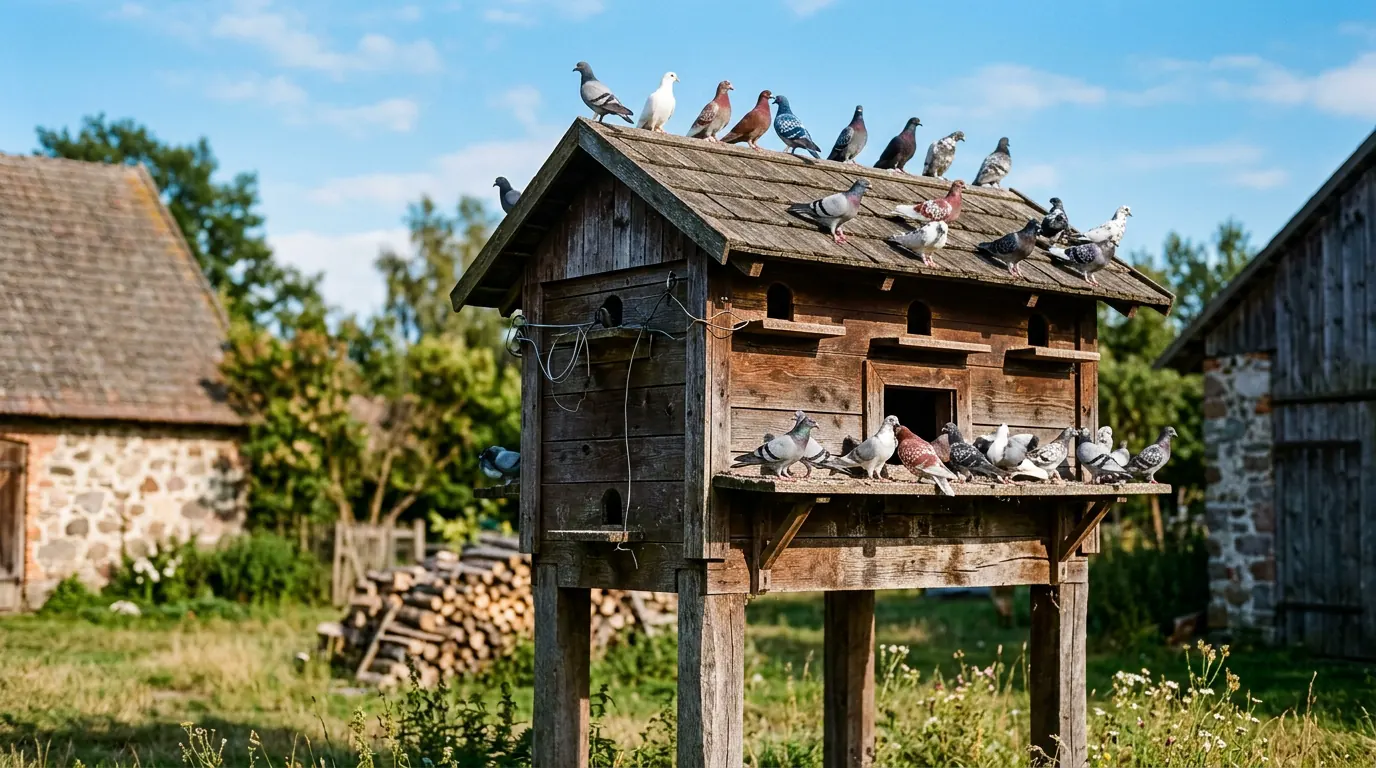
Perukarze are fancy pigeons kept mainly for their looks and for shows. Their trademark is the plumage on the head: the feathers form a dense crest that curls forward and in many birds partly covers the beak and eyes. Keeping them is much like keeping other fancy pigeons. They need a dry loft, clean drinkers and feeders, and regular health checks. The difference is the head feathers, which get dirty and damp easily. We compare fancy pigeon breeds in a separate overview: pigeon breeds, including fantails, Old Polish pigeons and more.
Who this breed suits
Perukarze suit a keeper who wants birds for shows and personal enjoyment, not for meat or eggs. When you buy, ask about the bird's origin and whether the breeder keeps their own lines. Before you buy a pair, check the breed standard with a fancy pigeon breeders' club. It describes the body build, the position of the hood and the color you should look for. Birds with no known origin are easily mistaken for crossbreeds, and then their show value drops. Spend the first weeks observing: a healthy pigeon eats readily, has clear eyes and smooth feathers.
The hood and the breed standard
The hood on the head
The hood is the most important trait of the breed. The feathers grow on the head against the usual direction and curl forward, forming something like a wig. The hood should be symmetrical and dense, with no gaps. In young birds it is usually less developed than in adults, so judging at a show takes patience. Head feathers are finer than body feathers, so hold the bird firmly when you carry it, but do not press on its head.
Standard and colors
The breed standard sets out body build, head shape, wing carry and feather color. Colors differ between varieties, and judges expect different things from each. Instead of relying on memory, compare your birds with the club's official standard and with birds that won at earlier shows. The cleanliness and symmetry of the hood often matter more than color, because faults in this part are hard to hide. If you plan to show, write down the requirements and check them at every review of your birds.
The loft and equipment
A dry, airy loft
The key rule is to keep it dry. Damp in the loft encourages respiratory disease and soils the head feathers, which are hard to put right afterwards. Provide ventilation without drafts over the birds, and cover the floor with litter that you replace regularly. Place the loft on dry ground, away from standing water. An inside flight or an aviary gives the birds exercise, but in changeable weather keep them indoors so the hood does not get wet.
Nests and nest bowls
Place nests and nest bowls in sheltered spots, away from drafts and from the entrance. Each pair should have its own nest. In the breeding season, check that the nest is free of damp and dirt. Clean the bowls after every brood and do not let feed residue build up. With several pairs, space the nests so that birds do not fight over the best spots, because conflicts lead to broken eggs and damaged feathers.
Drinkers and feeders
Place drinkers and feeders so that birds do not soil the hood with droppings and feed. Choose designs that are easy to wash, wash them regularly, and choose a disinfectant after talking to a vet. Keep the drinker above the litter and secure it against tipping. Put the feeder under cover so rain does not wet the grain. You will find the full list of fittings in our guide: pigeon loft equipment: nests, nest bowls, drinkers and feeders.
Feeding and hood care
Diet and water
The basis of feeding fancy pigeons is a good-quality grain mix suited to age and season, with clean water. Do not give table scraps, moldy grain or feed from an unknown source. Match the amount of feed to the birds' appetite: an empty feeder is a good sign, while grain left over can mean overfeeding or a health problem. Watch and record changes in appetite, because they are often the first sign that something is wrong. Talk over the mix with a vet or an experienced keeper.
Hood care
The hood needs checking every day. After rain, check that the head feathers are not stuck together with mud or droppings. Gently clean off the dirt before it dries, and do not pull out matted feathers by force. Save water baths for the period before a show and keep them moderate, then dry the bird in a warm, dry place. If you see more feathers falling out than usual, talk to a vet, because the causes vary.
Flock health and biosecurity
Daily observation
A healthy pigeon has clear eyes and nostrils and smooth feathers, is active and eats readily. Every day, watch how the birds behave at the feeder and in the nests. A bird that is listless, has ruffled feathers, sits apart from the others or has discharge from the beak needs urgent advice. Write events down so your vet has the full picture. Poland's Chief Veterinary Inspectorate (Główny Inspektorat Weterynarii) publishes the rules for reporting disease and current information. Pigeons are also susceptible to Newcastle disease (in pigeons called paramyxovirosis), and according to the Inspectorate's guide, disease surveillance must also take pigeons into account because infected birds can pose a risk to chicken flocks.
Biosecurity
Biosecurity is a set of rules that limit the disease brought into the loft: separate footwear and clothing at the entrance, quarantine for new birds, fewer visits from outsiders and protection from wild birds. Adapt the rules to the size of your loft and the risk in your area. You can build the outline of a plan in the biosecurity plan generator and then go through it with your vet. Introduce the rules step by step so that they are actually followed.
Treatment and withdrawal periods
A vet always chooses the medicine and dose, not the keeper going by a leaflet or a forum post. Record every treatment, its date and the withdrawal period where one applies. Keep treatment records so that you can check at any time what was given to the birds and when. Treatment records and withdrawal periods in DlaFerm make this easier, and it matters as much for show birds as for a production flock.
Rules and record keeping
Where to check the rules
Rules on keeping animals, animal health and trade in animals are published in ISAP, Poland's online legal acts database (Internetowy System Aktów Prawnych). We describe the rules as of 22.11.2026, but acts change, so check the current text in ISAP before you decide. For disease reporting and sanitary requirements, the county veterinary officer (powiatowy lekarz weterynarii) is the competent authority, and the Chief Veterinary Inspectorate publishes general information. Do not rely on unofficial summaries, because they differ in the details.
Loft records
Good records are a list of birds with their ring numbers, origin, hatch dates and health events. They let you answer quickly when a vet, a show judge or a buyer asks. Keep them in a notebook or in software. If you keep production poultry and fancy pigeons together, separate them in the records so the data do not mix. Poultry house records in DlaFerm help with this split, and the poultry farm management software gives you an overview of the whole farm.
Frequently asked questions
What are Jacobin (perukarze) pigeons?add
Perukarze are a fancy pigeon breed known for the plumage on the head that curls forward. They are kept mainly for shows and for the keeper's enjoyment. The breed standard is described by a fancy pigeon breeders' club.
How do you keep Jacobin pigeons in a loft?add
The key points are a dry loft, good ventilation without drafts, and clean nests, drinkers and feeders. Each pair should have its own nest. The head feathers need a daily check, especially after rain.
Can Jacobin pigeons be kept with other breeds?add
Yes, but when you keep them together, watch for conflicts at the feeder and in the nests. It is worth keeping show birds apart so that their hoods do not get soiled. Write down changes in the birds' behavior and discuss them with a vet.
How much does a Jacobin pigeon cost?add
The price depends on the bird's origin, breeding line, age and whether it is a show bird. Prices change, so we do not give amounts. Check current offers with breeders in the breed club and at shows.
Do disease reporting rules also apply to fancy pigeons?add
The law sets the rules for reporting disease and the sanitary requirements. Before you decide, talk to the county veterinary officer and check the current rules in ISAP. Do not assume that the rules for production poultry cover fancy birds until you have checked.
Who chooses the medicine for a pigeon?add
A vet always chooses the medicine and dose. The keeper records the medicines given, the dates and the withdrawal periods, and describes the symptoms as exactly as possible. Treating on the basis of ads or opinions without a diagnosis is often a mistake.
Sources & resources
- linkChief Veterinary Inspectorate (Główny Inspektorat Weterynarii) — gov.pl/web/wetgiw
- linkInternet System of Legal Acts (ISAP) — isap.sejm.gov.pl
- linkNational Research Institute of Animal Production (Instytut Zootechniki PIB) — izoo.krakow.pl
- linkMinistry of Agriculture and Rural Development — gov.pl/web/rolnictwo
Prepared by: DlaFerm Team based on data from the sources listed · Publisher: INSTA-TECH sp. z o.o.
Do you keep fancy pigeons next to poultry?
The poultry farm management software helps you keep poultry and health event records in one place. Create a free farm account or get in touch, and we will show you how it works in practice.
Phone
+48 796 258 151