High-Flying Pigeons and Wyszwanka Breeds: Selection and Training
High-flying pigeons and wyszwanka pigeons are groups of flying pigeons that keepers choose for flight training. Health, pedigree and regular training decide the quality of the birds, not looks alone. Below we explain how to choose birds, set up the loft and train them while keeping the flock healthy.
verifiedFrom the team that has organised work on poultry farms for years.
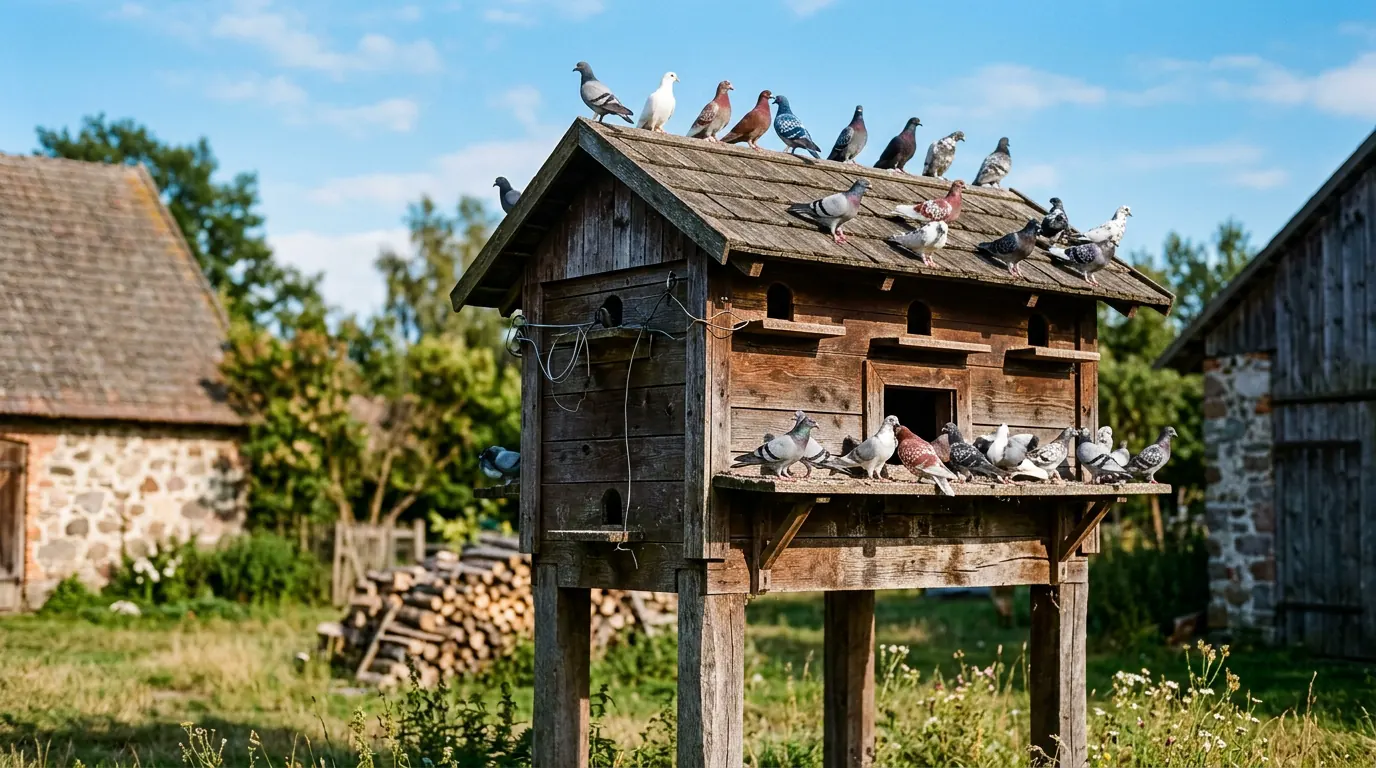
High-flying pigeons are a utility group bred to fly at great height. Wyszwanka pigeons (wyszwance in Polish) are a group of flying pigeons that keepers distinguish by body type and flying style. Both groups need similar care: daily feeding, fresh water and a clean loft. They differ in what the keeper expects from the bird in the air, so before you buy your first birds, check the breed standard with a breeders' club. For other breeds, see our overview of pigeon breeds.
What the standard sets
Each variety has a standard that describes body type, wing and tail build, color and flying style. The breed club sets the standard, and it is the reference point when birds are judged at shows. Before you buy, ask the breeder to show you the birds in motion and to give you their pedigree. Differences between varieties often show only in the adult bird, so judge young birds with care.
High-Flying Pigeons and Wyszwanka Pigeons: How to Tell Them Apart
The high-flying group
High-flying pigeons are bred to fly at great height. The flock is released for free flight and the birds return to the loft, so you judge them mainly on fitness and stamina, not looks. When choosing, ask the breeder how the birds return after a long flight and whether the breeder keeps training records. For other breeds, such as pawiki or staropolskie, see our overview of pigeon breeds.
Wyszwanka pigeons
Among keepers, the name wyszwanka describes a group of flying pigeons distinguished by body type and flying style. There is no single universal description, because each variety's club sets the standard traits. So before buying, ask for the standard and check that the birds on offer match it. Pedigree and records from earlier seasons show whether the line is pure.
Shared care
Both groups need the same basic care: regular feeding, fresh water, a dry loft and a daily health check. They differ in what you expect in flight, so set the training plan and the pairing separately for each variety. Keep records for each group of birds separately so you can compare their results easily.
How to Choose Healthy Pigeons for Breeding
Checking birds before you buy
A healthy pigeon has clean, glossy feathers, bright eyes and even breathing. Look at the birds in a cage and in motion, not only in a photo. Check the beak, legs and vent, and look for limping or discharge from the nostrils. If you have doubts, ask a vet to examine the birds before you take them to your loft.
Quarantine for new birds
Keep new pigeons apart before you join them to the flock. Agree the observation period with your vet, because it depends on where the birds come from and on the health situation in the region. During isolation, check each bird's appetite, droppings and behavior. Log the arrival date and your observations in poultry farm management software so you know when the birds can join the rest of the flock.
A Loft for High-Flying and Wyszwanka Pigeons
Ventilation and dryness
The loft must be dry and airy, but without drafts over the perches. Damp and ammonia from the litter quickly lower the birds' condition and raise the risk of respiratory disease. Replace the litter regularly and remove droppings and feed leftovers every day. Mold on walls or ceiling means the ventilation is not working well.
Nests, drinkers and feeders
Put nests and nest bowls in a quiet part of the loft, away from drafts and the entrance. Clean and disinfect drinkers and feeders on a set schedule, not only when you notice dirt. For more on choosing and placing equipment, see our guide to pigeon loft equipment.
Flight Training Step by Step
First flights
Get young pigeons used to the loft before you let them fly farther. Start with short releases in familiar terrain, then lengthen the route. Do not release birds in strong wind, rain or storms, because they lose their bearings. Release them at the same time of day to build the habit of returning to the loft.
Regularity and rest
Short but regular training works better than rare, long flights. After an intense flight, birds need rest, water and feed. Do not overload the flock during molting or when any bird is sick. Watch which pigeons return more slowly and check their condition before the next training session.
Flock Health and Biosecurity
Treat only with a vet
Pigeons can suffer from respiratory diseases, parasites and viral diseases. The medicine and dose are always chosen by a vet after examining the bird. Do not give pigeons medicine on your own or from leftovers of earlier seasons. Record every dose, because without a record it is hard to tell when a bird is ready to fly or be sold. Poland's Chief Veterinary Inspectorate (GIW) also notes that pigeons can carry paramyxovirus, known as Newcastle disease in poultry, and that infected pigeons can become a vector and threaten chicken flocks, so disease surveillance must take pigeons into account.
Withdrawal periods in your records
For farmed poultry the withdrawal period rule applies: the time between the last dose of a medicine and the use of the birds or their products. The medicine leaflet gives the length and your vet advises on it, so do not rely on memory. Keep a treatment log with the date of administration and the end of the withdrawal period to avoid mistakes. A tool for treatment and withdrawal period records helps you keep this data in one place.
Biosecurity
Limit entry to the loft and wear separate footwear or overshoes. Do not move birds between lofts without an examination and quarantine. Write your hygiene plan down, and you can prepare its outline in the biosecurity plan generator. Log visitors in the entry and exit log so that if a problem arises you know who was in the loft.
Frequently asked questions
What is the difference between high-flying and wyszwanka pigeons?add
Both groups fly, but keepers judge them by different traits and variety standards. The breed club's standard sets the differences, so check it before you buy. You will best see the differences by watching the birds fly at a specific breeder's loft.
When should I start training young pigeons?add
First get young birds used to the loft, then release them for short flights. Agree the timing with an experienced breeder, because it depends on the bird's development and the weather. Do not release them in strong wind or during a storm.
How do I check that a pigeon is healthy before buying?add
Check the feathers, eyes, beak, legs and breathing, and watch how the bird moves. If you have doubts, ask a vet to examine it. Do not buy birds that limp or have discharge from the nostrils.
How long should I keep new pigeons separate?add
Agree the quarantine period with your vet, because it depends on where the birds come from and on the health situation in the region. During that time, watch each bird's appetite, droppings and behavior. Join them to the flock only after the observation ends.
Can I give pigeons medicine without a vet?add
No. A vet chooses the medicine and dose after examining the bird. Record every dose and check the withdrawal period in the leaflet and with your vet before you use the birds or their products.
How should I set up a pigeon loft to keep birds healthy?add
The loft should be dry, airy and free of drafts over the perches. Replace the litter regularly and clean drinkers and feeders on a schedule. Log visitors to reduce the risk of contamination.
Sources & resources
- linkChief Veterinary Inspectorate (Główny Inspektorat Weterynarii) — gov.pl/web/wetgiw
- linkNational Research Institute of Animal Production (Instytut Zootechniki PIB) — izoo.krakow.pl
- linkInternet System of Legal Acts (Internetowy System Aktów Prawnych) — isap.sejm.gov.pl
- linkMinistry of Agriculture and Rural Development (Ministerstwo Rolnictwa i Rozwoju Wsi) — gov.pl/web/rolnictwo
Prepared by: DlaFerm Team based on data from the sources listed · Publisher: INSTA-TECH sp. z o.o.
Do you keep a pigeon loft next to a poultry farm?
DlaFerm.pl's poultry farm management software keeps treatment records, withdrawal periods and farm entries in one place. Create a free farm account or get in touch, and we will show you how it works in practice.
Phone
+48 796 258 151