Fantail pigeons (pawiki): breed, looks and care
The fantail, called pawik in Poland, is an ornamental pigeon you recognize by its wide, fan-shaped tail. Keeping it takes a dry, airy loft, clean water and a simple diet. Below we describe the breed standard, loft needs and prevention. Treatment is left to your vet.
verifiedFrom the team that has organised work on poultry farms for years.
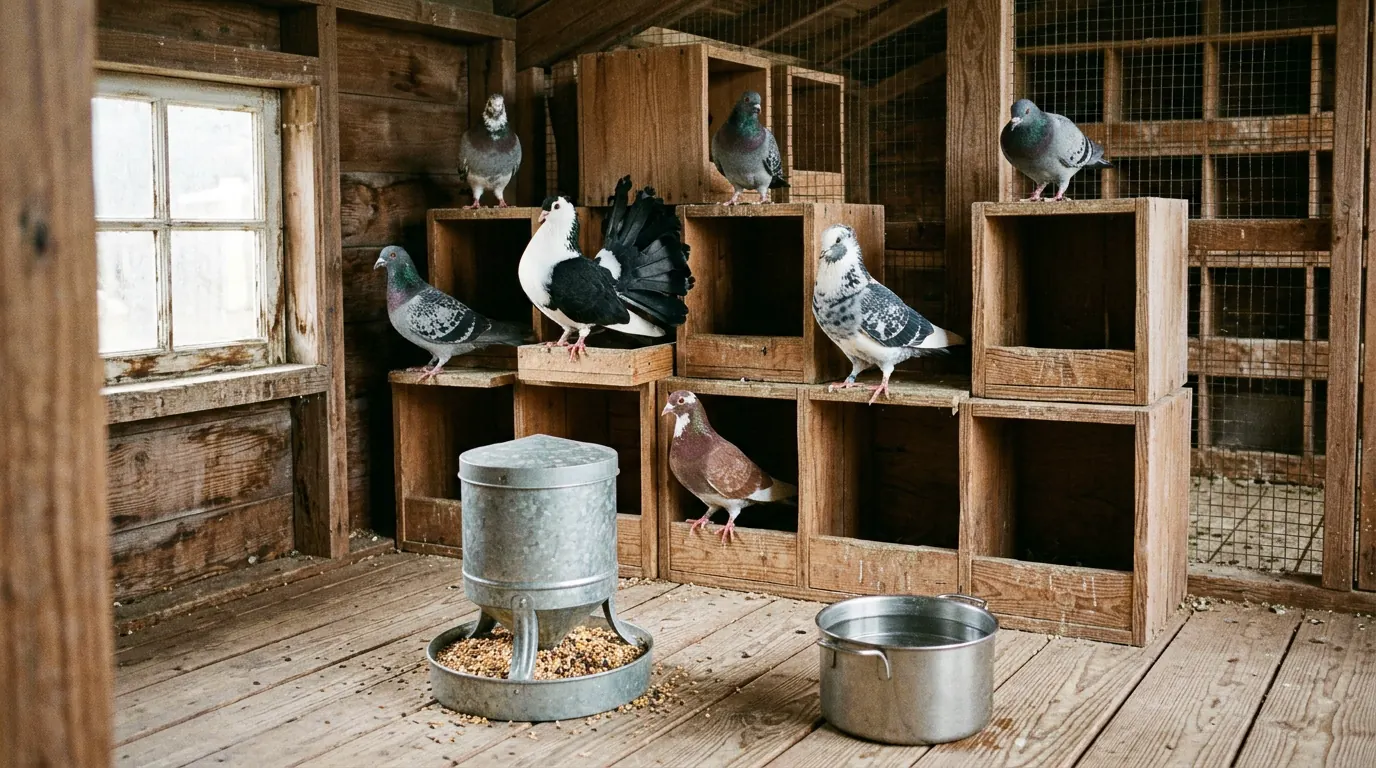
The fantail pigeon (pawik in Polish) is an ornamental breed known above all for a wide, fan-shaped tail that the bird carries high and tilts forward. Keepers hold fantails for their looks and for shows, not for meat or eggs. Below we explain how to recognize the breed, how to prepare the loft and what to watch in flock health. For the wider breed picture, see our guide to pigeon breeds.
Your goal decides everything
Fantails kept for shows need different attention than birds kept for pleasure. For shows, what counts is match to the breed standard, clean plumage and the bird's condition on judging day. For a family loft, simplicity matters more: a dry loft, clean water and regular health checks. Before you buy your first pair, write down why you keep them. Loft size, number of birds and the way you keep records depend on it.
How to recognize a fantail
The tail fan
The key trait of the fantail is a tail spread into a wide fan. The bird carries it high, often leaning forward, so the tail feathers form a full half circle. The tail should be dense, symmetrical and without visible gaps. The breed standard describes the shape and position of the fan, so before buying, look at the bird from several sides or ask the breeder for photos from different angles.
Build and posture
The fantail has a compact body, a fairly short beak and a clearly raised chest. The head is small compared with the tail, and the posture is proud and upright. Check that the bird stands steadily, does not limp and moves without trouble. Assess the build calmly, ideally at the breeder's place, where you can see the bird's parents.
Color varieties
Fantails come in many color varieties, and each has its own standard. The differences mainly concern feather color and its pattern, not the shape of the tail. Your choice of color depends on your taste and your goal. If you plan to show birds, check the current standard with a club of ornamental pigeon breeders, because variety descriptions are sometimes updated.
A loft for fantails
Dryness and ventilation
Fantails tolerate damp poorly, and the tail soils and gets wet easily. The loft must be dry, with good ventilation under the roof but no drafts at bird level. The floor should be easy to clean and the bedding changed regularly. Air that is too humid favors respiratory disease, so check humidity and bedding condition every week.
Nests and nest bowls
Each pair needs its own quiet nesting place. Nest bowls should be stable, easy to disinfect and placed away from walkways and drafts. We describe how to choose them in loft equipment. With several pairs, spread the nests out so birds do not fight over the best spot.
Space
Fantails do not need a lot of space, but they need room to move and for short flights. A loft that is too tight raises stress and tension between birds, and disease spreads more easily in such conditions. Plan the space so you can isolate sick birds in a separate pen if needed. Match the exact area to the number of birds and watch how the flock behaves.
Feed and water
Grain and mixes
Fantails eat mainly cereal grain and ready-made pigeon mixes. A good mix should be fresh, free of mold and impurities. Do not store feed for long in a sack in a damp place. Record feed purchases, because it helps you spot a problem fast when birds start eating less.
Water
Clean water is the basis. Clean drinkers daily and change the water before it turns cloudy or gets fouled with droppings. In hot weather check drinkers more often, because water spoils faster. No water or cloudy water quickly hurts the birds' condition, especially young birds.
Diet changes
Introduce new feed gradually, mixing it with the current feed. A sudden change can cause digestive problems and a drop in appetite. Watch whether the birds eat willingly and whether droppings have a normal consistency. If appetite falls, do not experiment with the diet on your own. Talk to your vet.
Prevention and treatment
Daily observation
The best prevention is looking at the flock every day. Check posture, appetite, plumage and behavior in flight. A bird that sits ruffled, keeps away from the others or has discharge from the eyes or nose needs a quick check. Note every change, because records let you spot a repeating problem before it spreads through the flock.
Quarantine for new birds
Keep a new fantail apart before letting it join the flock. Agree the observation period with your vet, because it depends on the health situation where you bought the bird and on its origin. Quarantine protects the flock from imported disease. With birds from shows, treat contact with strange pigeons as a risk and keep it to a minimum. Poland's Chief Veterinary Inspectorate (GIW) notes that pigeons are susceptible to paramyxovirus (Newcastle disease) and can pass the virus to chicken flocks, so disease surveillance has to take pigeons into account.
Treatment and withdrawal periods
A vet always chooses the medicine and dose for pigeons after diagnosing the disease. Treating on your own without a diagnosis often masks symptoms and delays proper therapy. If the birds are meant for meat, a withdrawal period applies after giving a drug. You must know it and document it. Keep records of products given in the treatment and withdrawal records.
Biosecurity
Limit entry to the loft to the people who care for it, and change footwear at the door. Feeding equipment and drinkers should not be shared with other animals. Set out your hygiene rules in the biosecurity plan generator, and log visits in the entry and exit log.
Buying fantails and keeping records
Checking the breeder
Buy birds from a breeder who shows you the flock in conditions close to yours. Ask about origin, health history and whether the birds were vaccinated or treated. A good breeder has no problem answering and will tell you about diseases in the flock. Avoid offers where the seller will not show the bird before you buy.
Prices
Fantail prices depend on the quality of the bird, the variety, its origin and whether you buy a young bird or an adult show specimen. Pedigree and the reputation of the line also count. Check current prices with breeders and in club listings, because they change with the season and demand.
Flock records
Record every bird: purchase date, origin, clutches, treatment and changes in the flock. With several pairs it quickly gets messy, so plan permanent records in poultry farm management software. Keep loft data in one place, not in notes scattered across notebooks.
Keeper duties and regulations
Veterinary authorities set the rules for keeping birds and moving them. Before you start, check the current requirements with the Chief Veterinary Inspectorate (Główny Inspektorat Weterynarii) and in the legal acts available in ISAP, Poland's online database of legislation. Do not assume that rules for commercial poultry apply in the same way to ornamental pigeons. Ask your county veterinarian (powiatowy lekarz weterynarii) which duties apply to your loft and whether shows bring extra requirements.
Frequently asked questions
What are fantail pigeons?add
Fantails (pawiki in Polish) are an ornamental pigeon breed known for a wide, fan-shaped tail. Keepers hold them for looks and shows, not for meat or egg production. Clubs of ornamental pigeon breeders describe the breed standard.
What does a fantail pigeon look like?add
The most typical feature is a tail spread into a wide fan, which the bird carries high and leaning forward. The body is compact and the posture proud and upright. Color varieties differ in feather color, not in tail shape.
Can you keep fantail pigeons in a small loft?add
Fantails do not need a lot of space, but they need a dry, airy room and freedom to move. A loft that is too tight encourages stress and disease. Match the area to the number of birds and watch how the flock behaves.
What do you feed fantail pigeons?add
The basis is cereal grain and a fresh pigeon mix, plus always clean water. Introduce new feed gradually, mixing it with the current feed. If appetite drops, talk to your vet.
Do fantail pigeons need veterinary treatment?add
A vet always chooses the medicine and dose after diagnosing the disease. Treating without a diagnosis often delays proper therapy. If the birds are meant for meat, a withdrawal period applies after a drug and must be documented.
How much does a fantail pigeon cost?add
The price depends on the variety, origin, age and pedigree of the bird. Check the current amount with a specific breeder or a club of ornamental pigeon breeders. Prices change with the season and demand.
Sources & resources
- linkChief Veterinary Inspectorate (Główny Inspektorat Weterynarii) — gov.pl/web/wetgiw
- linkNational Research Institute of Animal Production (Instytut Zootechniki PIB) — izoo.krakow.pl
- linkMinistry of Agriculture and Rural Development — gov.pl/web/rolnictwo
- linkInternet System of Legal Acts (ISAP) — isap.sejm.gov.pl
Prepared by: DlaFerm Team based on data from the sources listed · Publisher: INSTA-TECH sp. z o.o.
Keeping a few pairs of pigeons next to other poultry?
Our poultry farm management software lets you record your flock, treatments and purchases in one place. Create a free farm account on DlaFerm.pl or get in touch, and we will show you how it works in practice.
Phone
+48 796 258 151