Cryptosporidiosis in calves: scours, treatment and pen hygiene
Cryptosporidiosis is calf diarrhea caused by the protozoan Cryptosporidium. Antibiotics will not cure it. Hygiene, colostrum and fast rehydration decide the outcome. We explain how to recognize the disease, what to do at the first signs and how to set up pens so the infection does not circulate in the calf shed.
verifiedFrom the team that has organised work on poultry farms for years.
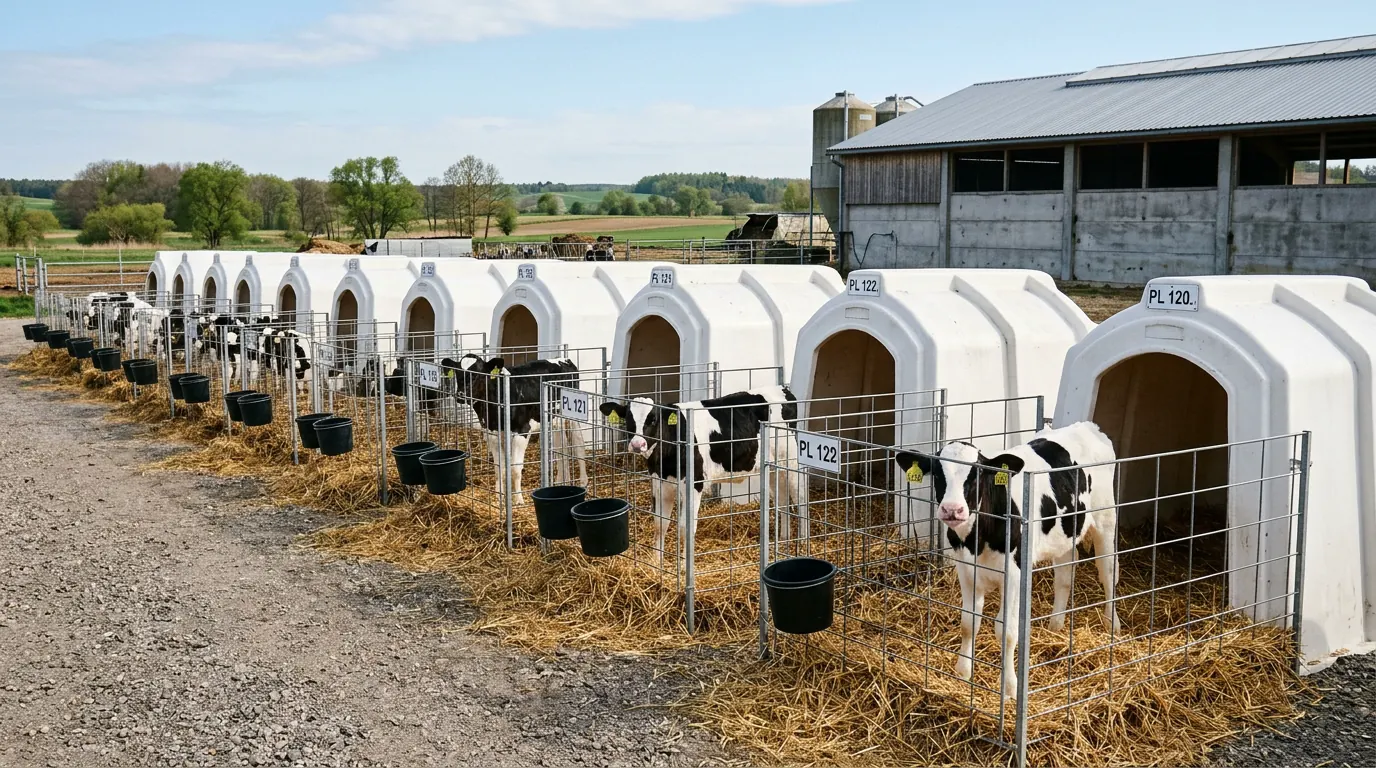
Cryptosporidiosis in calves is an infection with the protozoan Cryptosporidium parvum, which causes diarrhea. EFSA lists this parasite among the main causes of neonatal calf diarrhea, alongside bacteria and viruses. Teagasc notes that most calf diarrhea is caused by viruses and parasites, which antibiotics do not touch. So the basics are rehydrating the calf, calling a vet and keeping the calf shed clean.
Why it matters for the herd
According to EFSA, neonatal diarrhea is the most common disorder in pre-weaned dairy calves and accounts for more than half of all calf deaths on dairy farms. One calf with diarrhea infects the next if pens, buckets and hands are not clean. For a general overview of causes, see calf diarrhea: causes, treatment and withdrawal periods.
A disease for people too
Cryptosporidium is a zoonosis, meaning a parasite that passes from animals to people. In the 2023 EFSA and ECDC report it was the leading parasite behind foodborne outbreaks in the EU: 18 outbreaks in seven member states. So hand hygiene when working with sick calves matters for you and your family as well.
Cryptosporidiosis in calves: how to recognize it
Signs and age of calves
According to EFSA, neonatal diarrhea affects calves from a few days of age up to 1–2 months. Cryptosporidiosis falls within this syndrome. The calf has watery feces, grows weak, drinks less and may dehydrate. The signs alone do not tell you whether the cause is cryptosporidiosis, rotavirus, coronavirus or E. coli bacteria. Only a laboratory test of the feces can tell them apart.
Cryptosporidiosis or coccidiosis
Teagasc counts both cryptosporidia and coccidia among the parasites that cause diarrhea. Coccidiosis causes diarrhea in older calves, from three weeks of age upward. When diarrhea appears in younger animals, other causes are more likely, including cryptosporidia. We describe the signs and treatment of the other disease in coccidiosis in calves: signs and treatment.
When to take a fecal sample
Teagasc advises sending feces to a laboratory when diarrhea keeps recurring in the herd or the cause is unclear. The result shows which agent you are dealing with and lets you choose how to handle the whole calf shed. The vet takes the sample or arranges it.
Treating cryptosporidiosis in calves
Does a calf with diarrhea need an antibiotic
According to Teagasc, usually not. Most diarrhea is caused by viruses and parasites, so an antibiotic is wasted money and can raise bacterial resistance on the farm. Cryptosporidia are parasites, so the same rule applies. Only a vet chooses the drug and the dose, and you keep treatment records and withdrawal periods as the vet advises.
When to call the vet right away
Teagasc lists the cases where a calf with diarrhea needs an antibiotic and a vet's help. These are when the temperature is outside the normal 38.5–39.5°C, the calf is weak and will not stand, has sunken eyes, will not suckle or there is blood in the feces. Do not wait for improvement. Every hour of delay deepens dehydration.
Rehydration and electrolytes
A calf with diarrhea loses fluids, so a feeder with electrolytes is the basis of care. We describe how to give them and what to watch for in electrolytes for calves: when to give them and how to dose. Agree the amount and frequency with your vet, because they depend on the calf's condition.
Colostrum and the calf's immunity
Colostrum as the first protection
Teagasc puts colostrum first among the rules for calf health: the calf must get enough of it. EFSA names insufficient colostrum intake and poor farm hygiene as risk factors for diarrhea. Studies cited by EFSA show that the transfer of immunity from cow to calf can fail both with suckling and with bottle feeding. The IgG level in the colostrum is what counts. We describe colostrum feeding in calf rearing: colostrum, milk replacer, weaning.
Feeding mistakes also cause diarrhea
EFSA points out that diarrhea can result from poor-quality milk replacer or from management errors, for example miscalculating the milk replacer concentration. So with any diarrhea, first check how you prepare the feed. Write down who mixes it and how the powder is measured. This helps the vet find the cause.
Hygiene in pens and the calf shed
A dry, clean bed
Teagasc requires the calf's surroundings to be clean, dry and well ventilated, with special attention to calving pens and rearing areas. Add bedding regularly. The test is simple: you can kneel on the bedding and your knees do not get wet. We describe the layout of hutches and pens in igloo hutches, pens and calf sheds: how to set up calf rearing.
Cleaning and disinfection between batches
According to Teagasc, clean and disinfect every place where calves stay between batches. This includes equipment: stomach tubes, calving ropes and buckets. Choose the disinfectant and how to use it with your vet, because not every product works on protozoa. When planning rules for the whole farm, the biosecurity plan generator helps.
Sick calves kept apart
Separate a sick calf from healthy ones and handle it last, after the healthy ones. Use separate buckets and bottles. Change footwear or dip it in disinfectant at the entrance to the sick calf's pen. Stress and overcrowding favor calf diseases, so do not mix age groups and do not crowd animals.
Risk to people and working rules
What the EU data say
The 2023 EFSA and ECDC report states that Cryptosporidium was the leading parasite behind foodborne outbreaks in the EU. There were 18 outbreaks reported, three more than in 2022. C. parvum was found in three of them. The most frequently named route of infection was tap water, including well water. The two largest outbreaks, with 225 and 119 cases, involved contaminated water.
Rules for calf shed staff
After every contact with a sick calf, wash your hands with soap and water. Do not eat or drink in the calf shed. Take off work clothes before entering the house. Children should not enter pens with calves that have diarrhea. Well water used for washing equipment and feeding should be tested, because a well can be a source of infection. If anyone at home gets diarrhea, tell the doctor you work with calves.
Action plan for the herd
Order of steps
At the first signs: separate the calf, give fluids with electrolytes, take its temperature and check whether it stands and suckles. If you see any sign from the Teagasc list, call the vet right away. Order a fecal test. Clean and disinfect the pen after removing the calf, before the next one goes in.
Records and withdrawal periods
Note the date of illness, the calf's age, signs, tests ordered and every treatment given with the drug name and date. The record lets you return to the issue with the next batch and keep track of withdrawal periods after treatment. The Treatment and withdrawal module is for keeping such records. Vitamins for calves also support rearing, and the vet decides on their dosing.
Frequently asked questions
What is cryptosporidiosis in calves?add
It is diarrhea caused by the protozoan Cryptosporidium parvum. EFSA counts it among the main causes of neonatal calf diarrhea, alongside viruses and bacteria. It affects calves from a few days of age up to 1–2 months.
Do calves with cryptosporidiosis need antibiotics?add
Usually not. Teagasc states that most diarrhea is caused by viruses and parasites, which antibiotics do not work on. Only a vet can prescribe an antibiotic and its dose, when the calf has a fever, is weak or has blood in the feces.
What is the normal temperature of a calf?add
According to Teagasc, the normal range is 38.5–39.5°C. A reading outside this range in a calf with diarrhea is a reason to call the vet.
Is cryptosporidiosis dangerous to humans?add
Yes, it is a zoonosis. EFSA and ECDC report that in 2023 Cryptosporidium was the leading parasite behind foodborne outbreaks in the EU. Wash your hands after working with calves and keep children out of the pens of sick animals.
How do you disinfect pens after cryptosporidiosis?add
Remove the bedding, wash the pen, then disinfect it before the next batch of calves, together with equipment such as buckets and tubes. Choose the product and how to use it with your vet.
How do I know it is cryptosporidiosis and not coccidiosis?add
You cannot tell from the signs alone. Teagasc notes that coccidiosis causes diarrhea in older calves, from three weeks of age. A laboratory fecal test gives certainty.
Sources & resources
- linkTeagasc — Teagasc Beef Manual — Section 7: Animal Health
- linkEFSA AHAW Panel — Welfare of calves (EFSA Journal 21(3):7896)
- linkThe European Union One Health 2023 Zoonoses Report (EFSA Journal / ECDC)
- linkKPODR Minikowo — Rearing beef calves (guide by SGGW authors)
Prepared by: DlaFerm Team based on data from the sources listed · Publisher: INSTA-TECH sp. z o.o.
Record calf treatments and withdrawal periods in the Treatment and withdrawal module
The DlaFerm Treatment and withdrawal module lets you record every treatment with its date and drug name and keep track of withdrawal periods in one place. Create a free farm account in DlaFerm or get in touch.
Phone
+48 796 258 151