Cornish chicken (Indian Game): the broiler's ancestor
The Cornish, also called the Indian Game, is a heavy, stocky chicken breed with a broad breast and strong legs. Breeders crossed it with other breeds because it passed on meatiness. We cover how it looks, what it is used for and how it differs from modern broilers.
verifiedFrom the team that has organised work on poultry farms for years.
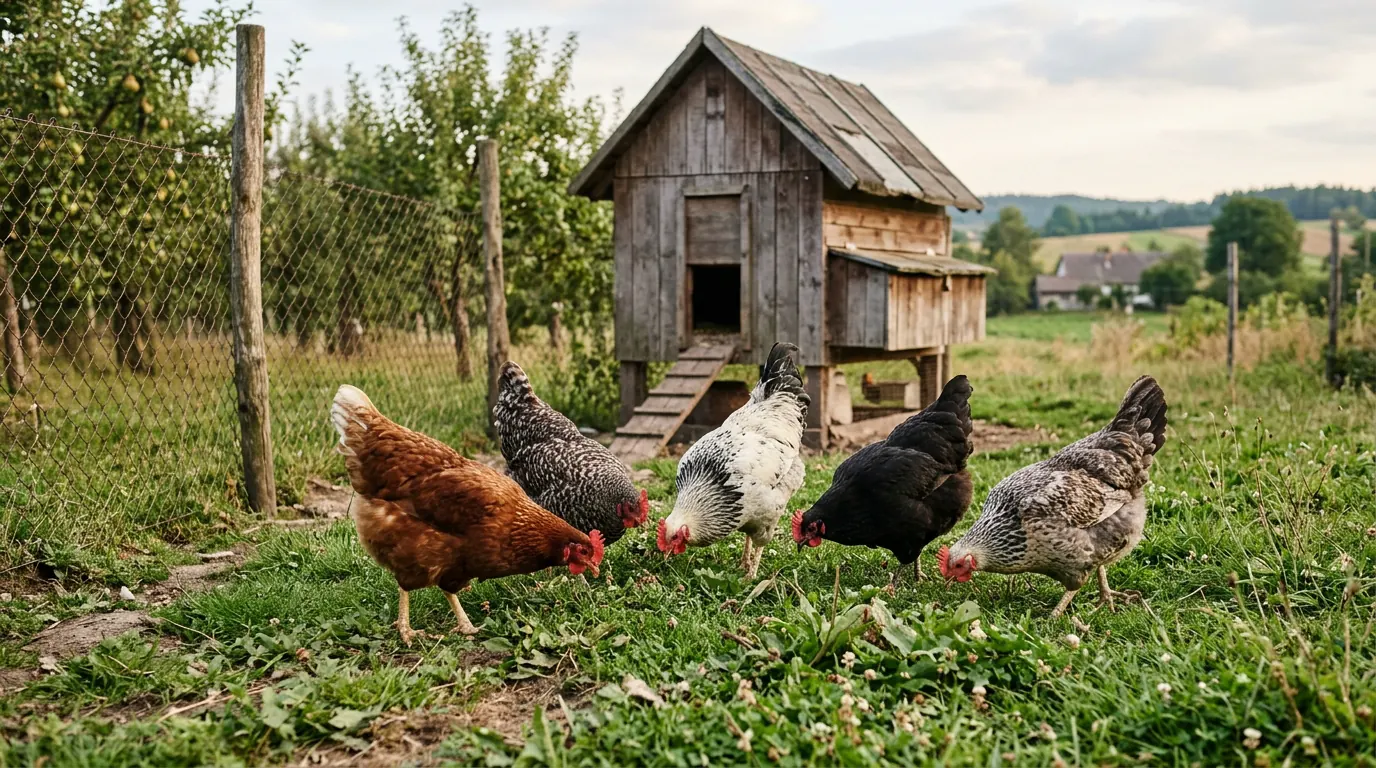
The Cornish is a clearly meat-type chicken: broad breast, heavy thighs, short strong legs and tight-fitting feathers. Breeders used these traits to create meat hybrids, which is why it is called the ancestor of the broiler. A pure Cornish grows slowly, though, and cannot match today's commercial lines.
Where the name comes from
The name "Cornish" comes from Cornwall. The second name, "Indian Game", caught on in show breeding. The breed came from crosses of fighting fowl, and many of its traits are left over from that selection: a compact body, strong bones and tough skin. All domestic chickens trace back to a wild ancestor, which we describe in our text on the red junglefowl (kur bankiwa).
How to recognize a Cornish chicken
Body build
The Cornish has a broad, rounded breast, widely set legs and a stocky body. The neck is short and strong, the head large and the beak short and curved. The feathering is short, hard and lies tight to the body, so the bird looks heavier than its weight suggests. It is the opposite of the light, long-legged laying breeds.
Temperament
The birds are calm around people, but roosters can be aggressive toward other males. If you keep several roosters in one pen, expect fights. Hens have sparse feathering, so on cold, damp days they need a dry coop sheltered from wind.
What the Cornish is used for
Meat performance
The Cornish gives a lot of breast meat for its size, but it grows slowly compared with modern hybrids. Today's broilers reach slaughter weight in a few weeks; you will find the figures for such lines in our description of Ross and Cobb broiler breeds. A pure Cornish needs a much longer rearing period, which usually does not pay once you count feed and labor.
Egg laying
Cornish hens lay few eggs and stop early. They do not suit laying flocks, and their use is only for meat or breeding. If you are thinking about laying hens, read about the drop in laying in hens after their first year.
Role in crossbreeding
Breeders combined the Cornish with other breeds to improve muscling of the breast and thighs. After many years of selection, these crosses produced today's broiler lines. Selection has a price, though: besides growth rate, breeders now look at robustness, as we explain in the article on selecting broilers for robustness.
Cornish versus a modern broiler
Feeding
The maker of the Ross line states in its 2025 handbook that finisher feed is usually used after day 25 of life and accounts for most of total feed use and feeding costs. For a slow-growing breed such as the Cornish, you use a similar split into phases, but the rearing period is longer. We describe the rules for commercial lines in the text on broiler feeding.
Housing conditions
Heavily built birds load their legs and feet, so dry litter and good ventilation matter. You will find the details in the articles on broiler house requirements and poultry house ventilation. Watch the condition of the feet, because wet litter promotes the lesions described in the text on pododermatitis.
Production results
The growth targets given by commercial line producers apply to birds fed the recommended feed in good conditions. According to Ross 308 Performance Objectives 2022, local factors such as the availability of raw materials, extreme climate or economic considerations can lower results. The Cornish is not a commercial line and has no such standards, so measure your own flock and compare it with earlier cycles.
If you want to keep Cornish
Body weight control
The 2023 Ross handbook for parent stock recommends weighing a representative sample of birds and comparing it with the target weight for age. Check the scale with a standard test weight at the start and end of each weighing, and use the same scale for later measurements. You can apply this rule to a heavy meat breed too.
Flock health
With birds kept longer than broilers, the risk of parasites and bacterial diseases grows. Read about worm infections and Salmonella in broilers. A vet always decides on treatment: the vet chooses the medicine and dose, and you keep the withdrawal period before slaughter.
Records
Even a small meat flock is worth recording: placements, losses, feed use and body weight. In DlaFerm, the digital flock record does this, and you calculate indicators in the FCR and EPEF online module.
Frequently asked questions
What is a Cornish chicken?add
It is a heavy, meat-type chicken breed, also called the Indian Game. It has a broad breast, short strong legs and tight-fitting feathers. It is used mainly for crossbreeding.
Is the Cornish chicken the ancestor of the broiler?add
Yes, the breed gave meat lines their broad breast and strong muscling. Today's broilers, though, are hybrids selected over many years, not pure Cornish.
Do Cornish chickens lay eggs?add
They lay few eggs and only for a short time, so they do not suit as layers. Keepers raise them for meat or for crossbreeding.
Is it worth raising Cornish chickens for meat?add
They grow slower than modern hybrids, so they use more feed per kilogram of gain. Work out the profit from your own data, using flock records.
How do you keep Cornish chickens in winter?add
Provide a dry coop sheltered from wind, with air exchange but no drafts. The birds have short feathering and tolerate damp worse than breeds with fuller plumage.
Sources & resources
- linkRoss Broiler Management Handbook 2025
- linkRoss 308 / 308 FF Broiler Performance Objectives 2022
- linkRoss Parent Stock Management Handbook 2023 (Interactive)
- linkNational Research Institute of Animal Production (Instytut Zootechniki PIB) — izoo.krakow.pl
Prepared by: DlaFerm Team based on data from the sources listed · Publisher: INSTA-TECH sp. z o.o.
Keeping a meat flock? Record weight and feed use in one place
The digital flock record in DlaFerm collects placements, losses, feed use and weighings so you can compare cycles. Create a free farm account or get in touch.
Phone
+48 796 258 151