Chickens at 3, 6 and 8 Weeks: Price and Buying
Chickens at 3, 6 and 8 weeks differ in weight, heat needs and price. Age shapes how you raise them, while price also depends on origin, line and delivery date. We explain what to check when you buy and where to find current rates.
verifiedFrom the team that has organised work on poultry farms for years.
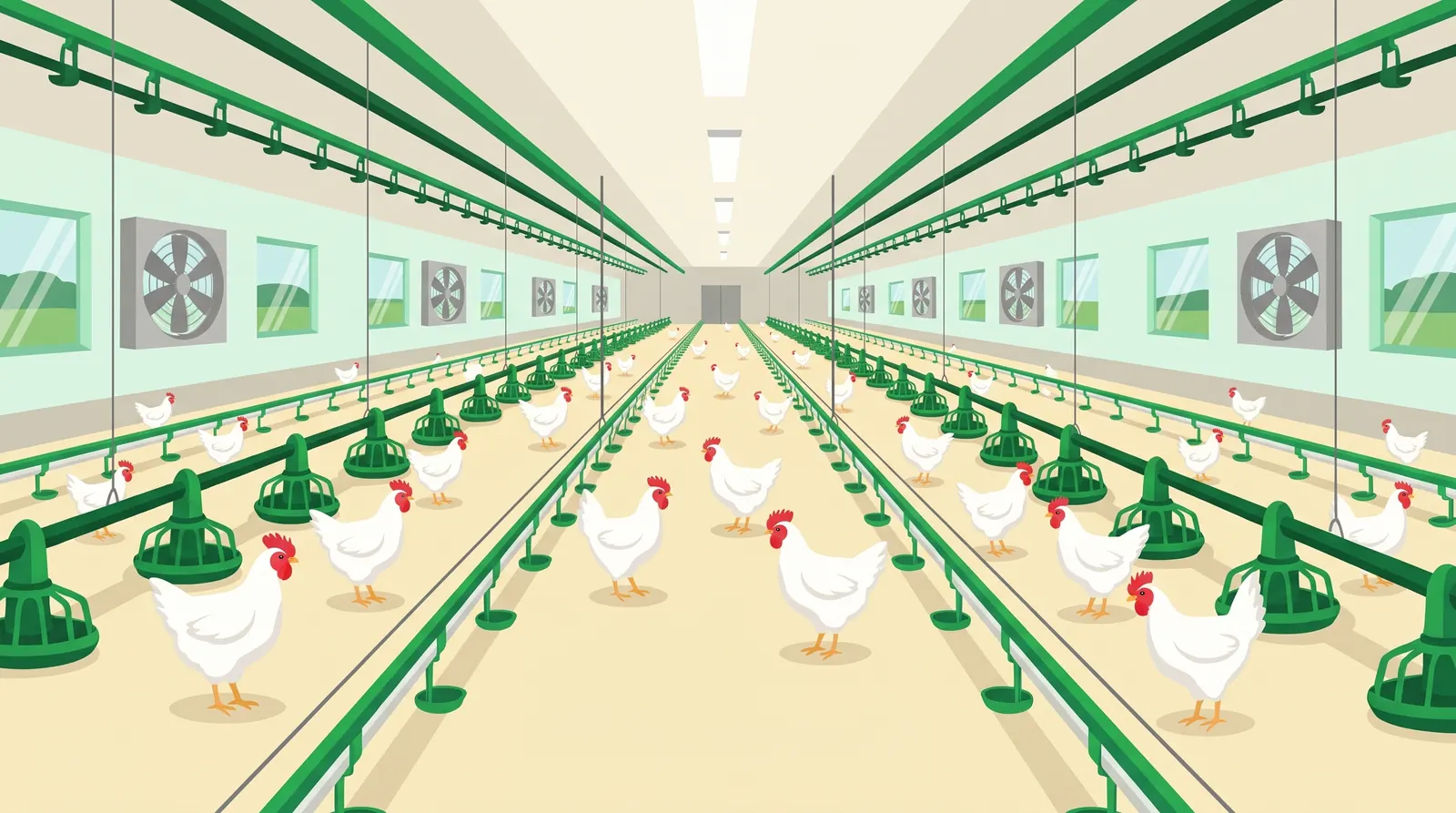
A 3-week-old chicken is a young bird that needs constant heat. A 6-week-old is more independent, and an 8-week-old is clearly heavier. Price does not depend on age alone. The rate is shaped by breeding line, sex, vaccinations done, delivery date and distance from the hatchery. We give no amounts, because they change fast. We show what drives them and where to check.
What to check before you buy
Before you pay, ask the seller where the batch came from, how old the birds are on the day of sale, and what treatments the hatchery carried out. Compare the condition of feathers and eyes, how active the birds are, and whether they are even in size. Write down the pickup date and the number of birds, because you will need this entry for settlement and any complaint. For larger purchases, ask about transport conditions and the documents the supplier issues. You can check current rates per bird in chicken price, but you always agree the final price with the specific supplier.
3-week-old chickens: heating and start
Brooding temperature
When you buy week-old birds, pen temperature matters most. A table in the Ross Broiler Management Handbook 2025 gives an ambient temperature of 23–24 °C (73.4–75.2 °F) in the brooding zone by the brooder for a bird weighing about 790 g (1.74 lb). Lighter birds need higher values, and the values fall step by step as the birds grow. Chicks cope worse with sudden temperature changes than older birds do. The table values apply to one specific line and are not a universal rule, so with a different line ask the breeder for their guidance. Measure temperature with a thermometer at bird level, not only near the heat source. We describe heating equipment in brooder and heat lamp for chicks.
Feed and water from day one
Young chickens need starter feed and easy access to water from the first hour after placement. Set drinkers so chicks find the water without trouble, and keep feeders low enough for birds to reach the feed. Match the amount of feed to the number of birds and how fast they eat it, and check consumption daily. Record feed and water levels on every walk-through. That way you spot a drop in appetite sooner, which is often the first sign of trouble in a flock. We cover feeding by age in more detail in our guide to feed for hens.
6-week-old chickens: price and where raising is heading
What changes between week 3 and week 6
Between the third and sixth week birds gain weight clearly faster, and you can usually cut back the heating step by step. Do not rely only on age tables. Watch how the flock behaves: birds spread out across the pen usually have the right temperature. Birds huddled together signal cold, and birds avoiding the lamp may be too hot. When you buy, check that the batch is even in size, because big differences at this age make pickup and sale harder. Confirm the birds' age with documents, and our guide to assessing poultry age can help.
Price per bird versus cost of raising
A 6-week-old bird costs more than a 3-week-old, because someone has already paid for the feeding and heating period. When you compare offers, do not look only at the price of one bird. Work out the unit cost: the price of the bird, the cost of feed from pickup to sale, and the likely losses. Feed efficiency indicators show whether a batch is growing as planned. We describe how to calculate and track them in FCR and EPEF online. When you compare costs, always set offers with the same parameters side by side.
8-week-old chickens: weight, space and planning
Space and stocking density
Eight-week-old chickens need more space than younger birds. Choose the stocking density in the house to match the current poultry welfare rules. You can check their current wording in Poland's Internet System of Legal Acts (Internetowy System Aktów Prawnych), and if in doubt ask the county veterinarian (powiatowy lekarz weterynarii). Too many birds worsens ventilation, raises litter moisture and encourages disease. Before you place a larger batch, plan where and when the birds will go, to avoid overcrowding. If you buy several batches at intervals, write down the dates of each so they do not overlap in one house.
Litter and ventilation
Birds at this age produce more moisture and droppings, so litter gets damp faster. Wet litter is a common cause of foot problems and of poor health in the whole flock. Check moisture and ventilation every day and record the results. Replace litter when it cakes into clumps or soaks through. If you notice weakness, lameness or a drop in appetite, consult a veterinarian. The vet makes the diagnosis and also chooses the treatment and dose. Picking medicines yourself without advice can harm the birds and make later sale harder.
What drives the price of a chicken
Origin and line
Price depends most on the parent flock and the genetic line. Birds from a recognized line, with health records and from a hatchery that keeps records, usually cost something different from birds without such data. Sex also matters, because cockerels and pullets grow differently and may be priced differently. When you buy, ask about vaccinations done earlier and whether the hatchery issues documents. The more information you get from the seller, the easier it is to judge whether the offer is fair.
Where to check current rates
Poultry price quotations are collected by Poland's Ministry of Agriculture and Rural Development (Ministerstwo Rolnictwa i Rozwoju Wsi), and you will find the official data at gov.pl/web/rolnictwo. For a quick picture, see the roundup of official poultry prices. You set prices with local suppliers directly, by asking for the rate per bird, the date and the delivery terms. Remember that prices can change within a week, so repeat the inquiry before you sign a contract. Write down every agreed price with its date, so you have a comparison for later purchases.
Vaccinations, medicines and documents when you buy
Vaccinations and schedule
Chicken vaccinations depend on age, type of flock and your veterinarian's advice. The vet sets the plan, not the keeper on their own. When you buy, find out which vaccinations the hatchery carried out and note them on the batch record. We describe a schedule for a backyard flock in vaccinating chickens in a backyard flock. Before you give any product, consult the vet, because the vet chooses the vaccine and the timing.
Withdrawal periods and treatment records
If the birds are meant for slaughter, every medicine you give has a withdrawal period. The rules come from the product label and your veterinarian's advice, not from a keeper's guesses. Record the name of the medicine, the date given and the date the withdrawal period ends, so you do not send birds off too early. You keep such records in the treatment and withdrawal module. Keep purchase and transport documents together with the batch record, because an inspector may ask for them during a check.
Frequently asked questions
How much does a 3-week-old chicken cost?add
We give no amount, because rates change often and depend on the line, sex and supplier. Ask several sellers for the price per bird, the date and the delivery terms, then compare offers with the same parameters.
What temperature do young chickens need?add
A table in the Ross Broiler Management Handbook 2025 gives 23–24 °C in the brooding zone for a bird weighing about 790 g. Younger birds need higher temperatures, and the values apply to one specific line, so ask your breeder for guidance on your own birds.
Does a 6-week-old chicken still need heating?add
Heating is usually reduced step by step, but base the decision on how the flock behaves and on measured temperature. Birds huddled together signal cold, and birds avoiding the lamp may be too hot. If in doubt, ask your veterinarian.
What documents should I get when I buy chickens?add
Ask for information on where the batch came from, the vaccinations done and the treatments at the hatchery. Ask about transport documents too. Check the requirements for your farm with the county veterinarian, because they depend on the type of flock and what the birds are for.
How long does it take to raise a chicken for sale?add
Raising time depends on the line, the purpose of production and the weight you want to reach. Record growth rate on the flock record and compare it with the growth table your breeder provides. We give no number of weeks here, because no single value fits every line.
Sources & resources
- linkRoss Broiler Management Handbook 2025
- linkChief Veterinary Inspectorate (Główny Inspektorat Weterynarii) — gov.pl/web/wetgiw
- linkMinistry of Agriculture and Rural Development — gov.pl/web/rolnictwo
- linkInternet System of Legal Acts — isap.sejm.gov.pl
Prepared by: DlaFerm Team based on data from the sources listed · Publisher: INSTA-TECH sp. z o.o.
Want all your chick purchases in one place?
The digital flock record module lets you log the placement date, the age of the batch and the vaccinations done. Create a free farm account in DlaFerm.pl or get in touch, and we will show you how it works in practice.
Phone
+48 796 258 151