Chianina cattle: traits, breeding and fattening
Chianina is one of the oldest and largest cattle breeds in the world, and it comes from Tuscany. In Poland it is a rare breed, kept mainly for meat. We explain what sets it apart, how to manage breeding and calf rearing, and what decides whether fattening pays.
verifiedFrom the team that has organised work on poultry farms for years.
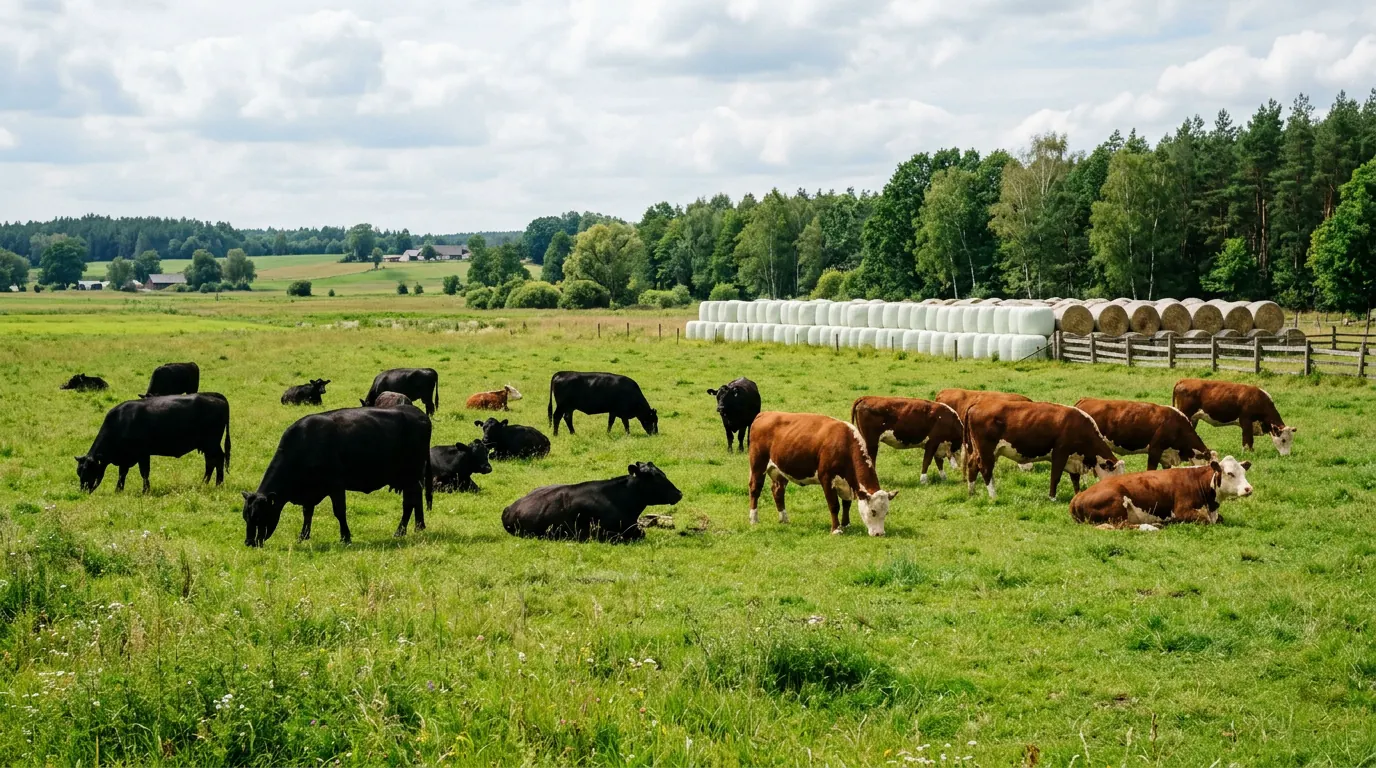
Chianina is one of the oldest and largest cattle breeds in the world. It comes from Tuscany, from the Val di Chiana valley, and for a long time it worked as a draft animal before it became a beef breed. In Poland it is rare. In the breed letter code list of ARiMR (Agency for Restructuring and Modernisation of Agriculture) it appears under the symbol CA (as of 22.11.2026). Before you buy your first animals, check three things: whether your pen and pasture can hold a large breed, whether you have the facilities for calving, and at what age you want to finish the animals.
Why farmers choose Chianina
Chianina is not a dairy or egg breed. Its strengths are large body size and good carcass yield. You can use it in two ways: as a pure breed in a suckler herd, or crossed with cows of other breeds. The choice depends on your goal. Purebred calves can be sold as breeding stock, while crossbreds usually go to fattening. In both cases, keep records for every animal. Without them it is hard to prove origin and to settle a batch at sale.
How to recognize a Chianina
Coat and color
Chianina has a light coat, most often white or grayish. The skin and the areas around the eyes, nose and hooves are dark. This helps tell the breed apart from other light beef breeds, but a sure identification needs a pedigree document or ear tags that match the register entry. Looks alone are not enough to sell an animal as purebred.
Build and weight
Chianina has a long, deep body and heavy limbs. Adult bulls are among the largest animals in this group, and the cows are clearly bigger than typical suckler cows of smaller beef breeds. Large size means higher demands on paddocks, waterers, feeders and pen protection against damage. Design the pen with extra space before you buy animals.
Value in crossbreeding
Research by IZ PIB (Poland's National Research Institute of Animal Production) on crossbreeds shows how much the sire breed matters. In a study of bull calves from black-and-white cows and beef bulls, carcass yield at 12 months ranged from 57.54% in the control group to 60.18% in the cross with Piemontese. The data concern breeds other than Chianina, but they show the principle: the sire breed affects the fattening result. If you choose Chianina for crossing, ask for progeny test results.
Breeding and calf rearing
Calving and calf checks
A large breed needs close watching at calving. Check cows around calving more often than on a normal day, and call a vet if the birth is difficult. The decision to assist a birth belongs to the vet, not to the farmer. Record every birth: the date, how it went, the calf's weight and any complications. These data are the basis for choosing a bull for the next season.
Records in the system
Each animal should have the herd location reported and an entry in the animal database. You can link data from IRZplus, ARiMR's online animal register, with your farm management, which cuts manual retyping. See how the integration with IRZplus and sensors works. Keep breeding records and a shared animal list in the farm management software, and check the data every month.
Raising calves on pasture and in the barn
In a study on organic farming, IZ PIB stresses that when access to concentrate feed is limited, the feeding results for cows and young cattle depend on the quality of roughage and on keeping its share as high as possible all year. So look after good meadows, and make hay and silage of stable quality. Calves should have constant access to water and starter feed from the first weeks, and you should track their growth by weighing them at fixed dates.
Fattening Chianina: slaughter age and feeding
Age at the end of fattening
The same IZ PIB study compared bull calves finished at 12 and at 15 months of age. Carcass yield and meat production relative to the control group changed with age. For example, in crosses with Piemontese, meat production relative to the control group was 121.5% at 12 months and 133.7% at 15 months. Choose the slaughter age after you work out feed costs and the time each stall is occupied, not on weight alone.
Feeding during fattening
Roughage and its quality decide the speed of weight gain. With a high share of silage or hay, check moisture, dust and whether the feed matches the animals' needs. Set the feeding plan with an adviser or a vet, and change the ration gradually so you do not upset the rumen.
Treatment and withdrawal period
A vet treats cattle and chooses the medicine and dose. The farmer is responsible for recording every treatment and for keeping the withdrawal period before slaughter. Keep treatment records and withdrawal dates in the treatment and withdrawal module so you do not miss the shipping date.
What decides the financial result
Income components
Income from Chianina is the difference between costs (feed, veterinary care, bedding, labor, depreciation of buildings) and revenue from selling calves, young cattle or meat. A publication by PODR Lubań (a regional agricultural advisory center) with a sample income calculation for beef production shows that the result changes clearly at different intensity levels. Before you decide, run your own data through the calculators for farmers.
Prices and where to check them
Prices of beef cattle and calves are quoted on the market and change within short periods. That is why we give no amounts in this text. You can check current quotes in ads and market reports, and at buyers and slaughterhouses. Remember that price depends on category, weight, age and carcass grade, so compare the same parameters.
Documents and calf welfare
Calf protection
Council Directive 2008/119/EC sets minimum standards for the protection of calves. It concerns housing conditions, not the look of the animal. Before you build pens and bedding areas, check the requirements in ISAP, Poland's online legal acts database (isap.sejm.gov.pl), and the current guidance of the Chief Veterinary Inspectorate (Główny Inspektorat Weterynarii). Inspectors look mainly at access to water, light and dry bedding.
Welfare in a beef herd
A large breed needs calm handling and safe passages. Limit stress when you move, transport and wean animals. Keeping a herd log of events helps you show care for welfare during an inspection. See also rules and documents for beef cattle farmers.
Compare with other beef breeds
If you are choosing a breed, compare Chianina with Limousine, Piemontese and Belgian Blue.
Frequently asked questions
What makes Chianina cattle special?add
Chianina is one of the oldest and largest cattle breeds, and it comes from Tuscany. It has a light coat, dark skin and a massive build. It is a beef breed, used in suckler herds and in crossbreeding.
What is the breed code for Chianina in Poland?add
In the ARiMR breed letter code list, as of 22.11.2026, Chianina appears under the symbol CA. The code marks cattle breeds in records. When you report animals, always check the current list on the ARiMR website.
Can you cross Chianina with dairy cows?add
Yes, crossing with cows of other breeds is used in practice. The fattening result depends on the sire breed, slaughter age and feeding. Before you decide, compare the IZ PIB data and talk the plan over with an adviser.
At what age should you finish beef cattle?add
IZ PIB studies compared bull calves finished at 12 and at 15 months and found differences in carcass yield and meat production. Choose the age after you work out feed costs and stall occupancy time. Set the plan with a vet or an adviser.
How much does a Chianina or a Chianina calf cost?add
Price depends on origin, age, pedigree documents and the market. We give no amounts because quotes change often. Check current prices with breeders and buyers and in market reports.
Who gives medicines to cattle on the farm?add
The vet chooses the medicine and dose. The farmer records each treatment and keeps the withdrawal period before slaughter. Good records help you avoid mistakes when you ship animals.
Sources & resources
- linkARiMR — List of letter codes for marking cattle breeds
- linkIZ PIB — Wiadomości Zootechniczne — Breeding work in a beef cattle herd (Z. Choroszy et al.), WZ L(2012)1:11–20
- linkIZ PIB — WZ — 60 years of IZ research on beef cattle (J. Trela et al.), WZ XLIX(2011)4:11–56
- linkIZ PIB — WZ — Feeding beef cattle in organic farming (K. Bilik et al.)
- linkIZ PIB — WZ — New methods of assessing the performance and breeding value of beef breeds (Z. Choroszy et al.), WZ LVI(2018)3:17–23
Prepared by: DlaFerm Team based on data from the sources listed · Publisher: INSTA-TECH sp. z o.o.
Planning a beef cattle herd?
The treatment and withdrawal module in DlaFerm.pl records each treatment and tracks withdrawal dates before you ship animals. Create a free farm account or get in touch, and we will show you how it works in practice.
Phone
+48 796 258 151