Capon: what it is, caponizing a rooster, meat and price
A capon is a rooster castrated before sexual maturity and raised for meat. The procedure changes growth rate and meat quality, and rearing takes clearly longer than with broilers. Below we cover the procedure, the meat, rearing, withdrawal periods for medicines and what drives the price.
verifiedFrom the team that has organised work on poultry farms for years.
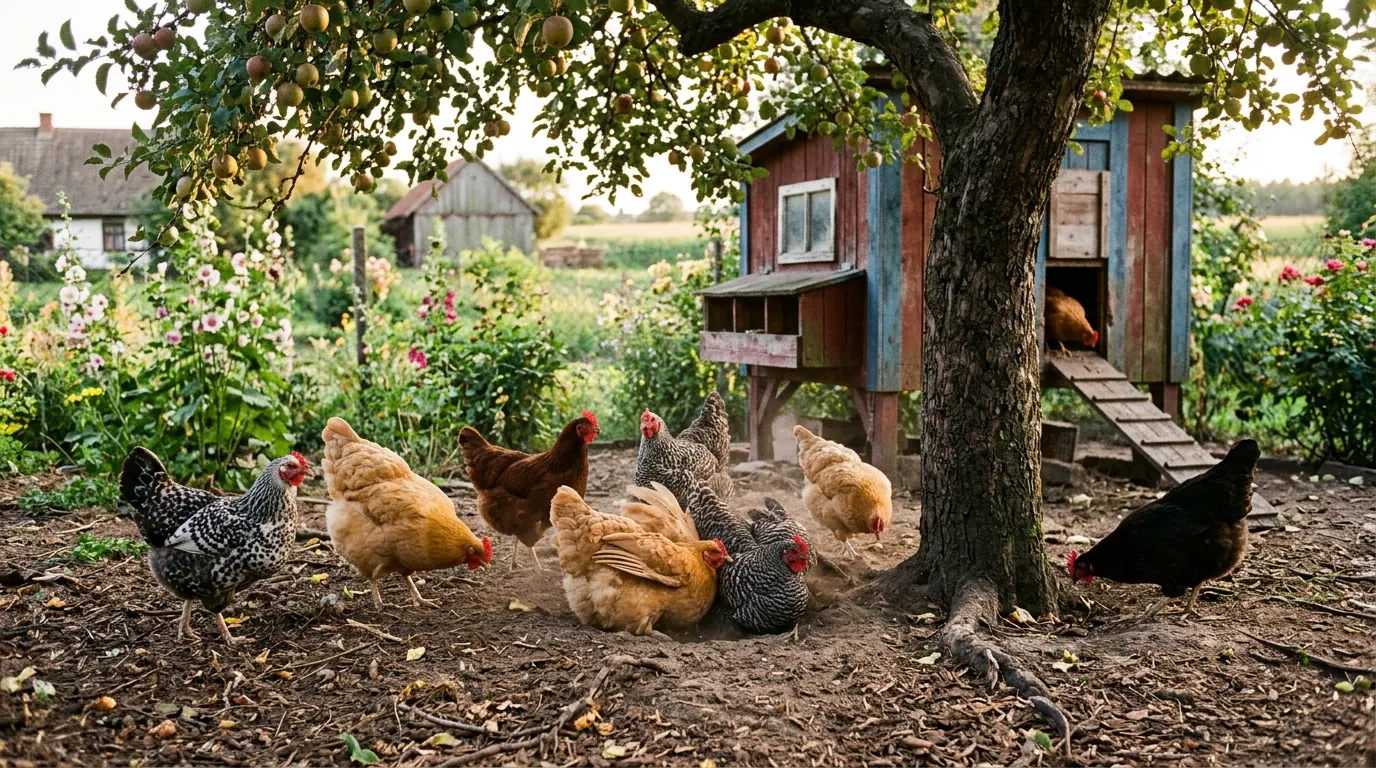
A capon is a rooster castrated before sexual maturity and raised for meat. The procedure changes the bird's hormone balance: it stops chasing hens, grows more slowly and lays down more intramuscular fat. The meat is more tender and juicier. A capon is not a separate breed. It is a rooster raised for a different purpose. If you wonder where crowing comes from, read our explanation of why a rooster crows.
Capon vs. chicken: growth rate
A capon needs several months, not several weeks, to reach slaughter weight. For comparison, according to the Ross 308 Performance Objectives 2022, a broiler at day 35 weighs 2296 g on average, with daily gain of about 100 g in that period. Capons are not raised at that pace. Their growth is slower, and the broiler data serve only as a reference point to show the scale of the difference.
Caponizing a rooster: what it involves
When and how
The procedure is done on a young rooster before it reaches sexual maturity. Historically, surgical castration was used: the gonads are removed or damaged through a small incision. A vet decides the method, the timing and the anesthesia. The person doing the procedure must be qualified and follow animal welfare rules. Operating on a sick or weak bird raises the risk of complications and losses in the flock.
Watching the bird after the procedure
After castration the bird needs close observation. Check appetite, movement and the state of the wound. The first days are when healing problems show up most often. If swelling or bleeding appears, or the bird stops eating, contact a vet. Record every procedure and the bird's reaction. That lets you compare batches across cycles. Coop records kept separately for each group make this easier.
Capon meat: how it differs
Flavor and texture
Capon meat is often described as more tender and juicier than meat from an ordinary rooster. This comes from slower growth and more intramuscular fat, which holds moisture during cooking. The difference is noticeable next to an uncastrated rooster. Compared with a broiler chicken, the main change is muscle structure, because a capon is older at slaughter. The bird's diet also affects flavor, so recording it through the cycle has a practical point.
Carcass yield
A capon usually gives a larger carcass than a rooster of the same age group, but a smaller one than a broiler after standard rearing. When you plan sales, allow for the longer rearing period and the higher share of fat, which has to go into your calculation. Record slaughter losses and carcass yield for each batch, because they show whether rearing pays off. Before adjusting the diet to the bird's age, talk to a vet or a feed adviser.
Rearing capons in practice
Feeding and outdoor run
Capons grow more slowly than broilers, so the diet must match the age and stage of rearing. Feed with too much energy over a long rearing period leads to excess fat. Set the feeding plan with an adviser and record feed use through the cycle so you can compare it with later batches. Keep the run dry and sheltered, and keep birds in groups of similar weight.
Records and bird numbers
With long rearing it is easy for the count in the house to drift from your paperwork. Record losses, procedures and transfers separately for each group. If you count birds from a camera, compare the result with the bird balance in our separate study: How many birds are really in the house: bird balance and camera.
Rules, medicines and withdrawal periods
What the rules say
Procedures on animals in Poland fall under animal protection and welfare law. Check the current text of the act in ISAP, Poland's online legal database (Internetowy System Aktów Prawnych), for the exact requirements on anesthesia, age at the procedure and documentation. We give no act numbers here, because they need confirming in the current wording. Veterinary rules are supervised by the Chief Veterinary Inspectorate (Główny Inspektorat Weterynarii). If in doubt, ask your vet or the county veterinary officer (powiatowy lekarz weterynarii).
Medicines and withdrawal periods
If a capon receives a medicine, a withdrawal period applies: the time after which the meat cannot be sold. The leaflet gives the length, and a vet chooses the medicine and dose. Do not set a withdrawal period from habits on other farms. Keep treatment records with the date given and the end of the withdrawal period, for example in the Treatment and withdrawal period module. We explain the difference between vaccination and medicine in Poultry vaccine: types and price.
Capon price: what it depends on
What affects the price
The price of a capon depends on the length of rearing, carcass weight, form of sale (live bird, carcass, cuts), season and place of sale. Longer rearing means higher costs for feed, energy and labor, which must go into the price. Market quotes change within short periods, so we give no amounts. Check current rates with buyers and in market reviews. For general context on poultry prices, see Chicken price.
How to work out profitability
Set the costs of feed, medicines, energy and labor against sales income from carcasses after losses. For each batch, work out the cost per kilogram of live weight or carcass. Without records of this data you are relying on estimates, and differences between batches get lost in the overall result. A farm management program collects costs, procedures and batch results in one place, which makes comparing cycles easier.
Frequently asked questions
What is a capon?add
A capon is a rooster castrated before sexual maturity and raised for meat. The procedure slows growth and gives a different meat structure than a broiler chicken. Rearing usually takes longer than with broilers.
How is a rooster caponized?add
The procedure is done on a young rooster. A vet decides the method, the timing and the anesthesia. After the procedure, watch appetite, movement and the wound, and contact a vet at once if complications appear.
How much does a capon cost?add
We give no amounts, because prices change within short periods. The price depends on the length of rearing, carcass weight, form of sale and season. Check current rates with buyers and in market reviews.
Is capon meat better than chicken?add
Capon meat has a different structure and usually more intramuscular fat, so it can be juicier. It is not better or worse in general. The choice depends on what buyers expect and how you cook it. Diet and age affect flavor.
Can capons be given medicines?add
Yes, but only under a vet's supervision, who chooses the medicine and dose. After giving it, a withdrawal period applies, set by the leaflet and the vet. Record each treatment with the date the withdrawal period ends.
Does a capon grow as fast as a broiler?add
No. A capon needs several months to reach slaughter weight. For scale, according to the Ross 308 Performance Objectives 2022, a broiler weighs 2296 g on average at day 35.
Sources & resources
- linkRoss 308 / 308 FF Broiler Performance Objectives 2022
- linkChief Veterinary Inspectorate (Główny Inspektorat Weterynarii): gov.pl/web/wetgiw
- linkInternet System of Legal Acts (ISAP): isap.sejm.gov.pl
- linkNational Research Institute of Animal Production (Instytut Zootechniki PIB): izoo.krakow.pl
Prepared by: DlaFerm Team based on data from the sources listed · Publisher: INSTA-TECH sp. z o.o.
Raising capons alongside broilers?
The DlaFerm.pl farm management program collects batches, procedures, medicines and costs in one place, so you can work out the profitability of each cycle more easily. Create a free farm account and see how it works in practice.
Phone
+48 796 258 151