Blauwindry and Strasser pigeons: breeds and care
Breeders judge Blauwindry and Strasser pigeons against the breed standard, which describes color, build and stance. Keeping both types rests on a dry loft, clean water, feed matched to age and regular health checks. Below we explain what to look for when you choose, house and manage your flock.
verifiedFrom the team that has organised work on poultry farms for years.
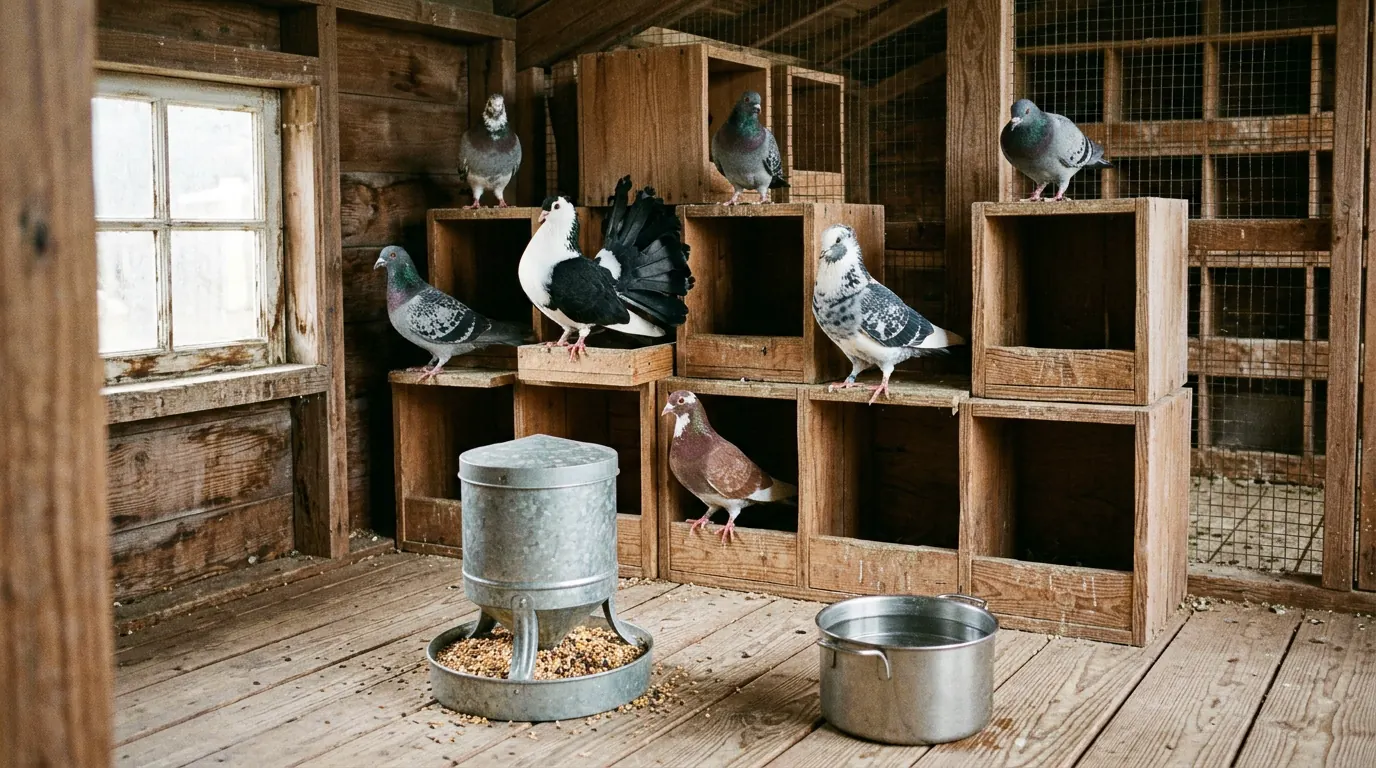
In fancy and show breeding, Blauwindry and Strasser pigeons are judged against the breed standard, which describes color, body build, stance and overall impression. Care for both types is much the same as for other pigeons: a dry, airy loft without drafts, clean water, feed matched to age and season, and steady observation of the birds. The differences between the breeds show best in the standard and on birds in your hand, not in photos from the internet. For a general overview, see our guide to pigeon breeds.
How to choose a breed
The choice between Blauwindry and Strasser usually depends on your goal: shows, preserving a breed, or simply liking birds. Before you buy a pair, ask the breeder for the breed standard and for a pedigree if they keep one. Check the birds in your hand: build, feather condition, clean eyes and nostrils, and behavior in the cage. Write down where the birds come from, because this makes later pairing and checking relatedness easier. When you buy, ask about the history of the flock and whether there has been any recent disease.
Blauwindry and Strasser: how to tell them apart
The breed standard as a starting point
The breed standard is a document from the breeders' club that describes what a correct bird looks like: color, shape of head and beak, body build, carriage of wings and tail, and eye color. At shows, judges score birds against these criteria. Before you buy, check that the standard is current, because clubs can change it. Breed descriptions come from breeders' clubs and their publications, not from pigeon shops.
Blauwindry in practice
The name Blauwindry points to a bluish color, but the breed standard, not the name, sets the color varieties and allowed shades. When judging, look at how even the color is on the wings and neck, and how clean the bars are if the standard calls for them. Birds with clear color faults are better kept for further breeding than as show candidates. Color standards can be narrow, so compare several birds side by side before you decide.
Strasser in practice
With Strassers, judges look mainly at build and stance, and at color that matches the variety listed in the standard. The bird should be compact, calm in its movements and stand upright on the perch or floor. Check for clean feathers around the vent and for the condition of the legs, as these are often the first visible signs of trouble in a flock. When you compare Strassers with Blauwindry, do not judge one type by the other's standard, because each has its own criteria.
The loft and its equipment
Location and ventilation
The loft should be dry, airy and free of drafts. Damp and built-up droppings encourage respiratory disease and parasites, so keep the floor and litter clean and replace them regularly. Place ventilation openings so the wind does not blow straight onto birds on the perches. In winter, cut down on moisture, not on fresh air, because birds tolerate cold better than a wet loft. Plan ventilation to suit the size of the loft and the number of birds.
Nests and nest bowls
Each pair needs its own nest or nest bowl in a sheltered, quiet spot. Set the bowls low enough that the young do not fall out, and clean them before every new clutch. Separating pairs during breeding reduces conflicts between birds. We describe nests, bowls and other fittings in our guide to pigeon loft equipment.
Drinkers and feeders
Water must always be fresh and clean. Place the drinker so birds cannot foul it with droppings, and check it more often in hot weather. Protect the feeder from rain and rodents, because damp feed goes moldy and mold harms the birds' health. Wash equipment regularly with the same cleaning agent and rinse it well after each use so no residue is left.
Feed, water and grit
Choosing a mix
Choose the pigeon mix to suit the bird's age and condition. Birds breeding and feeding young need different feed from birds out of season. Buy ready-made mixes from a trusted supplier with a label that lists the composition, and change over gradually by mixing old and new feed for several days. A sudden change of feed can weaken the birds and upset digestion. Do not formulate mixes yourself without talking to a vet or a feeding adviser.
Water and grit
Birds without access to clean water weaken quickly. Grit helps digestion in the muscular stomach, so offer it in a small dish rather than scattering it on the ground. Give mineral salt and calcium products only when a vet or the feed label recommends them, because too much of such supplements can harm the birds. Watch whether the birds eat evenly and whether the droppings have a normal consistency.
Prevention and treatment
Checking the flock
Watch the birds every day: stance, appetite, movement, feathers and breathing. Move birds that are apathetic, have ruffled feathers, or have discharge from the nose or eyes into a separate cage and note what you saw. Keep new birds apart before you add them to the flock so you do not bring in disease. The sooner you spot a change, the easier it is to control, so a simple check diary makes sense even with a few pairs. Pigeons can also carry Newcastle disease, which Poland's Chief Veterinary Inspectorate (GIW) calls paramyxovirosis in pigeons. Infected pigeons can spread the virus and may threaten the health of chicken flocks, so disease surveillance has to take pigeons into account.
Treatment and withdrawal periods
A vet chooses the medicine, dose and method of giving it after examining the bird or hearing the symptoms. Do not give birds leftover medicines without a diagnosis. If birds are to be eaten, keep to the withdrawal period set by the vet and shown on the label. Record every treatment: date, product name, reason and end of the withdrawal period. Treatment and withdrawal records in DlaFerm.pl make this easier.
Biosecurity
Limit contact between your birds and pigeons from other lofts, wild birds and rodents. Change shoes and clothes at the loft entrance, and keep cleaning tools only in that building. Keep newly bought birds in isolation and watch them. Write the rules into a plan that is easy to hand to family or anyone helping with the birds. The biosecurity plan generator prepares a ready-made scheme.
Registering the flock and keeping records
What to check in the regulations
You can find the rules on keeping poultry and registering flocks in Poland's Internet System of Legal Acts (Internetowy System Aktów Prawnych). The legal position described here is as of 22.11.2026, and rules can change, so check the current text before you register. Do not assume pigeons fall outside the rules just because they are fancy birds. In practice, the veterinary inspectorates are sometimes asked whether small fancy flocks have been registered, so check with your district veterinary officer (powiatowy lekarz weterynarii) before you enlarge the flock.
Bird records
Keep a record for each bird: origin, date of purchase or hatching, parents, mate, course of the broods, and deaths with a cause confirmed by a vet. This makes it easier to plan pairings and avoid inbreeding. A simple records program keeps this data in one place instead of in notebooks and phone photos. See the poultry house records module.
Frequently asked questions
What is the difference between Blauwindry and Strasser pigeons?add
They are two separate breeds with their own standards, so they differ mainly in color, build and stance as the standard describes them. The surest way to tell them apart is to compare the birds with the current breeders' club standard. Do not rely only on the name or on photos from the internet.
Can you keep Blauwindry and Strasser pigeons together?add
You can keep them in one loft, but each pair needs its own nest and a place at the feeder. Separate the pairs for breeding to avoid accidental mating. Watch whether any bird is bullied at the feeder or drinker.
What loft equipment do you need?add
You need a dry loft with ventilation and no drafts, perches, nests or nest bowls for each pair, drinkers, feeders protected from rain and rodents, and grit. Match the set to the number of birds and check it before the breeding season.
What do you feed fancy pigeons?add
The base is a ready-made pigeon mix chosen for age and season, with clean water and grit. Introduce feed changes gradually. Give mineral and vitamin supplements only on a vet's advice or as the feed label says.
Do you have to register a pigeon loft with the vet?add
The duty to register depends on the rules in force on the day. The legal position described here is as of 22.11.2026. Check the text of the rules in the Internet System of Legal Acts and ask your district veterinary officer whether your flock needs registering. Write down the answer and keep it with your farm documents.
Can I treat my pigeons myself?add
Do not choose the medicine and dose yourself. A vet makes the diagnosis and the treatment plan, and for birds meant for eating also sets the withdrawal period. Record every treatment with the date and product name so you do not mix up the dates.
Sources & resources
- linkChief Veterinary Inspectorate (Główny Inspektorat Weterynarii): gov.pl/web/wetgiw
- linkInternet System of Legal Acts (Internetowy System Aktów Prawnych): isap.sejm.gov.pl
- linkMinistry of Agriculture and Rural Development: gov.pl/web/rolnictwo
- linkNational Research Institute of Animal Production (Instytut Zootechniki PIB): izoo.krakow.pl
Prepared by: DlaFerm Team based on data from the sources listed · Publisher: INSTA-TECH sp. z o.o.
Keep a pigeon loft next to a poultry flock?
The poultry house records module keeps bird data, origin, broods and treatment in one place. Create a free farm account or get in touch, and we will show you how it works in practice.
Phone
+48 796 258 151