Banana pheasant: looks, housing and breeding
The banana pheasant is a pale color variety of the common pheasant, kept as an ornamental bird in an aviary or on a run. We explain how to recognize it, how to keep it and what the rules and flock health require. We describe the principles in general terms; medicine and dose are always chosen by a vet.
verifiedFrom the team that has organised work on poultry farms for years.
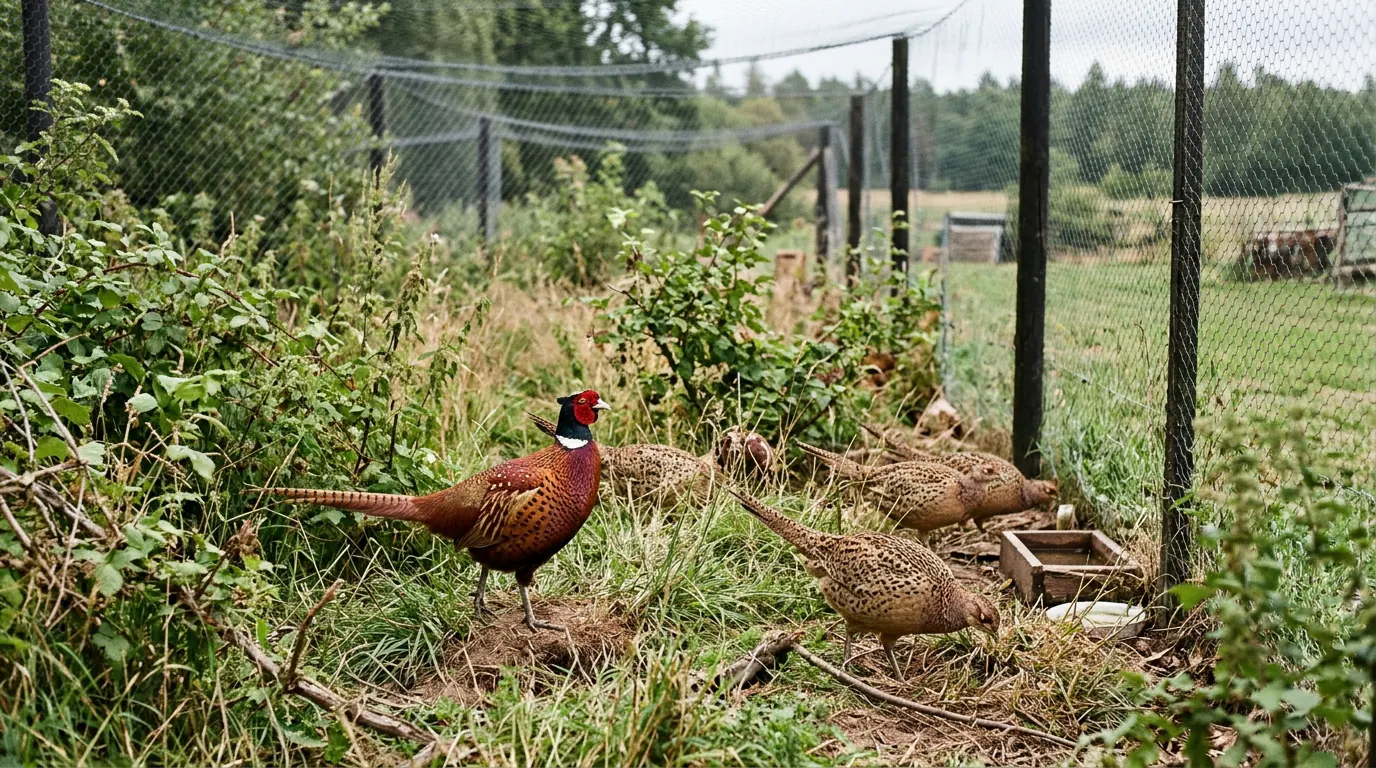
The banana pheasant is a color variety of the common pheasant, not a separate species. Its pale, yellowish plumage comes from a genetic mutation, so keepers treat it as an ornamental bird, not a production bird. We cover ornamental varieties in more detail in our guide to ornamental pheasants.
Who this variety suits
Keepers choose the banana pheasant to liven up a park, a home aviary or an agritourism farm. The bird needs plenty of space and steady attention, but it takes little room compared with production poultry. Before you buy, check that you have time for a daily aviary check, access to feed and a way to keep simple records. Without these it is hard to keep a flock in good condition all year.
How to recognize a banana pheasant
Plumage
The most distinctive trait is the pale, yellowish color. It sets this variety apart from the common pheasant, which has darker, brown-copper plumage. The shade can differ between birds, and color also depends on the breeding line and the bird's age. When you judge a bird, look at the whole body, not just one color. Changes in plumage during the molt are natural and do not point to disease.
Male and female
Males are usually larger and brighter than females, and they have a longer tail. Females are plainer, which helps them hide in the grass while laying. Sex can be hard to tell in young birds, so ask the seller how sure the sexing is and where the birds come from.
Aviary and living conditions
Aviary and shelter
Pheasants need an outdoor space where they can run and forage, and a roofed shelter for the night and bad weather. The fence must be solid and tall, and the bottom secured against digging by foxes and martens. The shelter should be dry, airy and free of drafts. Replace the litter regularly, because damp encourages disease. A clear cleaning schedule makes it easier to keep the aviary clean.
Biosecurity
Outside birds can bring disease into your flock, so every entry to the aviary should follow set rules. Limit the number of visitors, change footwear at the entrance and do not add new birds without quarantine. You can prepare a plan for these steps in the biosecurity plan generator.
What and how to feed
Basic diet
Pheasants are omnivores. In simple terms, the diet is a ready-made feed mix for pheasants or poultry, topped up with greens, fruit and grain. Match the mix to the bird's age and raise the protein share in the breeding season. Talk to a vet or a feeding adviser about the feed type and advice for your own flock.
Winter and the aviary
In winter pheasants find less natural food, so you must feed them. Provide clean water that does not freeze and a dry place for feed, because damp feed molds quickly. We describe feeding methods through the seasons in our guide to feeding pheasants.
Reproduction and chicks
Choosing birds
For breeding, pick healthy, well-muscled birds in even condition with clearly documented origin. Avoid inbreeding, because it weakens the flock. Record which birds are paired and when laying began. This lets you judge results and spot problems in a line quickly.
Hatching and rearing
You can hatch pheasant eggs naturally under a hen or in an incubator. Start a hatch only when you have a ready, warm and dry place for the chicks. Chicks need a steady temperature and fresh, easily digestible feed. We describe full rearing rules in our guide to pheasant breeding.
Prevention and treatment
Watching the flock
Check appetite, behavior and feather condition every day. A bird that stands apart, has ruffled feathers or has diarrhea needs a quick consultation. Record every case of illness and every product given, so you can spot recurring problems over time.
Medicines and withdrawal periods
A vet always chooses the medicine and dose, not the keeper based on forum opinions. After a medicine is given, a withdrawal period applies: the time during which the bird or its products may not be used for food. Keeping entries in a treatment and withdrawal record helps you keep to that date.
Formalities before you start
Animal protection
Keeping birds falls under animal protection rules, which change over time. Before you set up the aviary, check the current text of the act in ISAP (Poland's Internet System of Legal Acts) and take any doubts to your county veterinarian (powiatowy lekarz weterynarii). In practice, start by reviewing the requirements for the aviary and stocking. We cover the changes for keepers in our text on the animal protection act.
Registration and records
Keeping poultry requires notification and entry in the register run through IRZplus, ARiMR's online animal register, and you should keep entries up to date. Record the number of birds, arrivals and losses, and the dates of movements. We describe the procedure in our guide to poultry farm registration. Before you buy birds, confirm with your local county veterinarian which documents you will need in your case.
Frequently asked questions
What is the difference between a banana pheasant and a common pheasant?add
The banana pheasant is a color variety, not a separate species. It differs mainly in its pale, yellowish plumage, while the common pheasant has darker, brown-copper color. Aviary and feeding needs are basically the same.
Do you need a permit to keep banana pheasants?add
There is no single permit that fits every keeper. Your duties depend on the number of birds and how you keep them. Before you start, talk to your county veterinarian and check current rules in ISAP.
How do you keep pheasants in an aviary in winter?add
Provide a dry shelter, water that does not freeze and feeding with a ready-made mix. Keep the feed from getting damp or moldy. Watch the birds daily, because weaker birds lose condition faster in winter.
What should you do if a pheasant is sick?add
Separate the sick bird if you can and talk to a vet about the symptoms as soon as possible. The vet chooses the medicine and dose, and a withdrawal period applies after it is given. Record everything in your treatment log.
Can you keep pheasants with chickens?add
Keeping different poultry species together raises the risk of disease spread and fights over food. If you plan this, talk to a vet and keep feeding spots and drinkers separate.
Sources & resources
- linkChief Veterinary Inspectorate — gov.pl/web/wetgiw
- linkNational Research Institute of Animal Production — izoo.krakow.pl
- linkInternet System of Legal Acts (ISAP) — isap.sejm.gov.pl
- linkEFSA — efsa.europa.eu
Prepared by: DlaFerm Team based on data from the sources listed · Publisher: INSTA-TECH sp. z o.o.
Do you keep an aviary next to production poultry?
The <a href="/program-do-ewidencji-kurnika">poultry house records</a> module in DlaFerm.pl helps you manage different bird groups in one place. Create a free farm account and see how it works in practice.
Phone
+48 796 258 151