Feeding pheasants: what they eat in winter and in an aviary
In winter pheasants eat mostly cereal grain and ready-made game bird feed, plus whatever they find on open ground. Feeding is essential when natural food runs short. This guide covers what to feed, how to provide water and grit, and how to check that your birds are eating well.
verifiedFrom the team that has organised work on poultry farms for years.
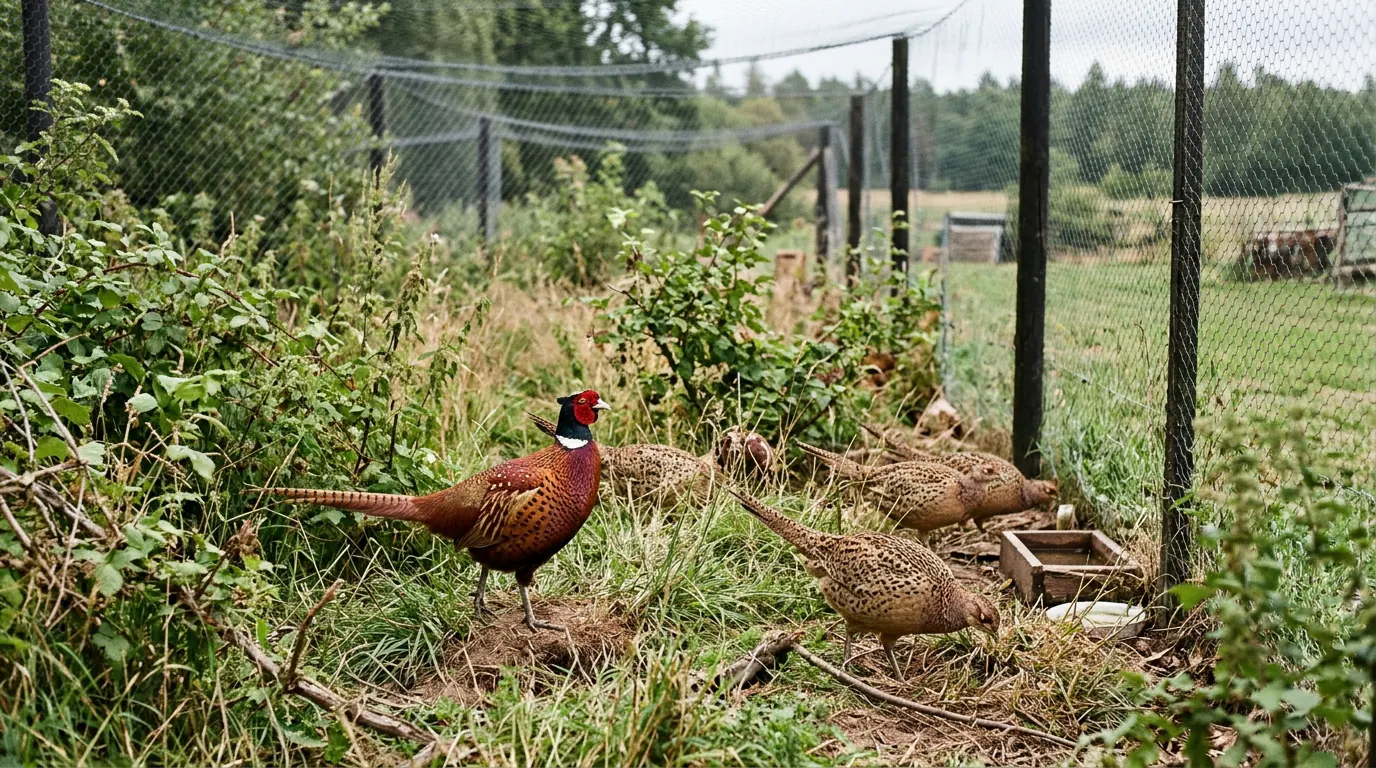
In winter pheasants eat mostly grain: corn, wheat, oats and millet. In an aviary they also get a ready-made feed mix made for game birds. On free range, birds pick up part of their food themselves: grass and weed seeds, buds and leftover greens. When the ground is frozen or under snow, that share drops almost to zero. A good winter diet is dry, clean grain, feed of known composition, water that is always available, and grit to help digestion.
Why winter feeding is needed
In winter a pheasant burns more energy to stay warm, while natural food is scarce. Snow, ice and frozen ground cut access to seeds and greens. A bird in an aviary depends only on what it gets in the feeder, so a daily check decides the condition of the flock. Thin, weak birds cope worse with winter and go into the breeding season in poorer shape. The rule is simple: keep the feeder filled, and match the amount of feed to the number of birds, their age and the weather. Agree the exact ration with a vet or an animal nutritionist, because it depends on the line, body weight and housing conditions.
Grain, mixes and supplementary feed
Cereal grain
Corn gives plenty of energy and birds eat it readily in winter. Wheat and millet are light and easy to get. Oats are rich in fiber and support the digestive tract. In practice, offer several kinds of grain instead of one so the diet stays varied. Grain must be dry, clean and free of mold. Set aside damp or dusty batches at once, even if they look fine. We describe keeping the whole flock in our guide to pheasant breeding.
Ready-made game bird mix
Feeds made for laying hens and broilers have a different composition from feeds for game birds. Before you buy, check the label for the species and production stage the feed is made for, and ask the producer about composition and protein content. Give the mix as a supplement to grain, not as a replacement for the whole diet. Birds of different ages have different needs, so feed young and adult birds separate portions. We describe similar rules for other poultry in our article on feeding guinea fowl.
Greens and vegetables
Fresh greens, leaves and small vegetables add variety in milder spells of winter. Give only as much as the birds eat during the day, because leftovers freeze and spoil in the feeder. Do not give bread, baked goods or table scraps. They have low nutritional value and can ferment or go moldy.
Water must never run out
Constant access to water
Water must be available around the clock, including in frost. Water freezes in drinkers, and ice reduces how much a bird can drink. Use heated drinkers or check every day that the water is liquid and clean. Place drinkers in a dry spot so you do not soak the litter or make mud around the feeder. Lack of water quickly hits appetite, so it is the first thing to check in the morning.
Grit for digestion
Pheasants, like other poultry, have no teeth. The muscular part of the stomach grinds grain, helped by small stones and sand swallowed with the food. On open ground birds find grit themselves, but there is little of it under snow. Provide clean, fine grit in a separate container near the feeder. It must not be contaminated with droppings or construction dust. Talk to a vet about the state of the birds' digestive tract, also when you change the diet.
Mold, pests and feed storage
Mold and toxins
Moldy grain and damp feed can contain mycotoxins, which are fungal toxins that weaken birds and lower their immunity. Signs are loss of appetite, diarrhea, weakness or sudden deaths. If you suspect poisoning, withdraw the feed and let a vet decide whether further tests are needed. According to Poland's Chief Veterinary Inspectorate (Główny Inspektorat Weterynarii), the keeper must report increased mortality to the county vet (powiatowy lekarz weterynarii). Keep records in our treatment records module, because this matters with every intervention.
Storage and rodents
Store feed in a dry, sealed container, away from the ground and from walls that may let in damp. Rodents carry disease and foul feed with droppings, so secure the store and inspect it regularly. Open bags only as needed and use batches in the order you received them. Storing grain too long lowers its nutritional value and raises the risk of mold.
Feeders set up sensibly
Place the feeder on a raised base or in a sheltered spot so snow and rain do not wet the feed. Closed, roofed feeders limit access for wild birds and rodents. Clear out leftovers regularly and clean the containers, because dirty bowls are a source of bacteria and parasites.
How to tell if pheasants are eating well
Daily observation
In the morning walk along the run and look for birds that sit fluffed up, do not come to the feeder or have a prominent breastbone. If you can feel the breastbone under the breast with no muscle on both sides, the bird is thin. Also watch droppings and the flock's behavior at the feeder. Any change that lasts longer than a day deserves a note and a talk with a vet.
Recording feed use
Write down how much feed you put out, because it is the simplest sign of changes in appetite. When use drops for no clear reason, check grain quality, water and temperature. Records also help you plan winter purchases and avoid gaps in supply. With more birds, keeping records in software saves time and puts the data at hand for every inspection. You can do this in our farm management software.
Treatment and withdrawal period
A vet always chooses the medicine and dose for pheasants. After each treatment, record the drug name, the date given and the withdrawal period stated in the documentation. The withdrawal period is the time during which you must not sell birds or their products, so skipping it is a serious mistake. Keep the record in one place with the flock documents.
Winter feeding step by step
Before the first frost
Check the condition of the run, your stocks of grain and feed, and that the drinkers work. Plan deliveries so your stock lasts several weeks and you do not have to buy in a hurry during a snowstorm. Repair the fence and feeder shelters, because quick repairs are harder in winter. Record the date you start feeding so you can compare the season in spring.
Adult hens and young birds
Hens prepared for the breeding season need better condition than birds kept for other uses, and young birds need feed matched to their age. We describe feeding rules for hens being prepared for breeding in our article on the golden pheasant hen. Change the diet gradually, because a sudden change in feed composition can upset digestion.
Back to the plan in spring
When green grass and insects appear, cut back the supplementary feed gradually. Birds coming out of winter are weak, so the move to full range should be gradual, with condition checks. Record the state of the flock before and after winter so you have a reference point for next season.
Frequently asked questions
What do pheasants eat in winter?add
In winter pheasants eat cereal grain, mainly corn, wheat, oats and millet, and ready-made game bird feed. On range they add seeds and leftover greens when these can be reached under the snow.
Can pheasants be fed grain only?add
Grain alone does not cover all of a bird's needs, so add a ready-made mix of known composition. Agree the ration and the diet composition with a vet or an animal nutritionist, because they depend on the age and condition of the flock.
Do aviary pheasants need grit?add
Yes, grit helps grind grain in the muscular stomach. Provide clean, fine grit in a separate container, because birds cannot find it themselves under snow.
Can you give pheasants bread and table scraps?add
No. Bread and kitchen scraps have low nutritional value and ferment and go moldy quickly, which can cause digestive problems. Give tested grain and feed of known composition instead.
How do I know if my pheasants are well fed in winter?add
Check how prominent the breastbone feels, how the birds behave at the feeder and how much feed they eat. Thin birds that do not come to the feeder need a vet's advice.
What should I do if pheasants lose appetite or die?add
Withdraw the suspect feed and water, note the symptoms and the number of birds, then contact a vet. Report increased mortality as the county vet (powiatowy lekarz weterynarii) requires.
Sources & resources
- linkChief Veterinary Inspectorate (Główny Inspektorat Weterynarii) — gov.pl/web/wetgiw
- linkNational Research Institute of Animal Production (Instytut Zootechniki PIB) — izoo.krakow.pl
- linkInternet System of Legal Acts (Internetowy System Aktów Prawnych) — isap.sejm.gov.pl
- linkEFSA — efsa.europa.eu
Prepared by: DlaFerm Team based on data from the sources listed · Publisher: INSTA-TECH sp. z o.o.
Do you keep pheasants alongside other poultry?
The <a href="/program-do-zarzadzania-ferma-drobiu">farm management software</a> in DlaFerm.pl keeps flock, feed and treatment records in one place. Create a free farm account and see how it works in practice.
Phone
+48 796 258 151