What to feed pigeons: feed, mixes and diet
A pigeon diet is built on grain: wheat, barley, peas and millet, topped up with pelleted feed, grit and constant access to clean water. Adjust the mix to the season, the stage of breeding and the condition of your birds. Below we explain what to feed, what to avoid and how to organize feeding in the loft.
verifiedFrom the team that has organised work on poultry farms for years.
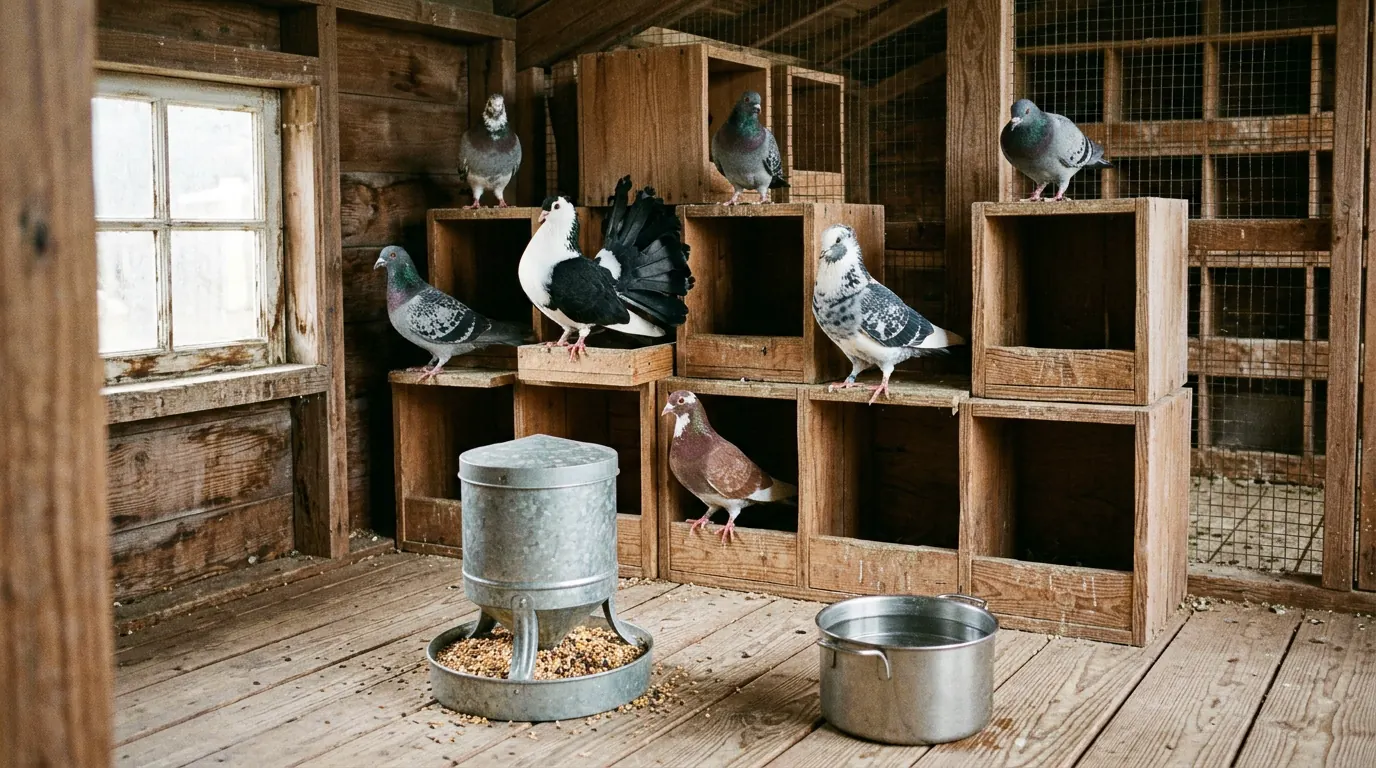
Feed pigeons mainly grain: wheat, barley, peas, millet and a smaller share of corn. This base covers most of a bird's energy needs, but it is not enough on its own. A good diet combines a grain mix or ready feed, grit (fine gravel that helps grind grain in the muscular stomach, the gizzard) and constant access to clean water. Change the diet with the season, the stage of breeding and the condition of the flock. If you keep other birds too, compare the rules with our guide to feeding chickens, because some feed hygiene rules are the same.
What pigeons eat in the wild and in the loft
In the wild, pigeons pick up grass and cereal seeds, weeds, and sometimes fruit and small insects. Their diet varies, and the birds choose what they need at the moment. In the loft, you have to recreate that variety. The simplest way is to give several kinds of grain in one mix and add pelleted feed. Pigeons are not fussy, but they are easy to overfeed on the most fattening ingredients, especially corn and sunflower seed, which leads to obesity and poorer condition. So size portions so the birds finish them in a short time, and remove leftovers from the feeder.
Grain, pelleted feed and mixes: which to choose
A grain mix as the base
A grain mix gives pigeons variety and keeps them busy while they eat. It usually contains wheat, peas, barley and millet, with a smaller share of corn because corn is fatty and high in calories. When you choose a mix, check that the grain is dry, even and free of any musty smell. Ready-made mixes for poultry, made for a specific group of birds, are covered in our guide to feed mixes for poultry. Store grain in a dry, airy place protected from rodents.
Pelleted feed
Pelleted feed has a fixed composition, so it is easier to control how much protein and energy the birds get. Choose a product made for pigeons, not a general feed for other poultry. The bag carries a declaration of composition and feeding instructions. If you have young birds or pigeons in the breeding period, pick a feed that fits their needs and do not mix it at random with feeds for other species. Introduce changes gradually, blending old and new feed over several days so you do not upset digestion.
How to combine grain and feed
The most common scheme is pelleted feed as the base, with grain added for variety. Grain keeps the birds occupied and encourages natural foraging, while the feed gives a predictable composition. Set the proportions by watching the flock: if the birds are putting on weight, cut back on fatty grain. If they are thin and breed poorly, ask a vet about changing the feeding plan.
Grit, water and minerals: what not to forget
Grit: why pigeons need gravel
Pigeons have no teeth. They grind grain in the gizzard, and for that they need small stones that stay in the crop and gizzard. Give grit separately, in a clean container, so the birds take the amount they need. Do not mix it into the feed, because then you lose control of the portion. Sand from the yard is not a good substitute, as it may be contaminated. We cover ready-made grit mixes with additives in our guide to grit and electrolytes for pigeons.
Water: clean and always available
Water must be fresh and available all day. Place the drinker so the birds cannot drop droppings or feed into it. In winter, check that the water is not freezing, and in summer change it more often, because heat contaminates it quickly. If you use acidified drinking water, treat it as part of hygiene and talk to a vet before you start. We explain the rules in our guide to acidifying drinking water for poultry.
Salt and minerals
Do not give table salt or leftover salty food. Too much salt harms birds, and the signs often appear only later. Get minerals from ready feeds that carry a declaration of composition. Extra calcium, as shells or feed chalk, is worth giving mainly in the breeding period, after talking to a vet who can assess the needs of your flock.
Foods you should not give pigeons
Bread and flour products
Bread is the most often named mistake in feeding pigeons. Wet bread swells in the crop, and dry bread has no nutritional value and clogs the stomach. Do not give pasta, cookies or other flour products either. In public places, feeding bread is a frequent cause of health problems in birds, so ban it completely in your loft.
Salty, fatty and processed foods
Kitchen waste includes fried dishes, seasoned meat, cheese and products with a lot of salt. Sweets, chocolate and fizzy drinks are also unfit for birds. Do not give greens treated with pesticides or ornamental plants you do not recognize. If you are not sure a product is safe, do not give it at all.
Spoiled and moldy grain
Grain with mold or a musty smell is one of the most serious causes of health trouble. Never mix moldy grain with good grain, and never feed it hoping the birds will not pick it. Store bags on a raised pallet and check them regularly. If you see signs such as apathy, diarrhea or a change in the look of droppings, contact a vet, who will tell you what to do next.
Pigeon diet through the seasons and life stages
Breeding and feeding squabs
Pigeons feed their young (squabs) a special food produced in the crops of both parents. During this time the pair needs access to good feed and clean water, and extra grain does not replace this natural mechanism. Do not force-feed squabs or try to replace their natural food without talking to a vet. It matters more to keep the nests calm and free of drafts.
Breeding season and molting
During breeding and molting, birds need more protein, so in these periods it is worth using a feed with higher protein content, chosen for the type of pigeon. Introduce it gradually, mixed with the current diet. Molting lasts longer when birds are in poor condition, so watch feathers and the behavior of the flock.
Winter and heat
In winter pigeons need more energy to keep their body temperature up, so on frosty days increase the share of grain in the diet. In summer, cut portions, because too much food in the heat encourages fermentation in the crop and weight gain. In both seasons, constant access to water is key, and it must never be allowed to freeze or overheat.
How to organize pigeon feeding in practice
Fixed times and portions
Always feed pigeons at the same times, ideally in the morning and before dusk. The birds get used to the rhythm, and you will notice more easily if one of them is not eating. Size portions so the birds finish them in a short time. Remove leftovers from the feeder so they do not attract rodents or spoil in the damp.
Keeping track of feed stock
Watch your stock of feed and grain so you do not run out at the worst moment, for example on a freezing weekend. Keep a simple note of use and check stock levels every week. For larger farms, we describe ways to track feed levels in our article on feed stock control.
Records
Write down what and how much you feed, how the birds' condition changed and whether any health problems appeared. Such records help you compare seasons and see quickly what worked. In poultry farm management software you keep this data in one place, together with your other groups of birds.
When diet is not enough and you need to call a vet
Signs that need a vet
Apathy, ruffled feathers, loss of appetite, diarrhea, watery discharge from the beak or eyes, and sudden losses in the flock all call for a consultation. Do not treat pigeons on your own. The vet who knows the situation in your loft chooses the medicine and dose. Write down everything you give and follow withdrawal periods strictly if the birds are kept for use.
Documenting treatment
Record every treatment and every dose of medicine with the date, the name of the product and the vet's instructions. This makes later checks easier and helps you avoid mistakes. We describe how to keep such records in our article on treatment records and withdrawal periods.
Frequently asked questions
What do you feed pigeons in winter?add
In winter, increase the share of grain in the diet so the birds have more energy to keep warm. Add pelleted feed for pigeons and give constant access to water, which must not run out even in frost. If you are unsure about the condition of the flock, ask a vet.
What is the best feed for pigeons?add
The best feed is one made for pigeons, with a clear declaration of composition on the bag. Match it to the age and life stage of the birds, for example the breeding period or molting. Make changes gradually so you do not upset digestion.
What do pigeons eat in the wild?add
In the wild, pigeons pick up grass and cereal seeds, weeds, and sometimes fruit and small insects. In the loft you recreate this variety by giving several kinds of grain and topping up the diet with feed. Do not replace natural foraging with a single product.
Can pigeons eat bread?add
No, bread is not suitable for pigeons. It swells in the crop, has no nutritional value and can harm the birds. Replace it with grain or a ready feed that has the right composition.
Do pigeons need grit?add
Yes. Pigeons have no teeth and grind grain in the gizzard with the help of small stones. Give grit separately, in a clean container, and do not mix it into the feed. Do not replace it with sand from the yard.
How often should you feed pigeons?add
Feed pigeons at fixed times, usually in the morning and before dusk, and size portions so the birds finish them in a short time. Remove leftovers from the feeder. The frequency and amount depend on flock size, season and the condition of the birds, so watch them and note any changes.
Sources & resources
- linkChief Veterinary Inspectorate (Główny Inspektorat Weterynarii) — gov.pl/web/wetgiw
- linkNational Research Institute of Animal Production (Instytut Zootechniki PIB) — izoo.krakow.pl
- linkMinistry of Agriculture and Rural Development (Ministerstwo Rolnictwa i Rozwoju Wsi) — gov.pl/web/rolnictwo
- linkInternet System of Legal Acts (Internetowy System Aktów Prawnych) — isap.sejm.gov.pl
Prepared by: DlaFerm Team based on data from the sources listed · Publisher: INSTA-TECH sp. z o.o.
Do you keep a pigeon loft alongside other poultry?
DlaFerm.pl poultry farm management software keeps your flock, feed and health records in one place. Create a free farm account and see how it works in practice.
Phone
+48 796 258 151