Grit and Electrolytes for Pigeons
Grit is hard particles a pigeon swallows so the gizzard can grind grain. Electrolytes are a mix of mineral salts given in water when a bird loses fluids and minerals. We explain how the two differ, when to give them and what to watch for.
verifiedFrom the team that has organised work on poultry farms for years.
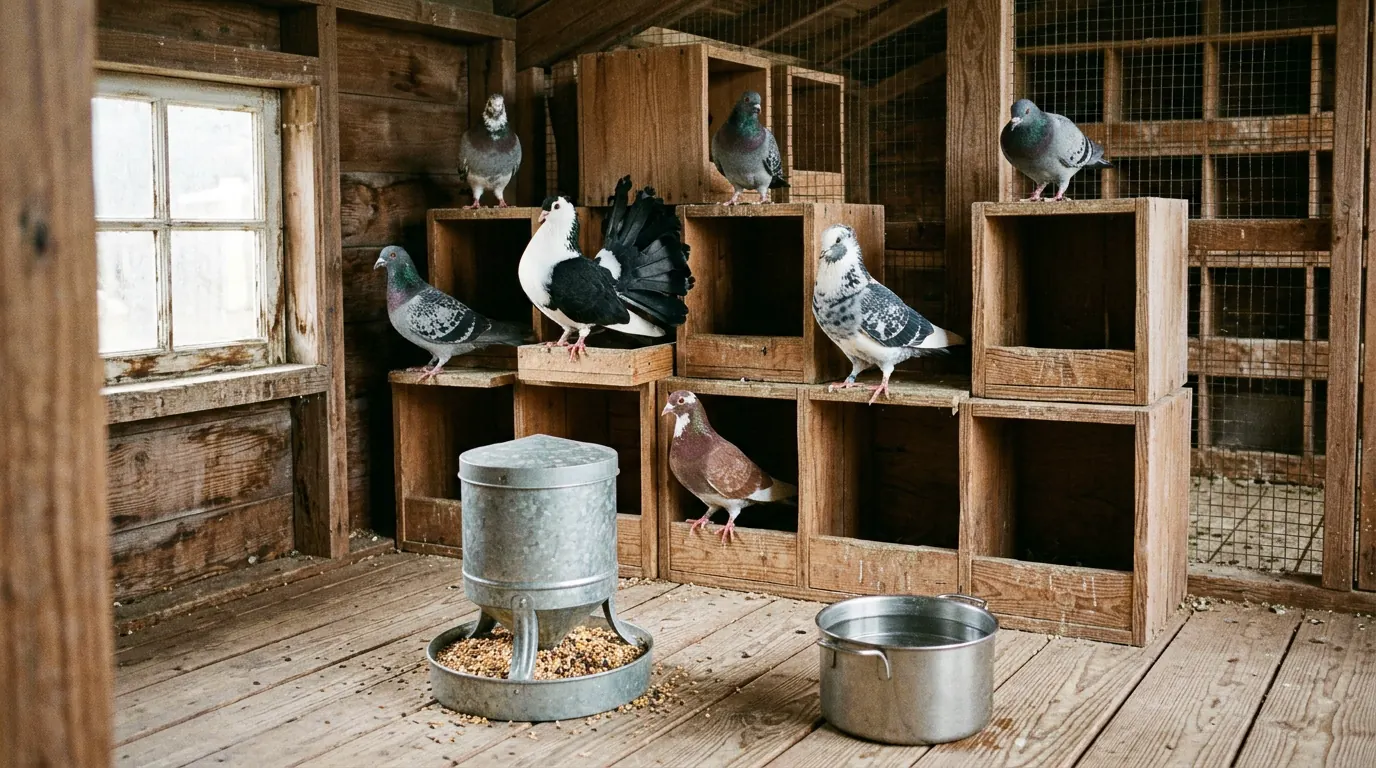
Grit is small, hard, insoluble particles, usually gravel of a suitable size. A pigeon swallows it with its grain, and in the gizzard (the muscular stomach) it grinds the food, because birds have no teeth. Electrolytes are a preparation dissolved in water. They replace sodium, potassium, chlorides and other minerals, plus fluids lost in heat, during illness, after transport or during molt. Both products help, but they solve different problems and do not replace each other.
How grit and electrolytes differ
Grit works mechanically in the digestive tract and adds nothing to the blood. Electrolytes work chemically: they enter the body with water and restore the water and mineral balance. You choose grit by the grain and the age of the birds, and electrolytes by the cause of the weakness. We also cover the basics in our guide to grit for chickens and in the article on electrolytes for poultry.
Grit for pigeons: why and how to give it
What grit does in the gizzard
Grain goes to the crop, then to the glandular stomach and the gizzard. The muscular wall of the gizzard squeezes the food, and hard grit particles help break it down. Without grit, grain, especially whole grain, stays longer and is digested worse. The pigeon picks its own amount of grit, so keep it always available in a separate container next to feed and water. With constant access, the bird takes what it needs.
What to choose and what not to give
Grit should be hard, clean and insoluble in water, in a size suited to the bird. Do not give yard sand, building site stones or road gravel, as they can be contaminated with salts, dust or have sharp edges. Ready-made mixes are more convenient, but check the label of every batch. Put the container under cover so the grit stays dry. If your pigeons have access to a run, make sure they do not pick up grit from mud; we describe the rules in the article on a chicken run.
Electrolytes for pigeons: when to give them
Situations when fluids are lost
Electrolytes make sense mainly when a bird loses water and minerals faster than it takes them in. Typical cases are heat or sudden temperature changes, transport, shows, long training flights, diarrhea and the period after illness. A weakened pigeon drinks little, sits with ruffled feathers and may have wet droppings. This picture is a signal to contact a vet (lekarz weterynarii), because the cause can be a disease that needs treatment, and replacing fluids alone is not enough.
Water as the carrier
The preparation dissolves in drinking water, so the bird drinks it like ordinary water. Make the solution fresh, following the leaflet, and do not mix it with other preparations without your vet's knowledge, as some ingredients can bind together. Clean the containers and change the water as often as the solution is used up, before it starts to ferment. Check that additives do not change the taste and put the birds off drinking; we describe this in the article on acidifying drinking water for poultry.
Dose, withdrawal period and the precaution rule
Dose and concentration
Give only as much as your vet or the leaflet recommends. A solution that is too strong can irritate the digestive tract and reduce water intake, and one that is too weak will not work. We do not give doses, because they depend on species, body weight, health and the cause of the weakness. If a bird will not drink the solution, do not force it; tell your vet.
Withdrawal period and records
Some preparations require a withdrawal period, especially when birds are meant for further sale or slaughter. The leaflet or your vet gives the withdrawal period; when in doubt, take the longest period stated. Record the date, product, method of giving and concentration. Veterinary medicine rules are in the Internetowy System Aktów Prawnych (Poland's online legal acts database). Keep record templates and withdrawal dates in your treatment and withdrawal records.
Other feed additives
Vitamins and minerals added to feed can change the need for electrolytes, so do not combine them without a plan. We describe separately what vitamins for chickens are and how birds use them. Tannins in raw materials lower mineral uptake, so take them into account when choosing feed and grit; we discuss their effect in the article on tannins in poultry feed.
A year-round plan
What to do through the year
Keep grit available all the time, and in the molting season make sure it is clean and dry. Prepare electrolytes as needed when a risk appears: a heat forecast, planned transport, a show or signs of weakness. Before the breeding season check your stock, expiry dates and the state of the containers. When you change your feed or grit supplier, note it, because a change of composition can affect water intake and digestion speed.
Keeping records
Note when you gave grit and electrolytes, from which pack, at what concentration and which birds were included. Such a record lets you judge whether drinking and condition improved afterwards, and you can show it to your vet at a visit. In the farm management software you save these entries against the flock and have them at hand at every inspection.
Where to buy and what affects the price
What affects the price
The price of grit depends on the grain size, pack weight, packaging and whether the product is a mix. Electrolytes differ in composition, concentration and pack size, so compare the price per ready-to-use portion or per unit of preparation, not per pack. Check offers with your supplier, a farm shop or a wholesaler, because prices change often.
What to look for in an offer
Check the composition, expiry date, batch number and the stated purpose. A veterinary product should come with a leaflet in Polish. When buying, ask whether the product is intended for the given species, and when in doubt, consult the vet who looks after your flock.
Frequently asked questions
Do pigeons need grit all year round?add
Yes. Grit should always be available, because the bird picks the amount it needs to grind grain. What matters is that it is clean, dry and insoluble in water. Check your stock before the molting and breeding seasons.
What is the difference between grit and electrolytes?add
Grit works mechanically in the gizzard and helps grind food. Electrolytes are a preparation dissolved in water that replaces fluids and minerals the bird has lost. You give the first all the time and the second only when needed.
How do you give electrolytes to pigeons?add
Usually in drinking water, in a solution made fresh and following the leaflet. Your vet sets the dose and length of use. Change the water often enough that the solution does not ferment.
How much grit should you give pigeons?add
We give no numbers, because the amount depends on age, diet and type of grit. The bird should always have grit within reach rather than a measured portion. If you are unsure, ask your vet.
Do electrolytes have a withdrawal period?add
Check the leaflet of the specific product or ask your vet, because the rules depend on the product. For birds meant for further sale, record every use and apply the longest stated withdrawal period.
How much do grit and electrolytes for pigeons cost?add
The price depends on composition, packaging, where you buy and whether the product is veterinary. Prices change often, so check the current offer with your supplier or a farm shop. Compare the price per usable unit.
Sources & resources
- linkChief Veterinary Inspectorate (Główny Inspektorat Weterynarii): gov.pl/web/wetgiw
- linkNational Research Institute of Animal Production (Instytut Zootechniki PIB): izoo.krakow.pl
- linkEFSA: efsa.europa.eu
- linkInternetowy System Aktów Prawnych (Poland's online legal acts database): isap.sejm.gov.pl
Prepared by: DlaFerm Team based on data from the sources listed · Publisher: INSTA-TECH sp. z o.o.
Do you keep pigeons or utility poultry?
The DlaFerm <a href="/program-do-zarzadzania-ferma-drobiu">farm management software</a> lets you record preparations and dates in one place. Create a free farm account or get in touch, and we will show you how it works in practice.
Phone
+48 796 258 151