What do geese eat? Feed, pasture and water
Fresh grass is the base of a goose's diet, topped up with grain or a complete goose feed. Birds need constant access to clean water and to grit, which helps grind food in the muscular stomach (the gizzard). How much feed you give depends on age, weight and season, so we cover feeding rules separately.
verifiedFrom the team that has organised work on poultry farms for years.
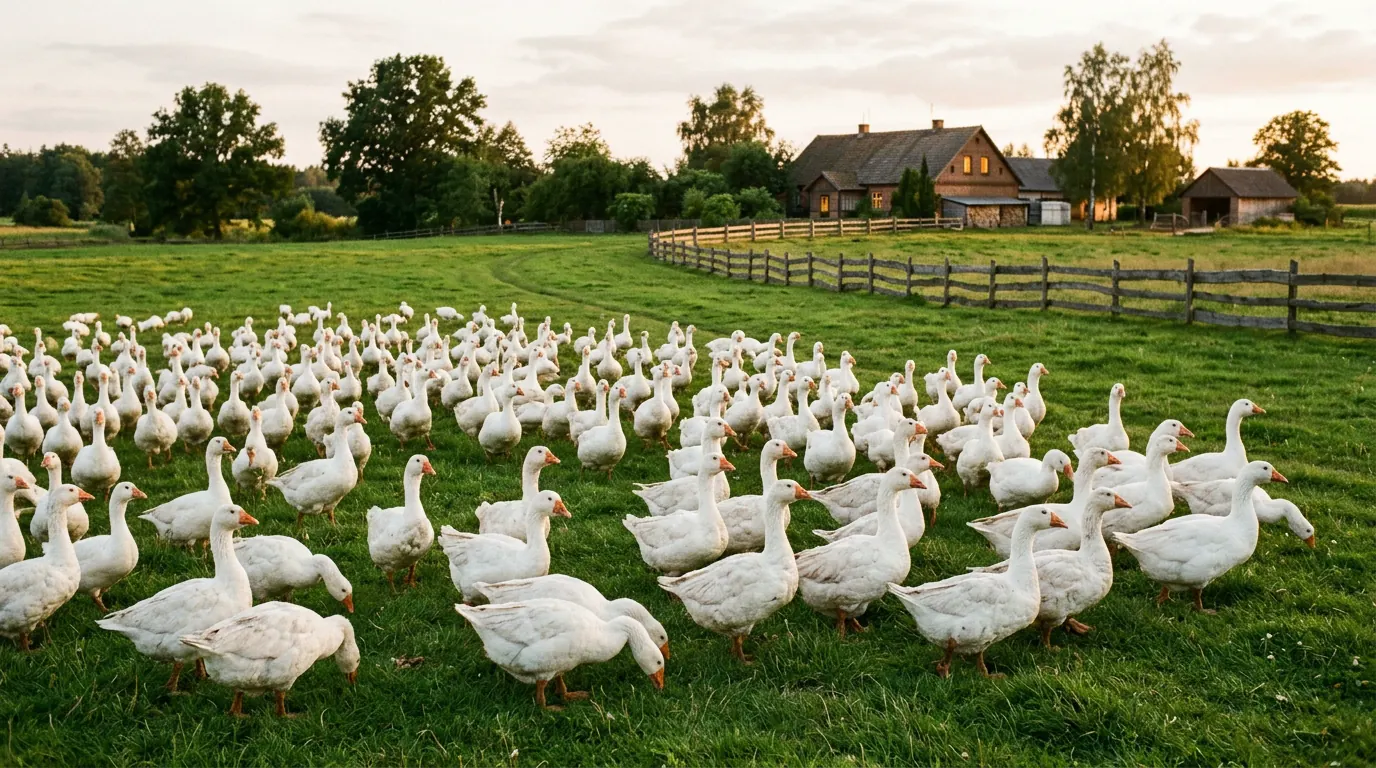
Geese are herbivores. On pasture they pick much of their own grass, while in winter or during fattening you add feed and grain. The base of the diet is green forage, topped up with feed, with clean water available at all times. Exactly how much to give and what depends on age, weight and season. We collected the feeding rules in the guide Feeding geese and ducks.
Why geese do so well on grass
Geese make good use of green forage, so a well-managed pasture can cover a large part of their needs in spring and summer. Grass is cheap, but it is not enough on its own. A bird needs energy from grain, especially when the pasture dries out, turns woody or disappears under snow in winter. Supplementary feed evens out these gaps and helps keep body weight steady all year. Breeds differ in growth rate and tendency to fatten, so the ration depends on your flock. If you are still choosing birds, read about goose breeds.
Feed for geese: ready-made or home-mixed
Complete feed and mixes
Ready-made goose feed has a fixed composition, so you know what each batch contains. A home mix of cereal grain and protein additives is cheaper to buy, but someone has to calculate its composition and keep protein and minerals in balance. You can read more about the differences in home-mixed vs ready-made feed. Do not replace goose feed with broiler or chicken feed. Those feeds have different requirements and composition, and geese react to them differently than chickens do. For feed for backyard broilers, see broiler feed on the farm.
Grain as a supplement, not the base
Cereal grain gives a lot of energy, so too much of it leads to fattening and poorer condition. Give it as a supplement, especially in winter, in the period before slaughter or when pasture is poor. Grain must be dry, clean and free of mold. Damp grain, or grain packed down in a sack, spoils quickly and can cause health problems. Store it in a dry place, away from rodents and moisture.
Pasture and grass in the goose diet
Rotation and stocking density
Geese kept too long on one patch of land eat the grass down to the roots and churn up the soil. Divide the pasture into paddocks and move the birds regularly so the grass can regrow. Too many birds on a small area quickly destroys the sward and raises the risk of infection, because the birds keep walking on their own droppings. Before you let them out, check that the pasture has no poisonous plants and no standing water with waste in it.
Young geese
Young geese should not go out to pasture from their first days. At the start they need a special starter feed and a warm, dry place. Introduce fresh grass gradually and watch whether the goslings eat and stay active. Agree the exact timing and method of the switch to green forage with your vet, because it depends on age, breed and conditions on your farm.
Winter and lack of grass
In winter, or after long rain, grass stops growing and the pasture turns to mud. Then you need to feed geese complete feed and grain in a dry place, with access to water. The birds eat more feed at this time. Keep an eye on it, because too little or too much shows straight away in body weight and flock condition.
Water and grit in goose feeding
Water without breaks
Geese need constant access to clean water. They like to dip their bills and drink from a larger container, and they rinse their nostrils and eyes in the water. Choose drinkers so that water does not freeze in winter and does not get fouled by droppings. Clean the containers regularly and check that the water has no bad smell or cloudiness. Too little water quickly lowers appetite and affects feed intake.
Grit for the gizzard
Geese have no teeth, so they break food down in the muscular stomach with the help of small stones. Grit of a suitable size should always be available, especially when the birds eat whole grain or a lot of grass. Without it digestion weakens and feed is used less well. Buy grit from a reliable supplier and offer it separately, in a spot where the birds can reach it freely.
What to avoid when feeding geese
Moldy feed and poisonous plants
Moldy feed, damp litter and dirty water raise the risk of disease, including bacterial infections. One of the most dangerous threats in poultry keeping is salmonella, which can come from contaminated feed and water. We describe its symptoms and prevention in Salmonella in geese. If you see a sudden loss of appetite, diarrhea or deaths, do not wait. Contact your vet, who will decide on tests and treatment. Only a vet chooses the medicine and the dose.
Parasites and diet
Intestinal worms weaken birds, reduce feed use and lower weight gain. Diet alone is therefore not enough, and the flock needs regular checks. You can read about this problem and how to deal with it in Worms in geese. Carry out any deworming as your vet advises and note it in your records. Observe the withdrawal period before selling or slaughtering birds, because without it the meat may contain drug residues.
How to record feeding and costs in a goose flock
Feed and pasture records
Write down how much feed and grain you give, from which sack or batch, what the weather was like and which part of the pasture the flock was on. That makes it easy to spot that appetite drops after rain, or that one batch of feed performs worse. Keeping such records in a program for duck and goose farms makes it easier to compare cycles and draw conclusions quickly.
Feed cost and profitability
Feed cost depends on the prices of grain and protein additives, and on how much grass you can use from the pasture. Check current prices with feed suppliers, agricultural wholesalers and grain market quotes. We do not give them, because they change often. Work out feed cost per bird and compare it with the price of birds in that cycle. For more on what drives the financial result, see Profitability of goose farming.
Frequently asked questions
What do geese eat on pasture?add
On pasture geese eat mainly fresh grass and other green plants. When the grass is poor or dried out, you feed them complete feed or grain. The pasture must be free of poisonous plants and contamination.
Can you feed geese only grain?add
Feeding geese on grain alone is not recommended. Grain gives a lot of energy but few of the nutrients needed for proper growth and condition. Complete feed or a balanced mix is safer. Agree the composition with your vet or a feed adviser.
Do geese need water to swim in?add
Geese need water to drink and to rinse their nostrils and eyes, but they do not need a large pond. A container where the bird can dip its bill is enough. The water must be clean and changed regularly.
What should I feed young geese?add
Young geese need a special starter feed made for their age, with the right protein content. Introduce green forage only after the early growth period, and do it gradually. Agree the exact plan with your vet, because it depends on breed and conditions on your farm.
How much feed does one goose eat?add
Feed intake depends on age, body weight, breed, temperature and how much grass the bird eats on pasture. We give no single figure here, because without context it would mislead. We describe the feeding rules and how to calculate them in the guide Feeding geese and ducks.
Sources & resources
- linkMain Veterinary Inspectorate (Główny Inspektorat Weterynarii) — gov.pl/web/wetgiw
- linkMinistry of Agriculture and Rural Development (Ministerstwo Rolnictwa i Rozwoju Wsi) — gov.pl/web/rolnictwo
- linkNational Research Institute of Animal Production (Instytut Zootechniki PIB) — izoo.krakow.pl
- linkEFSA — efsa.europa.eu
- linkInternet System of Legal Acts (Internetowy System Aktów Prawnych) — isap.sejm.gov.pl
Prepared by: DlaFerm Team based on data from the sources listed · Publisher: INSTA-TECH sp. z o.o.
Do you keep geese together with ducks?
DlaFerm.pl's <a href="/ewidencja-leczenia-i-karencja-lekow">treatment and withdrawal period records</a> keep treatments, withdrawal periods and the farm entry and exit log in one place. Create a free farm account and see how it works on your own farm.
Phone
+48 796 258 151