Vienna and Widyna pigeons: breeds guide
Vienna pigeons and Widyna pigeons (gołębie wiedeńskie and widyny) are fancy breeds, kept for looks that match the breed standard, not for meat or eggs. We explain how to recognize them, how to set up a loft and what records to keep. Always check the exact breed traits in the current standard from your breeders' club.
verifiedFrom the team that has organised work on poultry farms for years.
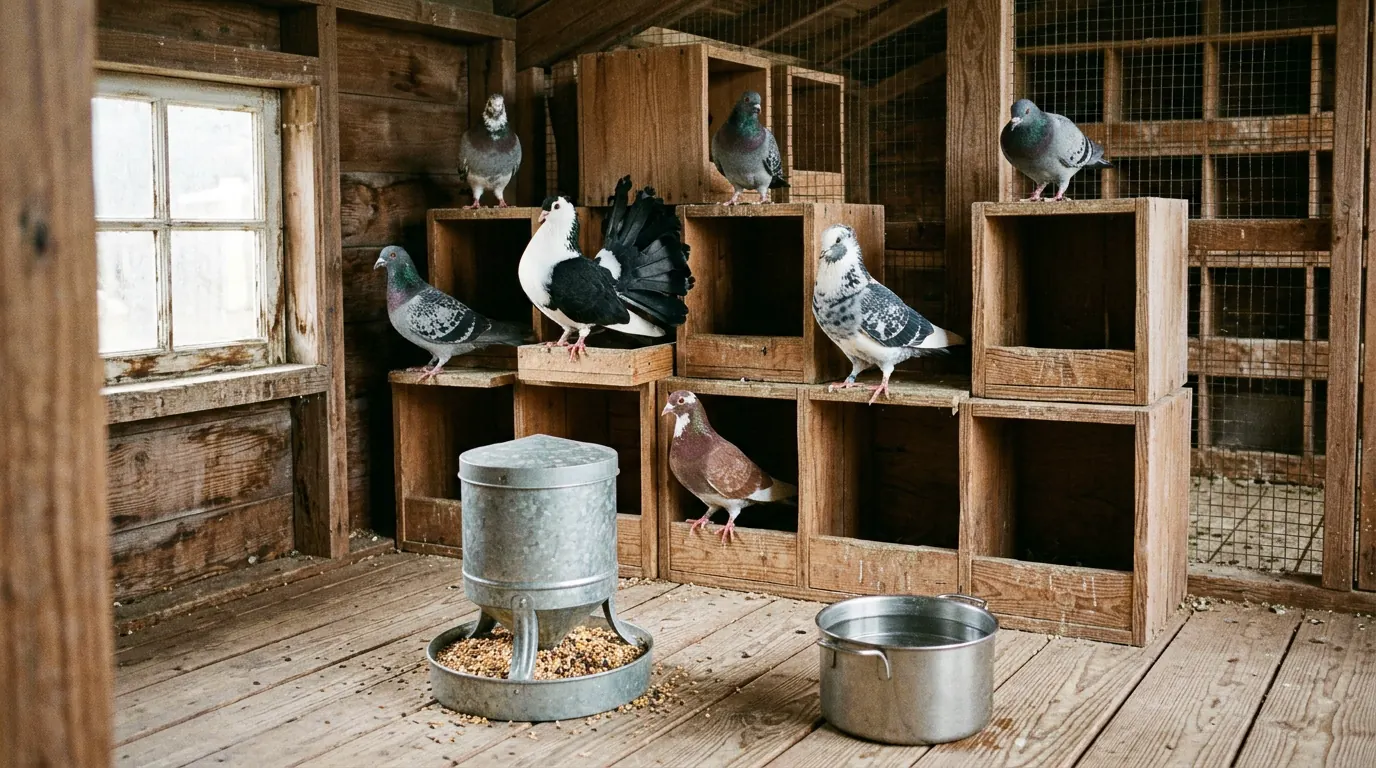
Vienna and Widyna pigeons are fancy breeds, kept mainly for body shape, color and fit to the show standard. They are not utility birds, so their value is set by the breeder, not by meat yield or laying. You judge them against the breed description in the club standard, not against one universal set of traits. Always check exact dimensions, weights and disqualifying faults in the current edition of the standard, because judging rules get updated. Below we cover the rules of keeping, housing and record keeping that apply to both breeds. For a wider look at ornamental birds, see fancy pigeons and pigeon breeds.
Where the names come from and how the breeds differ
The name "Vienna" points to the city of Vienna, which is tied to the history of this group of pigeons. "Widyna" is the name Polish breeders use for a separate breed. The differences come mainly from the standard: a different build, different color and different expectations from judges at shows. When you buy, do not rely on the name in an ad alone. Ask for a pedigree or confirmation of breed membership from a breeders' club, and compare the bird with the current standard. No paperwork at all for birds sold as purebred is a warning sign.
How to judge a bird against the standard
Shape and build
The standard describes the wanted body build, the proportions of head, neck and wings, and the bird's stance. Look at the pigeon from the side and from the front, in a calm position, without tension. A bird with a clearly different shape will not meet show requirements, even if its color is right. Before you start selecting, make a list of traits from the standard and tick them off for each bird separately. That list also helps when you talk with a judge or another breeder.
Color and plumage
Color is one of the most often judged traits. The standard sets the shades, the color pattern and the condition of the feathers. Watch for clean plumage, because dirty or damaged feathers lower the score whatever the shape. Molting, the replacement of feathers, changes how the bird looks for a while, so judge it after molting ends. Differences in shade between varieties of the same breed can be subtle and need comparison with a live bird, not just a photo.
A loft for fancy breeds
Space and ventilation
The loft should be dry, airy and free of drafts. Damp and stale air favor respiratory disease and also spoil the feathers. When you plan the loft, provide ventilation that works without drafts over the birds' heads, and make the floor easy to clean. Set the stocking density so birds can move freely and do not fight over perches. You will find exact space norms for a given breed in the standard or from a club adviser.
Nests and nest bowls
Each pair needs its own place to sit on eggs. Nest bowls should be clean and stable, and the bedding material dry. Before the breeding season, check all nests and replace worn parts. Good loft equipment, including nests, drinkers and feeders, helps keep things tidy and lowers the risk of infection.
Drinkers and feeders
Water must always be available and clean. Clean drinkers regularly, because bacteria and mold grow fast in a damp setting. Place feeders so birds do not trample feed into the litter or foul it with droppings. Remove leftover feed every day. With more birds, it helps to have separate feeders for different groups, so weaker birds are not pushed away from the food.
Feed and water for fancy pigeons
Grain and mixes
Fancy pigeons are usually fed grain mixes made for pigeons. The mix should suit the bird's age and the breeding and molting seasons. While birds sit on eggs and feed squabs, their need for nutrients rises. Change the diet gradually, because a sudden feed change can upset digestion. Agree the exact mix and amounts with a breeder experienced in the breed or with a vet.
Clean feeders and drinkers
Dirt in feeders is one of the most common sources of health problems in small lofts. Soiled feed spoils and becomes unpleasant for the birds. Clean feeders and drinkers on a schedule, not only when they look dirty. Note the dates of cleaning and feed changes in your records. This simple habit makes it easier to explain later why the birds' condition got worse in a given period.
Prevention and treatment
Watching the flock
Daily observation helps you catch problems early. Watch behavior, appetite, feather condition, discharge from eyes and nostrils, and breathing. A listless bird that keeps away from the rest needs a quick check. Isolate sick birds from healthy ones to limit the spread of disease. Write down every symptom you notice with the date, which makes the talk with your vet easier. Poland's Veterinary Inspection (Główny Inspektorat Weterynarii) notes that pigeons can catch Newcastle disease, which in pigeons is called paramyxovirosis, and can then carry the virus to chicken flocks. So disease surveillance has to take pigeons into account.
Medicine and withdrawal period
A vet always chooses the medicine and the dose, not the keeper on the strength of a forum post. The withdrawal period rule means that after a drug is given, for a set time you may not use products from the treated bird. This also covers eggs, if they are meant for further use. The vet or the product leaflet gives the withdrawal time, so write down what was given and when. We describe keeping such records in the module for treatment and drug withdrawal periods.
Pedigree, shows and records
Pedigrees and shows
A pedigree confirms where a bird comes from and is the base of credible breeding. At shows, judges assess the bird against the standard, and documents help prove its line. Record who each bird came from, which pair it hatched from and what results it won at shows. Such records let you plan matings better and avoid too close a relationship in later generations. If you are starting out, our guide to keeping pigeons helps.
Keeping records
Keep the loft records in one place instead of scattered notes. Enter birds with their ring numbers, hatch dates, pairs, clutch results and health events. This makes it easy to review the flock and to answer questions at an inspection. If you run a loft next to a poultry farm, look at the poultry house records module, which organizes flock records, or the wider poultry farm management software.
Frequently asked questions
What is the difference between Vienna and Widyna pigeons?add
The differences come from the standard of each breed: build, color and what judges expect at a show. The name alone is not enough to judge a bird. Compare the bird with the current breed description from your breeders' club.
Can fancy pigeons be kept with farm poultry?add
It is possible, but it needs separate buildings or at least clearly divided zones. Diseases can pass between species, so apply biosecurity rules. Agree with your vet which solutions suit your farm.
How do I recognize a purebred pigeon?add
Judge the build and color against the description in the standard, then ask for a pedigree or confirmation of breed membership. A bird with no papers can look right, but its origin needs checking. Talk to a judge or a member of the breeders' club.
Do pigeons need to be vaccinated?add
Your vet decides on vaccination, as the vet knows the disease situation in your area and the state of your flock. Do not use any product without advice, even if it is sold without a prescription. Record all treatments.
How do I keep records of treatment and withdrawal periods?add
Write down the name of the product, the date given, the dose set by the vet and the withdrawal time from the vet's instructions. That way you can easily reconstruct the course of treatment at an inspection or when in doubt. You can use the treatment records module in DlaFerm.
Do fancy pigeons have to be reported to a register?add
Rules on reporting poultry keeping are set in legal acts available in ISAP (Poland's Internet System of Legal Acts). Check the current legal state and your duties with the Chief Veterinary Inspectorate (Główny Inspektorat Weterynarii), as requirements can change. Do not rely on outdated information from forums.
Sources & resources
- linkChief Veterinary Inspectorate (Główny Inspektorat Weterynarii) — gov.pl/web/wetgiw
- linkNational Research Institute of Animal Production (Instytut Zootechniki PIB) — izoo.krakow.pl
- linkInternet System of Legal Acts (ISAP) — isap.sejm.gov.pl
Prepared by: DlaFerm Team based on data from the sources listed · Publisher: INSTA-TECH sp. z o.o.
Do you run a loft next to a poultry farm?
Our <a href="/program-do-zarzadzania-ferma-drobiu">poultry farm management software</a> lets you keep flock records and health notes in one place. Create a free farm account in DlaFerm.pl or get in touch, and we will show you how it works in practice.
Phone
+48 796 258 151