Tundra goose: breed and keeping guide
The tundra goose is a northern goose tied to the tundra in the breeding season. The materials behind this guide contain no breed standard and no data on body weight or egg laying, so we describe the principles of keeping geese and you should get figures from breeders and the supervising institutions. We show how to prepare the range, feeding, flock health and records.
verifiedFrom the team that has organised work on poultry farms for years.
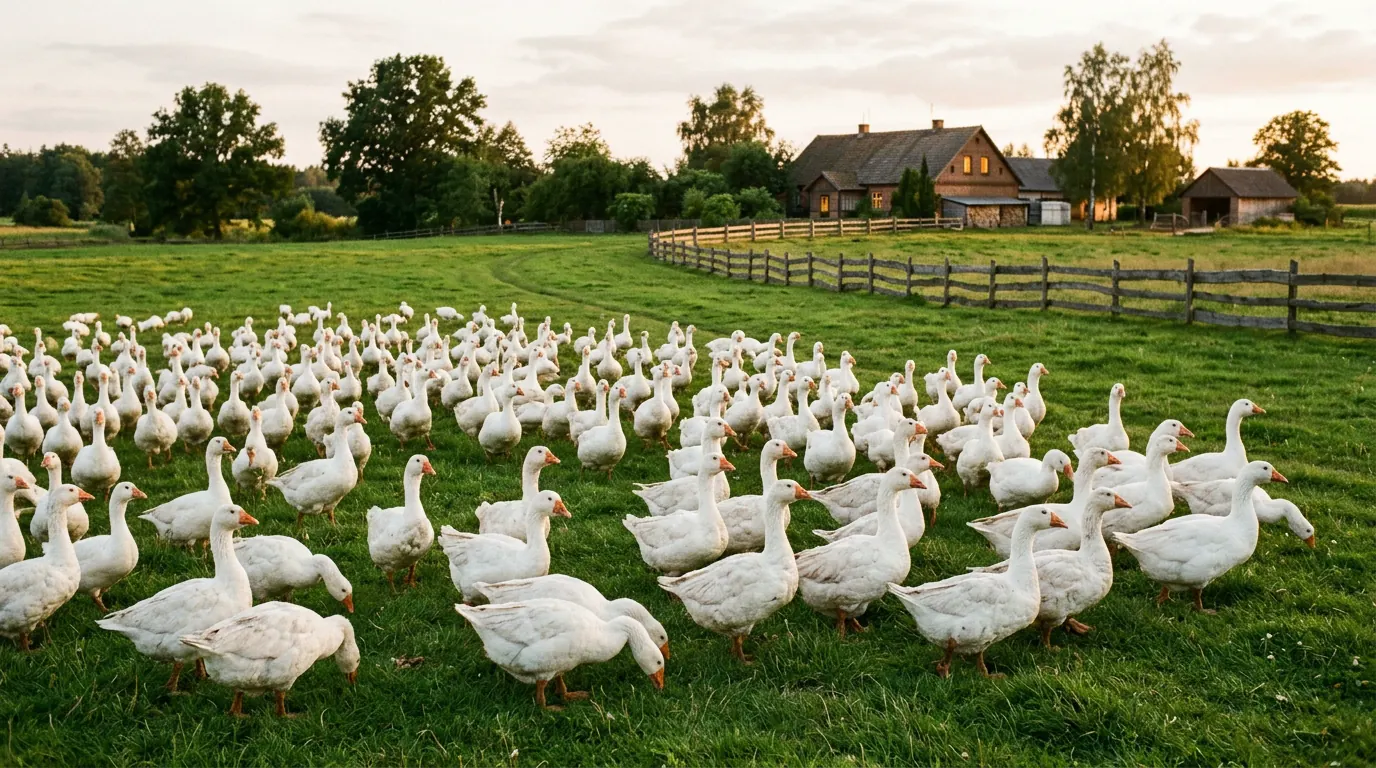
The tundra goose is a northern goose. It spends the breeding season on the tundra, then travels south and feeds on meadows and fields. The name is used both for the wild bird and for groups kept on farms, so before you buy, find out what you are really dealing with. If you are just starting, begin with goose keeping for beginners, then come back for the breed details.
Why the name can mislead
A wild species and a domesticated bird differ in behavior, resistance and needs. The rules on keeping wild birds are not the same as for farm poultry. Before you buy eggs or birds, check the current rules in Poland's Internet System of Legal Acts (ISAP, status as of 22.11.2026) and ask the county veterinary officer (powiatowy lekarz weterynarii) how they apply to you. In practice inspectors expect full documents showing where the flock came from, and missing papers can block the sale or movement of birds.
Where the tundra goose comes from and how to recognize it
A northern goose
The tundra goose grazes mainly on vegetation: grass, moss and the roots of water plants. On the tundra it raises its young in a short, intense breeding season. This biology explains many of the keeping rules below, because a bird shaped by long migrations and short summers does not behave like a goose from a lowland farm. Take this into account when you choose the range.
Outward features
You recognize it by the shape of the bill, the color of the feathers and its body size compared with other geese. Field guides and ornithological keys differ in detail, so compare your birds with several sources and with the documents showing their origin. We give no dimensions or weights here, because none of the materials we have contains reliable data for this group of birds. You can get such figures from a breeder, a poultry breeders' club or the Institute of Animal Science (Instytut Zootechniki PIB).
Housing conditions for the tundra goose
Range and pasture
Geese eat plants, so the range should have a grassy area for grazing and access to water where the bird can immerse itself. A small, trampled area quickly turns into mud and a source of parasites. Plan rotation on the range: after some time, move grazing to a fresh patch of grass. For more on how to run geese, see our guide to goose keeping.
House and microclimate
At night geese need a dry, airy place without drafts at bird height. Litter must be dry and replaced, because damp encourages respiratory disease and skin infections. Match ventilation and temperature to the age and condition of the birds, and ask a vet if you are unsure. A well planned house also makes it easier to check the flock every day.
Feeding and growth of young geese
Pasture and feed
Grass is the base of a goose's diet. Young birds and birds in a period of fast growth get a complete goose feed on top, chosen by a nutrition adviser. We give no amounts, because they depend on age, weight, season and pasture quality. Too much concentrate for birds grazing grass can lead to fattiness and condition problems, so change the ration gradually and watch the flock.
Water and regular checks
Geese use a lot of water and need enough of it to eat freely. Clean the drinkers regularly, because dirty water quickly harms the birds' health. Weighing samples of the flock at set intervals shows a drop in gain earlier than symptoms do. Write results down at once, because after a few weeks it is hard to work out why something changed.
Flock health and biosecurity
Watching the flock
A daily check is the simplest way to spot disease early. Watch for apathy, birds lagging behind the group, changes in breathing, discharge from eyes and nostrils, diarrhea and loss of appetite. Report every deviation to a vet. Do not pick medicines yourself: the vet chooses the drug and the dose, not the keeper from a leaflet.
Treatment, withdrawal and biosecurity
After every medicine there is a withdrawal period that you must observe before slaughter or collecting eggs. Write down the date, the name of the medicine and the end of the withdrawal period, because an inspection may check it. Keep these records in the Treatment and withdrawal module. Rules for keeping disease off the farm, such as entry through a hygiene lock and control of visitors, are covered by the biosecurity plan generator.
Profitability and flock records
Prices and costs
Bird prices depend on origin, age, sex, documents and whether you buy goslings, young birds or a production flock. Quotes change often, so we give no amounts. For current live poultry prices from breeders and what drives them, see how much a chicken, duck or goose costs. Before you decide to buy, work out the cost of feed, range and vet, because they decide the result.
Entry and exit records
Every bird, every animal sold and every visitor should be recorded. A good solution is an entry and exit book with a QR code, which you keep in the QR entry and exit book. You collect full records of the flock, gains and costs in the farm management program, so data on your birds sits in one place.
Frequently asked questions
Is the tundra goose a farm breed?add
The materials behind this guide contain no breed standard and no performance data for tundra geese. The name refers mainly to a wild species, so before you buy, check that the seller can show where the birds came from. You can get details from the Institute of Animal Science (Instytut Zootechniki PIB).
Can you keep tundra geese in Poland?add
It depends on whether the birds are domesticated or wild, and on the rules in force. You can check current legal acts in Poland's Internet System of Legal Acts (ISAP), status as of 22.11.2026. If in doubt, ask the county veterinary officer before you buy birds or eggs.
How do you keep tundra geese on a range?add
They need a grassy area for grazing, water to immerse in and a dry place for the night. Divide the range into paddocks and rotate their use so the grass is not trampled and the soil does not get fouled. Check the birds and the drinkers every day.
How much does a tundra goose cost?add
The price depends on the bird's origin, age, sex and documents. Poultry prices change often, so we give no amounts. Compare current offers from several breeders and check that the seller can show flock documents.
How do you keep treatment records for geese?add
Write down every medicine with the date, the name of the product and the end of the withdrawal period. The vet always chooses the medicine and the dose. You need the records for inspections and when you sell birds, so keep them in one place.
Sources & resources
- linkChief Veterinary Inspectorate (Główny Inspektorat Weterynarii) — gov.pl/web/wetgiw
- linkInstitute of Animal Science (Instytut Zootechniki PIB) — izoo.krakow.pl
- linkInternet System of Legal Acts (Internetowy System Aktów Prawnych) — isap.sejm.gov.pl
- linkEFSA — efsa.europa.eu
Prepared by: DlaFerm Team based on data from the sources listed · Publisher: INSTA-TECH sp. z o.o.
Do you keep geese alongside other poultry?
In the DlaFerm.pl farm management program you keep flock records, entry and exit logs and treatment records in one place. Create a free farm account and see how it works on your farm.
Phone
+48 796 258 151