Toulouse Geese: Breed, Laying and Fattening
The Toulouse is a large, heavy goose breed from France, kept mainly for meat. Hens lay seasonally, mostly in spring, and sit on eggs well. We explain how the breed differs from others, how fattening works and what to watch when you keep a flock.
verifiedFrom the team that has organised work on poultry farms for years.
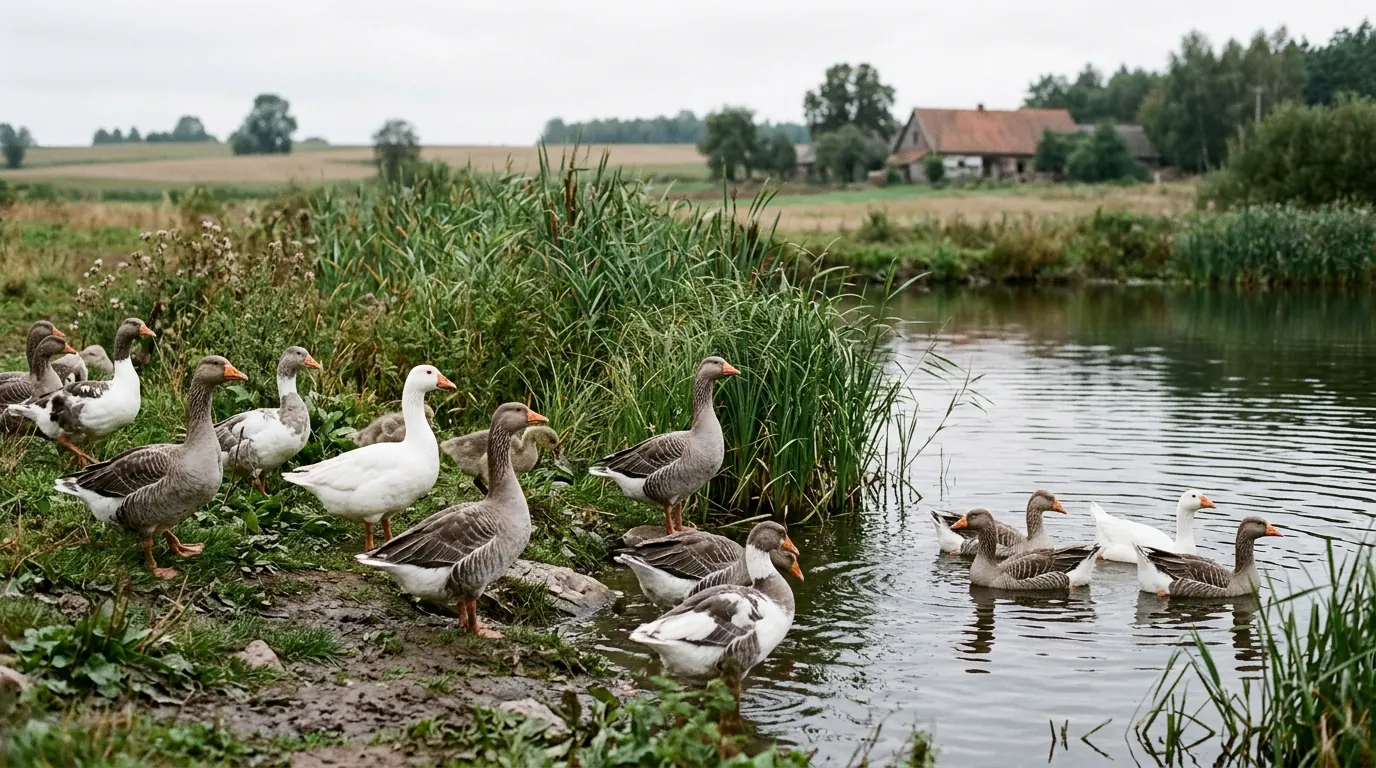
The Toulouse is a large, heavy goose breed from the area around Toulouse in France. It has gray or gray-brown plumage, a massive body and a clear skin fold under the beak and on the belly, which is easy to see in adult birds. Keepers choose it mainly for meat. Laying is seasonal: geese lay mostly in spring. You will find other breeds in our article on goose breeds, and we compare the Toulouse with a smaller breed under the Owsiana goose.
Why this breed needs longer planning
The Toulouse grows more slowly than breeds known for fast fattening, and it reaches sexual maturity late. For you, that means a longer production cycle, more space and feed, and more work with the flock. Before you buy goslings, work out the cost of keeping them for the whole cycle. Agree the collection date and weight with the meat buyer too, because profit depends on them. Before the birds arrive, have a feeding plan and a record system ready.
Toulouse breed traits
Build and plumage
The Toulouse has a deep, broad body and a short neck compared with lighter breeds. Plumage is usually gray with shades of brown, and the color can differ between birds even in the same batch. The skin fold under the beak and on the belly is a breed trait, but its size depends on the age and condition of the bird. When you assess a flock, do not rely on this one sign. Look at the whole build and the body weight for the age.
How to tell a gander from a goose
Ganders are usually larger and heavier than females, but in young birds the difference is often small. The surest way to tell sex is once the birds mature, by voice and behavior in the mating season. So record the sex in your flock register only after you confirm it, and do not assume it when you buy goslings. This makes it easier to plan breeding pairs and sales later.
Laying and hatching
The laying season
Toulouse geese lay mostly in spring. How much they lay depends on the breeding line, the age of the birds, housing and feeding. The best way to find the number of eggs per female per season is to check data for your specific line, or publications of the Institute of Animal Science (Instytut Zootechniki PIB), which researches the genetic resources of poultry and cattle. Do not treat the results of one season as the norm for the whole flock. Record laying through the whole season, because only such data lets you judge your flock.
Hatching and goslings
Toulouse geese are good broody hens and often sit on eggs themselves. Use this, because natural hatching saves you work with incubation. If you need a set number of goslings by a set date, order them from a reliable poultry hatchery. When you buy goslings, ask about the origin of the flock, vaccinations and health check results. The first days after hatching are when feeding mistakes are easiest to make, so have a start plan ready.
Fattening Toulouse geese
Feed and pasture
Geese make good use of pasture. Their diet rests largely on grass and roughage, topped up with grain in the final stage of fattening. Feeding norms depend on age, body weight and the aim of production. Before you set a ration, check the guidance on feeding geese and ducks and talk it over with a feeding adviser. Record changes in feed composition, so you can later link weight gain to feed cost.
Fattening time and checking results
Fattening time depends on the breed, age at slaughter, feeding method and housing, so there is no single cycle length. Weigh the birds at regular intervals and compare with your own earlier batches. The measure of efficiency is feed used per kilogram of gain. FCR and EPEF indicators help you see whether fattening is on plan, and it pays to analyze deviations before the next batch.
Housing, run and flock health
Housing and run
Geese need a dry, airy building without drafts, and litter that does not cake or hold moisture. Access to water matters for feather hygiene and eye health. We describe building and run requirements in our article on housing requirements for geese. Fence the run so birds have no contact with wild birds or with standing water, where pathogens can build up.
Diseases and prevention
Two groups of problems worth knowing in geese are bacterial diseases and parasites. We cover the risk of Salmonella infection in the article Salmonella in geese. If you suspect disease, call a vet, because the vet chooses the medicine and the dose. Keep to the withdrawal period rule: you must not sell meat or eggs before the withdrawal period ends, and you must record every treatment. A farm management program keeps treatment records in one place.
A goose keeper's duties
Registration and notifications
A poultry keeper has registration and notification duties toward the county vet (powiatowy lekarz weterynarii) and the animal identification system. Exact deadlines and the scope of notifications come from regulations that change over time. You can find the current text of the law in ISAP, Poland's online legal acts system (Internetowy System Aktów Prawnych). For explanations about payments and support, see the websites of ARiMR, Poland's Agency for Restructuring and Modernisation of Agriculture. If in doubt, ask your county office before you start a new production cycle.
Flock records
Good records are the basis for inspections and sales. Write down placement dates, the number of birds, the origin of goslings, treatments and weighing results. At an inspection, the Veterinary Inspection (Inspekcja Weterynaryjna) will expect clear records, and a meat buyer may ask for data on the origin of the batch. It is easiest to keep records up to date, without copying notes afterwards. A farm management program collects flock data in one place.
Frequently asked questions
Are Toulouse geese good for fattening?add
Yes. The Toulouse is a utility breed kept mainly for meat. Fattening takes a longer cycle than with fast-growing breeds. Before you decide, compare the cost of keeping the birds with the purchase price in your area.
How many eggs does a Toulouse goose lay?add
Laying is seasonal and depends on the breeding line, the age of the bird and housing. Check exact data for your line with the breeder or in publications of the Institute of Animal Science (Instytut Zootechniki PIB). Record laying through the whole season to judge your own flock.
Where can I buy Toulouse goslings?add
Goslings are usually bought from poultry hatcheries that offer geese. Before you buy, ask about the origin of the flock, health test results and transport conditions. Order goslings early, because hatcheries plan hatches in advance.
Can Toulouse geese hatch eggs on their own?add
Yes. Geese of this breed are good broody hens and often sit on eggs themselves. Natural hatching needs a quiet, shaded spot and as little disturbance of the bird as possible. If you need goslings by a set date, it is better to order them from a hatchery.
How long does it take to fatten a Toulouse goose?add
Fattening time depends on age at slaughter, feeding, housing and the body weight you need. There is no single cycle length. Track weight gain and feed use in your records, and talk the plan over with an adviser if you are unsure.
Can I choose the medicine for my geese myself?add
No. A vet always chooses the medicine and the dose, because the vet knows the state of the flock. Remember the withdrawal period, the time after which you must not sell meat or eggs. Record every treatment.
Sources & resources
- linkChief Veterinary Inspectorate (Główny Inspektorat Weterynarii) — gov.pl/web/wetgiw
- linkInstitute of Animal Science PIB (Instytut Zootechniki PIB) — izoo.krakow.pl
- linkInternet System of Legal Acts (ISAP) — isap.sejm.gov.pl
- linkMinistry of Agriculture and Rural Development — gov.pl/web/rolnictwo
Prepared by: DlaFerm Team based on data from the sources listed · Publisher: INSTA-TECH sp. z o.o.
Do you keep geese alongside other poultry?
The DlaFerm farm management program keeps flock records, treatments and performance indicators in one place. Create a free farm account and see how it looks with your own data.
Phone
+48 796 258 151