Poultry body weight: chickens, turkeys, geese and ducks
For the Ross broiler, the handbook gives weight points from 44 g to over 1530 g. For turkeys, geese and ducks, our sources contain no verified tables. We show how to read the data, how to weigh a flock and how to set your own reference weight.
verifiedFrom the team that has organised work on poultry farms for years.
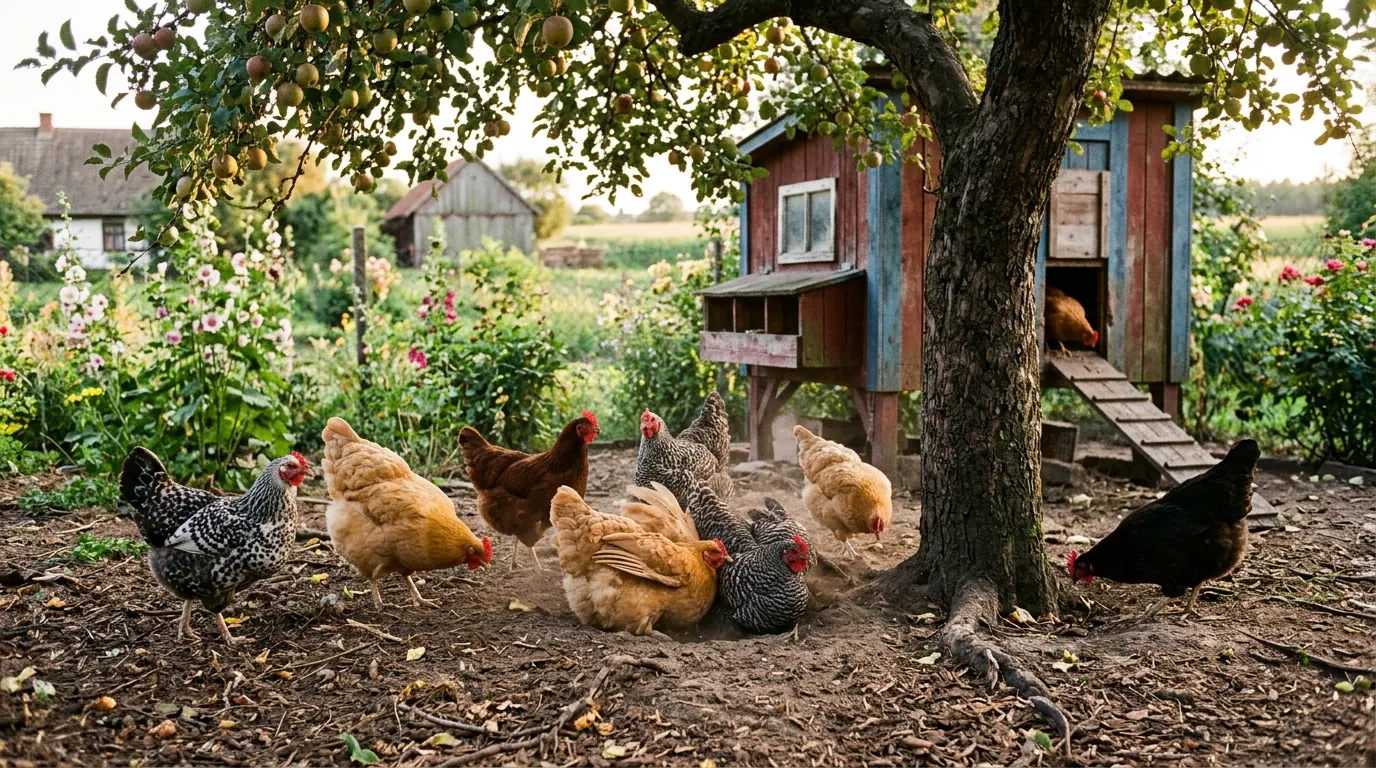
The short answer: there is no single weight for a turkey, goose, chicken or duck. Body weight depends on the line or breed, sex, age, and whether the bird is a broiler or a laying breeder. So the DlaFerm.pl chart has no numbers that are missing from verified sources. For the Ross broiler we give reference points from Aviagen handbooks. For turkeys, geese and ducks we show how to set your own reference weight. The question "how much does a chicken weigh" often means two different birds: a laying hen and a meat chicken, the broiler.
Why one number is not enough
Body weight is the result of genetics, feed, temperature and housing conditions. The Ross Broiler Management Handbook 2025 links body weight to house temperature: from 30 °C for birds weighing 44 g (0.10 lb) to 20 °C for birds over 1530 g (3.37 lb). The table shows that requirements change as the flock ages, so always compare weight with age. We list broiler weight over time in the broiler weight and gain table, and cover the first days in body weight at day 7.
Broiler weight according to Ross
Reference points from the table
In its temperature table, Ross gives body weight for successive stages: 44 g (0.10 lb), 100 g (0.22 lb), 180 g (0.40 lb), 290 g (0.64 lb), 425 g (0.94 lb), 590 g (1.30 lb), 790 g (1.74 lb), 1015 g (2.24 lb), 1260 g (2.78 lb) and over 1530 g (3.37 lb). We also give pounds, because some keepers count in lb. The table recommends a different ambient temperature for each weight, so weight and environment go together. Use these values as points to compare your own flock against, not as a target that must match to the gram.
Weighing on the farm
In its performance objectives tables, Ross gives weight "on farm". This is weight including the feed in the digestive tract. A bird weighed after a big meal will be heavier than one weighed in the morning, so compare results from the same time of day. At every weighing, note the age, the number of birds and the time. Ross also notes that table values are rounded, so conversions to other indicators may carry a small error.
Weighing a parent flock
Individual weighing and CV%
With a manual scale, you record the weights of individual birds on a weighing sheet. From the records you calculate the average, the range (highest minus lowest weight) and uniformity. Ross gives the formula: CV% = (standard deviation ÷ average body weight) × 100. You can work out the standard deviation in a spreadsheet or on a scientific calculator. The lower the CV%, the more even the flock. The sheet in the Ross PS handbook has columns for weight in grams and pounds and for the target value, so you can copy it into your own notebook.
Feed and growth rate
Ross nutrition specifications for parent stock are based on an energy value of 2800 kcal/kg. If the energy in your feed is different, the nutrients must be adjusted proportionally, especially digestible lysine. Feed amounts are set by body weight, muscle scoring and egg production, not by the calendar. Ross notes that feed volume lengthens clean-up time and helps keep weight uniform. When you dilute feed, check clean-up time so every bird gets its share. We describe how to set rations in restricted feeding of poultry.
Matching feed to target weight
Three ranges in the Ross 308 specification
The Ross 308 and 308 FF nutrition specifications (2022 edition) split their tables by as-hatched target weight: up to 2.0 kg (4.4 lb), 2.0 to 3.5 kg (4.4–7.7 lb) and over 3.5 kg (7.7 lb). Each range has its own tables with a target live weight. Which table you pick depends on the product (live bird or portions), ingredient prices, age and weight at slaughter, and market requirements, such as skin color. If you keep birds at home, also see feed for broilers on a small farm.
FCR counted from starting weight
The Ross 308 Performance Objectives (2022) state that FCR takes the starting weight at placement into account and does not include mortality. Table values are rounded, so small differences can appear when you convert to other indicators. When you compare your result with the handbook, check that you count mortality and starting weight the same way Ross does. You can calculate production indicators, including FCR and EPEF, as you go in the FCR and EPEF online module.
Turkey, goose and duck: how to set your own weight
Why we give no numbers
The published tables cover broilers and chicken parent stock. We have no verified weight table for turkeys, geese or ducks, so we give no numbers for them. The weight of an adult turkey, goose or duck differs a lot between commercial lines and between sexes. Set your target weight from the standard of the line you keep, and ask a breeding adviser if in doubt. We describe temperature requirements for young turkeys in the turkey temperature table.
Your own weight chart
Do the first weighing on one day, using a random sample of birds, not only the heaviest or the weakest. Record age, sex and time, then repeat the weighing at fixed intervals. Build a simple table from the results: age, average, range and CV%. For geese and ducks it also helps to review feeding in feeding geese and ducks, because diet affects weight as much as age does.
Keeping weighing records on the farm
Where to keep results
Enter weighing results in the flock record, next to the date, age and number of birds. After a few cycles you can see whether weight follows the reference, instead of relying on memory. For broilers, the digital flock card does this and keeps the records in one place with the rest of the flock data.
Rules and requirements
Our sources contain no legal act on weighing poultry, so we cite none. For farm requirements, check current acts in Poland's Internet System of Legal Acts and notices from the Chief Veterinary Inspectorate (Główny Inspektorat Weterynarii). If your records involve treatment or biosecurity, agree their scope with your vet.
Frequently asked questions
How much does a turkey weigh?add
Our sources have no verified turkey weight table, so we give no number. Weight depends on line, sex and age. Set a target from the standard of the line you keep, and compare your own weighings against it, taken at the same time of day.
How much does a goose weigh?add
As with turkeys, we give no number without a source. Goose weight depends on breed, sex and feeding. The breeder usually supplies data for commercial lines, so ask for the standard for the age of your birds.
How much does a chicken weigh?add
It depends whether you mean a laying hen or a broiler. For broilers, Ross gives points from 44 g (0.10 lb) to over 1530 g (3.37 lb) in its temperature table. For parent stock, use the target tables. Set the exact weight for a given day by age and line standard.
How much does a broiler chicken weigh?add
The Ross Broiler Management Handbook 2025 gives weight reference points in its temperature table, not a guaranteed weight for every day. The result on your farm depends on line, feed, temperature and flock health. Compare your average and range with the table, remembering that "on farm" weight includes the contents of the digestive tract.
How much does a duck weigh?add
We have no verified duck table in our sources, so we give no number. Set the weight for your line and age by weighing a random sample of birds at fixed intervals. Check the line standard for duck and goose feeding requirements.
How do you weigh a flock properly?add
Weigh a random sample, not just the heaviest or lightest birds. Record all weights, then calculate the average, range and CV% with this formula: standard deviation divided by the average, times 100. With a manual scale, write results down right away on a sheet.
Sources & resources
- linkRoss Parent Stock Management Handbook 2023 (Interactive)
- linkRoss Broiler Management Handbook 2025
- linkRoss 308 / 308 FF Broiler Nutrition Specifications 2022
- linkRoss 308 / 308 FF Broiler Performance Objectives 2022
- linkRoss 308 Parent Stock Nutrition Specifications 2021
- linkChief Veterinary Inspectorate (Główny Inspektorat Weterynarii) — gov.pl/web/wetgiw
Prepared by: DlaFerm Team based on data from the sources listed · Publisher: INSTA-TECH sp. z o.o.
Running a flock and want all your weights in one place?
The digital broiler flock card in DlaFerm.pl lets you record weighing results together with the date and age of the birds. Create a free farm account or get in touch, and we will show you how it works in practice.
Phone
+48 796 258 151