Veterinary thermometer: how to take a bird's temperature
A veterinary thermometer measures a bird's body temperature, most often through the cloaca, and shows whether the flock is within the normal range. A reading only means something when you know the normal range for the species, measure the same way every time and record the results. Below we explain the measurement step by step and the situations when you need to call a vet.
verifiedFrom the team that has organised work on poultry farms for years.
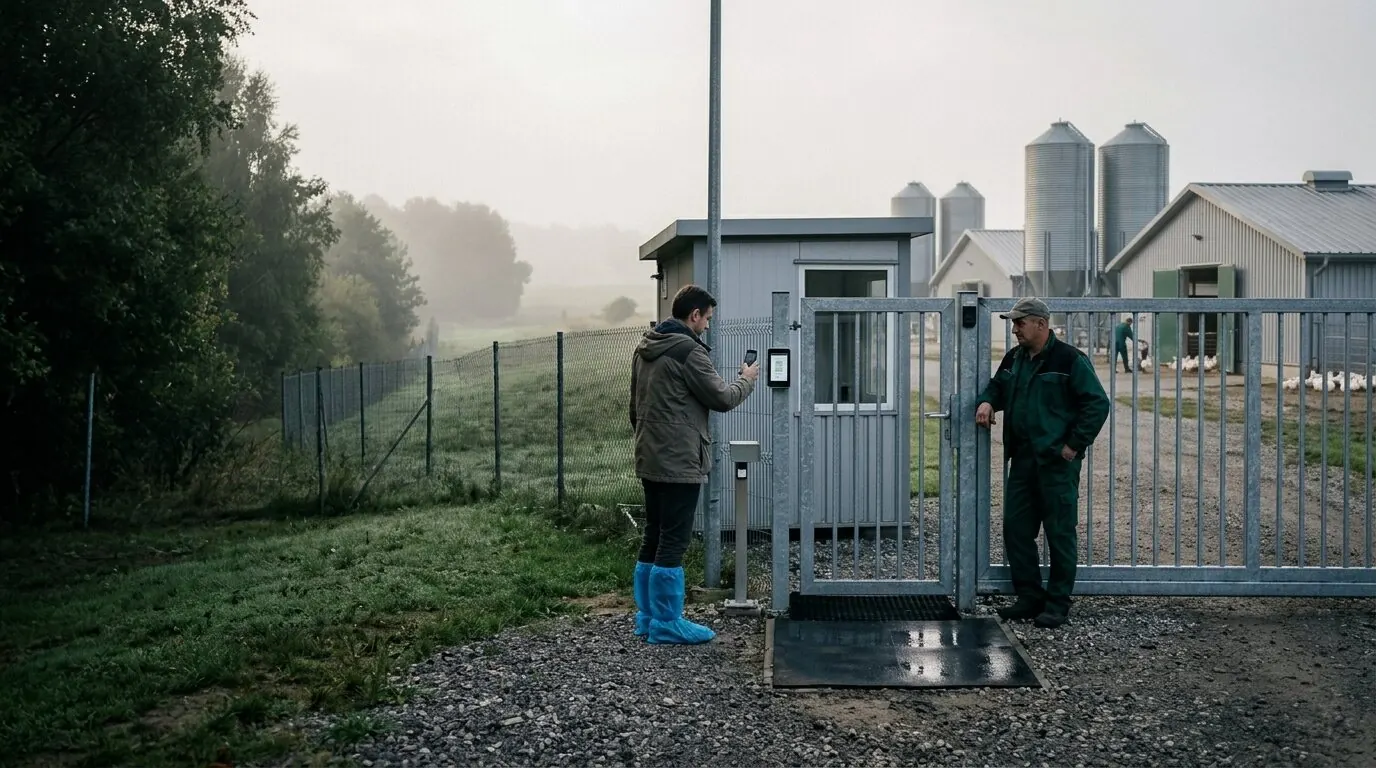
A veterinary thermometer measures a bird's body temperature. In poultry you usually measure through the cloaca: insert the thermometer a few centimeters, wait until the reading settles and write down the result. The number alone does not tell you whether the bird is sick. Only a comparison with the normal value, the picture of the whole flock and the birds' behavior gives you grounds for a decision. Always measure under the same conditions so the results can be compared.
Why measuring makes sense in practice
A sick bird often hides its symptoms for a long time. Lower feed and water intake, listlessness or moving away from the group appear later than a rise in temperature. Regularly measuring a few birds from different parts of the house lets you notice earlier that something is changing. A thermometer does not replace watching the flock or a vet's exam, but it gives you a concrete number to compare with previous days. Readings kept in your records are also easier to discuss with a vet than what you remember.
Normal body temperature and what changes it
Reference value
As a rough guide, the normal body temperature of adult chickens is about 40–42 °C, and the values given differ depending on the source. Turkeys, ducks and geese have different ranges, so do not apply one table to all species. Set the reference value for your flock with your vet or in the manual for the line you keep. Write it in your records so every worker compares results against the same value.
Factors that shift the result
The reading is affected by stress after moving, by catching and holding birds before measuring, and by the temperature in the house. A bird in heat or after a long transport may have a higher result without any disease. So measure at a calm moment, ideally at the same time of day, and do not compare results taken after heavy activity in the house. If a reading falls outside the range, repeat the measurement after a few dozen minutes and note both values along with the conditions.
Measuring step by step
Preparation
Before measuring, check that the thermometer works and is clean and the batteries are charged. Prepare disinfectant, a clean cloth and paper or a phone for notes. Hold the bird firmly but calmly, without pressing on its chest. A second person can hold the wings, which shortens the measurement and reduces stress. If you work alone, move the bird to a place with soft light, away from drafts.
Inserting the thermometer and reading
Lubricate the tip of the thermometer with a small amount of a clean lubricant approved for this purpose. Insert it gently through the cloaca a few centimeters, angled slightly toward the bird's back, and hold it until the reading settles. Do not force the thermometer in. When done, read the result, remove the thermometer and write down the value with the bird's or group's number. The manual for your model gives the reading time, which you should follow.
Hygiene between birds
After each bird, disinfect the tip of the thermometer with a suitable product, and wash your hands after measuring. A thermometer should not carry infection from one bird to another, so in a large flock it is better to keep a stock of disinfectant at the house entrance. It is worth writing the hygiene rules into a biosecurity plan, which helps decide who disinfects equipment and when. For farms that are only building their procedures, the biosecurity plan generator in DlaFerm.pl can help.
House temperature and bird behavior
Humidity changes how warm birds feel
According to the Ross Broiler Management Handbook 2025 (section 2), birds lose heat by evaporating moisture from the respiratory tract and skin. High relative humidity limits this evaporation, so at the same air temperature the bird feels warmer. Low humidity works the other way. So always combine temperature readings in the house with humidity readings. Before you change the temperature with heating, check the minimum ventilation, because swings in humidity are often the result of wrongly set ventilation. You will find more in our text on temperature and humidity in the poultry house.
Watching behavior
The same handbook recommends constantly watching bird behavior as a signal of whether the temperature is right. When birds huddle together, it is too cold. When they spread their wings and pant, they are too hot. It is worth recording these observations together with the thermometer reading. Putting the two side by side lets you judge faster whether the problem is in the bird or in the house. For ventilation problems, our text on fans and ventilation can help.
When to call a vet
Warning signs
Contact your vet when a reading stays outside the normal range over several measurements in a row, when many birds have a high temperature at once, or when it comes with lower feed intake, apathy, diarrhea or sudden mortality. Do not wait if you see several of these signs together. If you suspect an infectious disease, report it as the rules require. In Poland the Veterinary Inspection (Inspekcja Weterynaryjna) carries out checks on large farms, and we describe its scope in our text on farm inspections.
Treatment and withdrawal period
The vet chooses the medicine and dose, not the keeper based on a thermometer reading alone. After every treatment write down the date, the name of the product and the withdrawal period given by the vet or the leaflet. Missing entries are the most common problem in checks of products intended for slaughter. Keep treatment records so that temperature readings and withdrawal end dates are visible in one place. See also treatment and withdrawal records.
Readings in your farm records
What to record for each measurement
For each reading, write the date, time, bird or group number, temperature value, the condition of the house (temperature and humidity at the time) and notes on behavior. Notes kept this way let you see after a few days whether the temperature is rising in one part of the flock or across the whole house. Also compare results with the placement plan and the birds' age, because young groups react differently from adult birds.
How to connect it with a system
You can keep readings in a notebook, but on a larger farm mistakes come easily. In DlaFerm.pl you enter readings in the poultry house records module, and treatments and withdrawal periods in the treatment and withdrawal module. The digital flock card shows the course of the whole batch, and the farm management program collects all entries in one place, which makes talking to your vet easier.
Frequently asked questions
How do you take a chicken's temperature with a veterinary thermometer?add
Insert the thermometer a few centimeters through the cloaca, gently and without force. When the reading settles, write down the result and disinfect the tip before the next bird. The manual for your model gives the reading time.
What is a normal temperature for a chicken?add
As a rough guide, for adult chickens it is about 40–42 °C, depending on the source. Set the reference value for your flock with your vet or in the manual for your line. Other species have different ranges.
Does a bird's temperature change during the day?add
Yes. Stress, activity and heat can raise the result without disease, so measure at the same time of day and in calm conditions. If a reading falls outside the range, repeat it after a few dozen minutes and record both values.
When should you call a vet after taking a temperature?add
Call when a reading stays outside the range over several measurements, when many birds have a high temperature at once, or when it comes with lower feed intake, apathy or sudden mortality. The vet makes the diagnosis and decides on treatment.
Is a thermometer in the poultry house the same as a thermometer for measuring a bird's body?add
No, they measure different things. A room thermometer shows conditions in the house, and a veterinary thermometer shows the bird's body temperature. Record both readings together, because the effect of humidity and ventilation shows only when you compare them.
How do you disinfect a thermometer between birds?add
After each bird, wipe the tip with a disinfectant meant for equipment, following the manufacturer's instructions, then wash your hands. To keep the procedure consistent, write it into the farm's biosecurity plan.
Is a temperature reading enough to decide on treatment?add
No. A reading is one piece of information, alongside watching the flock and a vet's exam. The vet chooses the medicine and dose, and after treatment you record the date and withdrawal period.
Sources & resources
- linkRoss Broiler Management Handbook 2025
- linkRoss 308 / 308 FF Broiler Performance Objectives 2022
- linkChief Veterinary Inspectorate (Główny Inspektorat Weterynarii) — gov.pl/web/wetgiw
- linkInternet System of Legal Acts (Internetowy System Aktów Prawnych) — isap.sejm.gov.pl
Prepared by: DlaFerm Team based on data from the sources listed · Publisher: INSTA-TECH sp. z o.o.
Do you write temperature readings in a notebook?
The treatment and withdrawal module links a measurement result with a treatment entry and the date the withdrawal period ends. Create a free farm account in DlaFerm.pl or leave your contact details, and we will show you how it works for poultry.
Phone
+48 796 258 151