Poultry and pig feed producers in Poland: how to choose
Choose a feed producer by composition, quality documents and reliable deliveries, not only by price per tonne. We show how to compare feed companies for pigs and poultry, what to look for in the specification and batch analysis, and where to find a producer directory. A directory does not replace checking the actual batch.
verifiedFrom the team that has organised work on poultry farms for years.
A good feed producer states the composition and nutritional value of its mixes, documents the quality of every batch and delivers feed with a consistent composition through the whole production cycle. Price per tonne is only one cost. PIC guidelines point out that feed is the largest production cost, so differences in quality and consistency quickly show up in herd or finishing results. Choose a producer based on what you can verify, not only on what the offer promises.
Where to get a list of producers
A feed company directory is a starting point, not a decision. Lists for farmers usually give contact details, feed types and production range, but rarely show how a company handles complaints or keeps delivery dates. Ask every producer the same questions: which mixes it makes for pigs and poultry, whether it can supply a sample, who supervises the recipe and how the complaint procedure works. Write the answers side by side. Two or three companies is a good range to compare, because it lets you set prices, documents and delivery terms against each other.
What to check in the documents and on the label
Composition and nutritional value
The label and product sheet should list the ingredients and the content of crude protein, fat, fiber, calcium and phosphorus, and for complete feed also the energy value. The pig feeding recommendations edited by E.R. Grela describe the nutritional value of feed as dependent on the chemical composition of the raw materials, so the same mix name from two producers can give different results. Ask for the full specification, not just the trade name. Compare protein and energy against the needs of your animal group, not per bag.
Quality documents and batch analysis
Ask for a certificate of analysis for the specific batch, not just a general company certificate. A certificate without a batch number says little about what reaches your silo. Also ask whether the plant is under official control by the Veterinary Inspection (Inspekcja Weterynaryjna), since feed supervision is run by the Chief Veterinary Inspectorate (Główny Inspektorat Weterynarii). You can find the feed rules in ISAP, Poland's online database of legal acts. Legal state as of 22.11.2026: before buying, check the current wording of the rules, and if in doubt, consult your county veterinarian.
Recipe changes
Ask whether the recipe changes when raw material supplies change and whether the producer tells you before delivery. A different protein source or a different share of fibrous ingredients changes the value of the mix, even when the name on the bag stays the same. Ask for written notice of every recipe change and record the date the new batch goes into the silo.
Pig feed: matching the production phase
Feeding phases
PIC guidelines base the feeding program on the production goal and economics, not on one mix for all pigs. In practice that means separate feeds for weaned piglets, for finishers in successive finishing periods, and for pregnant and lactating sows. A producer that offers one product for the whole farm usually cannot match the composition to each age group.
Feed additives
Additives such as probiotics or phytobiotics should be described in the specification with their name and information on compliance with the rules. Discuss doses and the choice of additives with a veterinarian or a nutrition adviser, not just the leaflet. Ask about this before buying, because changing an additive midway through finishing adds a health risk for the herd.
Feed and welfare
Feed affects pig behavior, especially when fiber is short or the composition changes suddenly. IZ PIB (Poland's Institute of Animal Production) publications on welfare link feeding with the condition and behavior of the animals, so introduce recipe changes gradually and note them in the farm records. You can keep these records in the app for pig farmers.
Poultry feed: protein and raw materials
Scale of protein imports
According to KPODR Minikowo (the Kujawsko-Pomorski agricultural advisory center), Poland's demand for high-protein raw materials for feed reaches about 1 million tonnes of protein, and about 80% of it is covered by imports. The data in that publication refer, among others, to 2015. Soybean meal is the best plant source of protein and, according to the same study, makes up about 55–60% of feed mixes. For a farmer, this raises a question: where does the producer get its protein, and how does it react to market price changes?
Origin of GM raw materials
KPODR points out that a large share of the soybean meal in Poland comes from genetically modified plants. Ask the producer whether it offers feed with a defined origin status of raw materials and whether it can document this. Check the rules on GM raw materials in ISAP before every larger purchase, because they affect the availability of mixes.
Ready mix or concentrate
A ready mix is simple to use, but gives you less say over the recipe. A concentrate and premix let you choose grains and protein raw materials yourself, but you need scales, storage and knowledge of composition. When choosing a producer, check whether it offers both forms. The descriptions of poultry feed mixes and of concentrate and premix differ in storage requirements, so compare them separately.
Deliveries, storage and consistency
Dates and batches
Ask about the minimum delivery size, the order lead time and the delivery method: bulk into the silo or in bags. Agree what happens in case of delay, because a break in the middle of a feeding stage forces a change of mix. With a longer lead time, keep a stock for several days of use.
Silo stock control
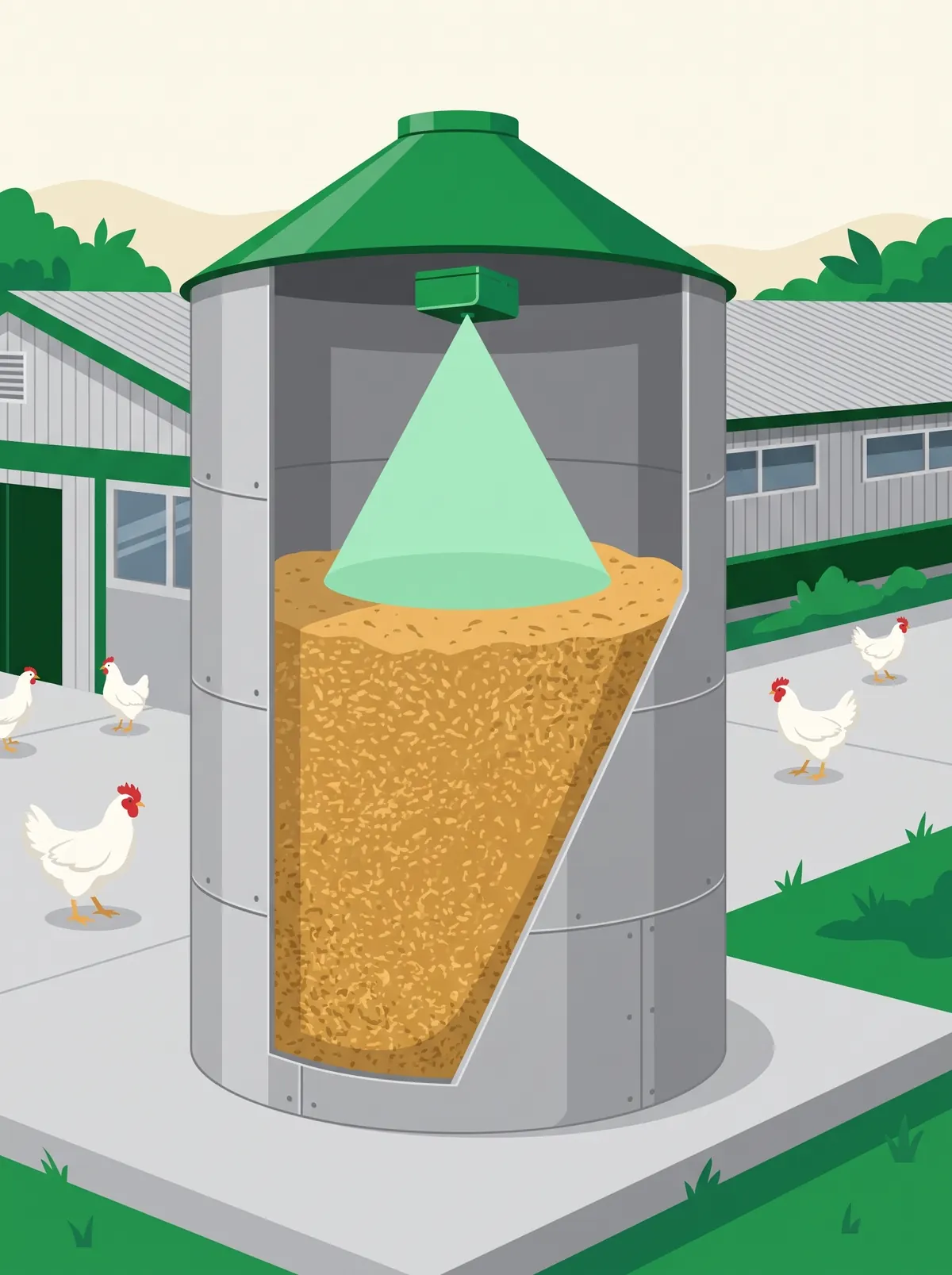
Record the silo level and feed consumption as you go, so you quickly notice a leak, damp feed or an unplanned loss. Feed silo monitoring helps you keep track of feed stocks on the farm. At every delivery, compare the weight with the document and record the batch number.
How to check whether the feed pays off
Income over feed cost
PIC considers income over feed cost one of the most accurate ways to assess a feeding program. You calculate it by subtracting the cost of the feed used by the group from the value of the gain achieved or of the animals sold. Compare results for the same age group and the same line, because different conditions change the results.
FCR and EPEF
The feed conversion ratio (FCR) shows how much feed was used per kilogram of gain. EPEF is the European Production Efficiency Factor, calculated from gain, survival and rearing time. Tracking FCR and EPEF online lets you see whether results got worse after you changed producer or mix. Before drawing a conclusion, compare at least two batches under the same conditions.
Trial on a separate group
Instead of changing the feed for the whole flock or herd at once, run a trial on a separate group through a full feeding stage. Note feed use, gains and health status. Discuss diet changes, especially additives, with a veterinarian or a nutrition adviser.
Where to look for a producer and how to compare offers
Sources of contacts
Company directories for farmers, industry lists and trade fairs give a good first contact. Also use county advisers, agricultural chambers and the opinions of other farmers, remembering that these are opinions, not proof of quality. A direct conversation with the producer shows more than the offer description alone.
Comparison table
For each producer, write down: declared composition, protein and energy content, documents for the batch, minimum delivery, lead time, rules for changing the recipe and net price per tonne. Quotes change often, so we do not rely on recorded amounts; ask for the current offer with every order. We describe the poultry market context in the article on poultry production in Poland and worldwide.
Frequently asked questions
How do I choose a pig feed producer?add
Judge the producer by the mix specification, documents for specific batches and delivery consistency. Ask for a line for each feeding phase, because one mix rarely suits both piglets and finishers. Compare FCR and EPEF after changing supplier, not only the price.
Does a feed producer have to be certified?add
Requirements depend on the type of feed and the customers, so check them in the current rules in ISAP. Ask the producer for quality documents for every batch and about official supervision. A certificate alone does not replace analysis of a specific delivery.
How much does a tonne of pig feed cost?add
The price depends on the type of mix, the feeding phase, the raw materials and whether you buy in bulk or in bags. Quotes change often, so get the current amount from the producer or wholesaler. Compare net prices per tonne for the same composition and the same form of delivery.
How do I check what is in my feed?add
Ask for the full specification and the analysis for the specific batch, not just the trade name. Compare protein and energy content with the needs of your animal group. If in doubt, send a sample to a laboratory and keep the result in the farm records.
Is GM feed banned in Poland?add
The answer depends on the current rules, so check the legal state as of 22.11.2026 in ISAP before a larger purchase. The producer should state clearly the origin status of the raw materials in the specification. If in doubt, consult your county veterinarian.
How often should I change feed producer?add
There is no universal interval. Consider a change when FCR and EPEF get worse or deliveries are unreliable. Before switching to a new feed, run a trial on a separate group, and do not base the decision only on a lower price.
Sources & resources
- linkPIC — PIC Nutrition and Feeding Guidelines (metric)
- linkIZ PIB — Guide to organic pig farming (ed. E.R. Grela)
- linkKPODR Minikowo (PROW 16 Cooperation) — A quality system as a guarantee of good pork
- linkChief Veterinary Inspectorate — gov.pl/web/wetgiw
- linkInternet System of Legal Acts — isap.sejm.gov.pl
Prepared by: DlaFerm Team based on data from the sources listed · Publisher: INSTA-TECH sp. z o.o.
Want to keep track of feed and results on your farm?
The feed silo monitoring module and the FCR and EPEF indicators in DlaFerm.pl let you see stock and consumption in one place. Create a free farm account and check whether the data from your own batches confirm your choice of producer.
Phone
+48 796 258 151