Pigeon diseases: symptoms and treatment
The most common pigeon diseases are coccidiosis, respiratory infections and infections that can pass to people. The signs look like many other illnesses, so diagnosis and the choice of drug belong to a vet. We explain what to watch for in the loft and how to reduce the risk of infection.
verifiedFrom the team that has organised work on poultry farms for years.
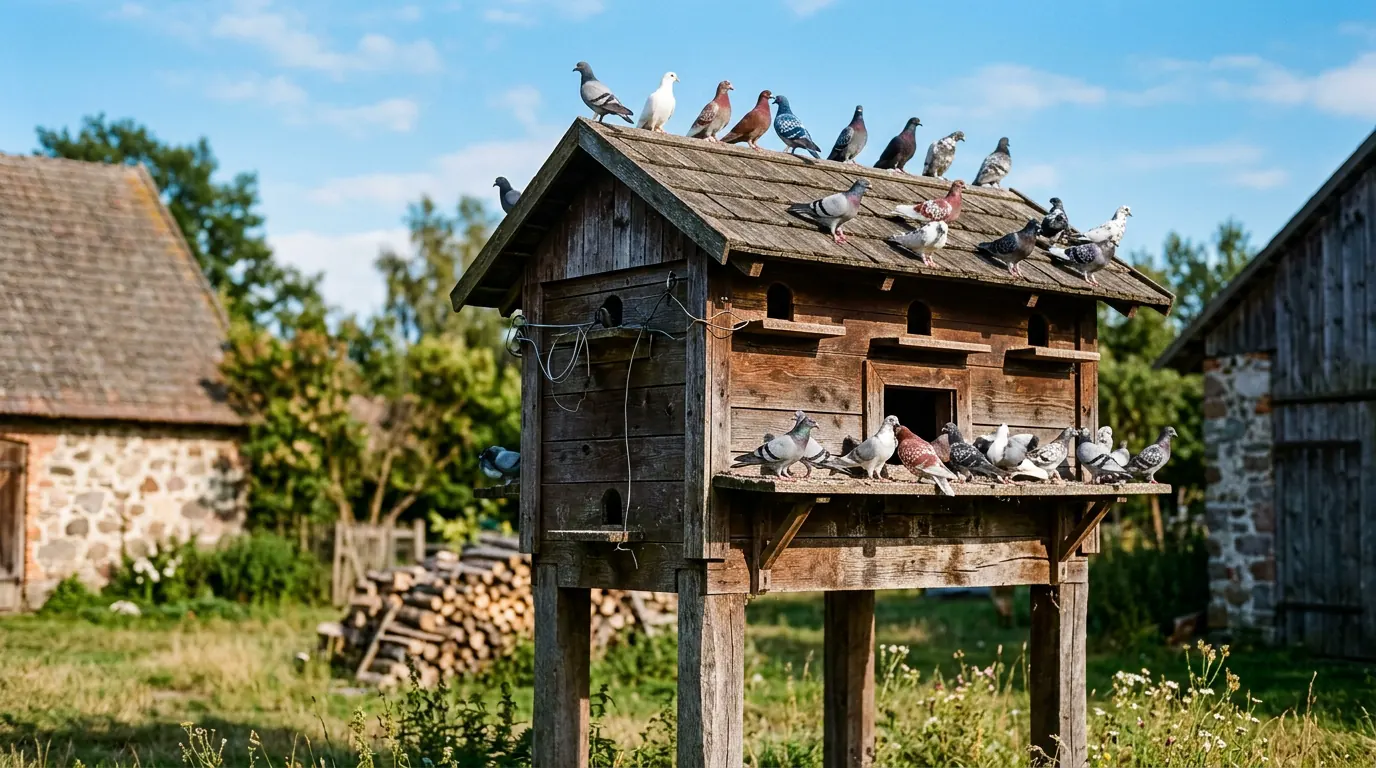
Coccidiosis in pigeons is a parasitic disease of the gut caused by protozoa of the genus Eimeria. It most often hits young birds. The signs are weakness, ruffled feathers, diarrhea and weight loss. Confirming the disease takes a fecal test, and the vet chooses the drug and the dose. The same rule applies to other pigeon diseases: first observe and isolate the sick bird, then see a vet. Do not give an antibiotic left over from an earlier treatment.
Can pigeons spread diseases?
Yes, some pigeon diseases can also be dangerous to people. The ones named most often are psittacosis (avian chlamydiosis), caused by the bacterium Chlamydophila psittaci, and infections with Salmonella bacteria. The risk rises when you clean dry droppings and dust out of the loft. Wear gloves and a mask while you work, and wash your hands afterward. If you suspect an infectious disease, ask your vet whether it must be reported.
Coccidiosis in pigeons: symptoms and course
How coccidiosis develops
Eimeria protozoa live in the gut. A bird becomes infected by swallowing oocysts passed in the droppings of sick birds. Oocysts survive for a long time in damp litter, so the disease spreads fast in a loft where too many birds share a small space. Stress, transport, a change of feed and a wet floor weaken immunity and make the signs worse. The more parasites in the surroundings, the greater the chance that an infection starts to show.
Signs to watch for
Weakness is the first thing you will notice. The bird sits with ruffled feathers, away from the feeder. Later come diarrhea, sometimes with blood, weight loss and a smaller appetite. This picture is easy to confuse with other gut diseases, so do not rely on looks alone. Collect fresh droppings from the litter into a clean container and show them to the vet so a sample can be tested.
Testing and confirmation
Diagnosis rests on a fecal examination under a microscope, done by a vet or a laboratory. Not every case of diarrhea in pigeons is coccidiosis, and bacteria and viruses can cause similar signs. So do not choose a drug by the look of the litter. Keep a record of test results and the course of the disease, because it shows whether the problem keeps coming back. The guide Coccidiosis: is your program working? Flock data and Eimeria species can also help.
Treating coccidiosis and respiratory disease
Antibiotics for respiratory disease
Antibiotics act on bacteria, not on viruses or protozoa. Respiratory disease in pigeons often has mixed causes, so a vet may order a test before choosing a drug. Antibiotics for animals are issued on a veterinary prescription. Giving a leftover drug without a diagnosis leads to resistant bacteria and masks the signs. Write down every treatment with the date and the name of the drug, because it is the basis for further treatment. Treatment records and withdrawal periods give you a convenient way to keep these notes.
Coccidiostats and vaccination
To prevent coccidiosis, farmers use drugs added to feed or water, or vaccination. The choice depends on whether the birds are kept for food, for slaughter or as pets, and on how many birds share one loft. We compare the options in a separate guide: Coccidiostats or vaccination. If the birds are meant for eating, a withdrawal period applies: the time from the last dose of a drug to slaughter. Never shorten it.
Care during illness
A sick bird needs dry litter, clean water and easy access to feed. Electrolytes and grit may support hydration and digestion, but they do not replace treatment. Keep sick birds apart so they do not infect the rest of the flock. If a bird neither eats nor drinks for several hours, or its condition gets worse, call your vet without delay.
Preventing disease in the loft
Litter and moisture
Parasite oocysts and germs from droppings survive in damp bedding. Change the litter regularly and do not let drinkers flood the floor. A well-ventilated loft keeps moisture and dust down. Clean nests, nesting bowls and drinkers separately. When problems are serious, disinfect equipment with a product approved for use in poultry keeping, following the maker's instructions.
Biosecurity and new birds
Treat every new pigeon as a possible source of disease. Keep it apart before you let it join the flock, and watch its behavior and droppings. Agree the quarantine period with your vet. Limit visits by outsiders to the loft and change footwear at the door. Write the rules down in a plan that fits your loft. The biosecurity plan generator can help.
Stocking density and stress
Too many birds in a small space raise the risk of infection. Transport, shows and mixing groups weaken immunity, so check bird health closely at those times. Record the number of birds in each room so you can quickly see when it gets too crowded. Note changes in behavior and appetite at once, which helps you catch disease early.
When to report disease to a vet
When to call the vet
Call your vet when several birds lose appetite, get diarrhea or die within a short time. The same goes for sudden deaths with no obvious cause. Do not wait for the situation to clear up by itself. An early visit limits losses and lets you meet any reporting duties on time.
Rules and legal position
Veterinary law sets out the duties to report infectious animal diseases. Check the legal position as of 22.11.2026 in Poland's online legal acts database (Internetowy System Aktów Prawnych) and on the website of the Chief Veterinary Inspectorate (Główny Inspektorat Weterynarii), because lists of diseases and rules get updated. In practice, the inspectorates expect a keeper to report a suspected infectious disease quickly, even before it is confirmed. We list the sources at the bottom of the page.
Zoonoses and handling birds
Psittacosis and salmonellosis can pass to people. People with weak immunity, older people and children should avoid cleaning the loft without protection. If you get a fever or cough after contact with the birds, tell your doctor that you keep pigeons. We also describe risks to people in Avian flu and people.
How to keep a flock health record
What to write down
Record the date the signs appeared, the number of sick birds, a description of the droppings, behavior and body weight. Note also when a test was done, which drug the vet advised and when the withdrawal period ends. Such a record lets you judge how well your measures work without guessing. You can keep it in the farm management program, which brings flock data together in one place.
Records of people and bird movements
An entry and exit book with a QR code shows who visited the loft and when. This helps trace contacts if disease appears and helps you keep to biosecurity rules. The entries are also clear to a vet who comes for an inspection. See the details in the description of the QR entry and exit book module.
Frequently asked questions
Can pigeons pass diseases to people?add
Yes, some. The most important is psittacosis, caused by Chlamydophila psittaci, along with infections with Salmonella bacteria. Gloves, a mask and avoiding dry sweeping of droppings reduce the risk. If you get a fever or cough after contact with birds, tell your doctor.
What are the symptoms of coccidiosis in pigeons?add
Most often you see weakness, ruffled feathers, a smaller appetite and diarrhea, sometimes with blood. Birds lose weight and move away from the rest of the flock. A final diagnosis needs a fecal test, because many other diseases cause similar signs.
Can you buy an antibiotic for pigeon respiratory infection without a prescription?add
Antibiotics for animals are issued on a veterinary prescription. The vet sets the drug and the dose and may order a test first. Giving a drug yourself without a diagnosis can make the disease worse and raise bacterial resistance.
How do you treat coccidiosis in pigeons?add
The vet chooses the anticoccidial drug after a fecal test. During treatment, provide dry litter and clean water and isolate sick birds. If the birds are meant for slaughter, keep to the withdrawal period, which is the time since the last dose of the drug.
Does coccidiosis spread to other pigeons?add
Yes. Birds become infected by swallowing oocysts passed in the droppings of sick birds. Shared damp litter and a high stocking density speed the spread, so sick birds must be isolated.
How can you prevent pigeon diseases?add
Dry litter, lower stocking density, quarantine for new birds and fewer visits by outsiders all help. Work out a biosecurity plan together with your vet, fitted to the size and type of your loft.
Sources & resources
- linkChief Veterinary Inspectorate (Główny Inspektorat Weterynarii) — gov.pl/web/wetgiw
- linkNational Research Institute of Animal Production (Instytut Zootechniki PIB) — izoo.krakow.pl
- linkEFSA — efsa.europa.eu
- linkPoland's online legal acts database (Internetowy System Aktów Prawnych) — isap.sejm.gov.pl
Prepared by: DlaFerm Team based on data from the sources listed · Publisher: INSTA-TECH sp. z o.o.
Do you keep a loft alongside other birds?
The Treatment and withdrawal module records drug doses and withdrawal dates in one place. Create a free farm account in DlaFerm.pl or get in touch, and we will show you how it works in practice.
Phone
+48 796 258 151