Peacock turkey: an ornamental breed and how to keep it
The peacock turkey is an ornamental turkey, kept mainly for its looks, for shows and in small hobby flocks. It is not a bird for meat production at farm scale. We explain how it differs from working turkeys, how to house it and what to write down.
verifiedFrom the team that has organised work on poultry farms for years.
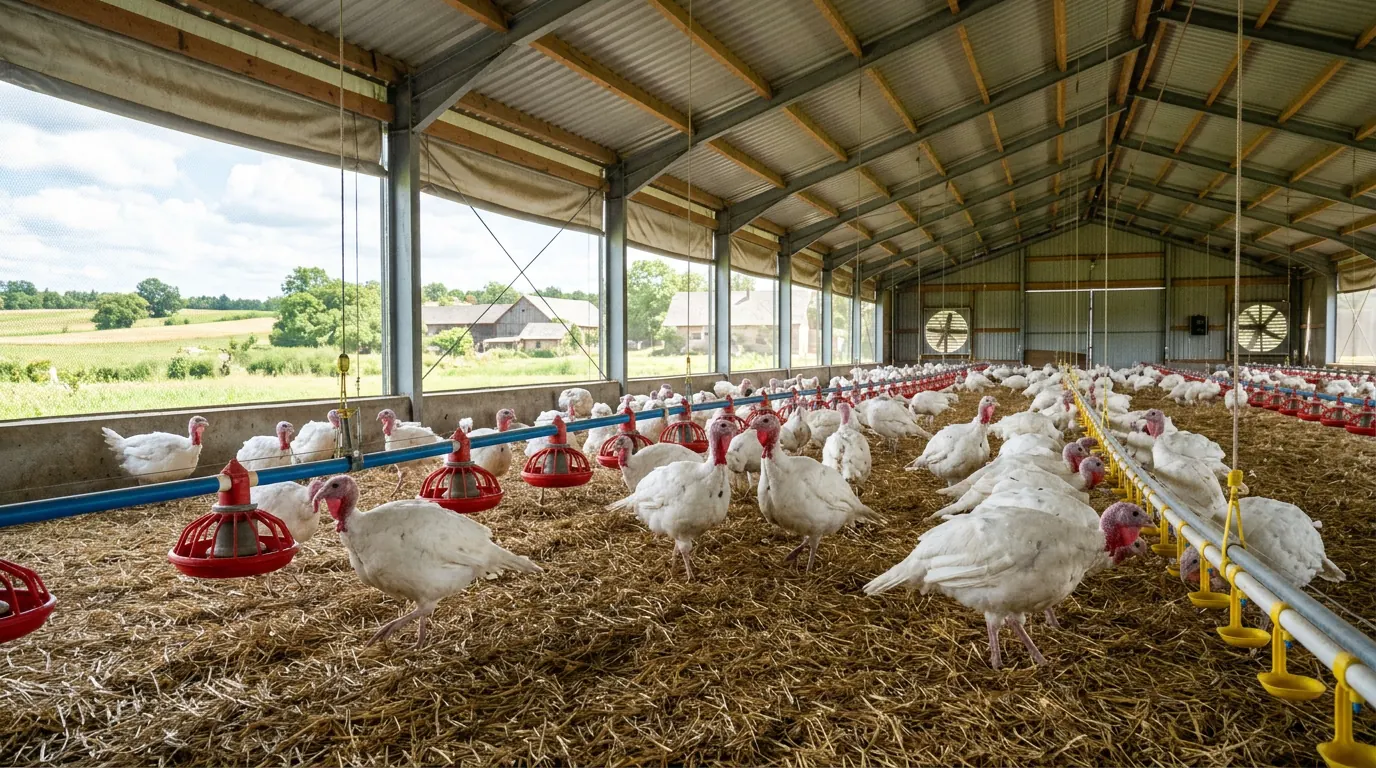
The peacock turkey is an ornamental turkey, kept mainly for its looks. The name comes from the plumage and the outline, which seen from the side recall a peacock. The bird is not meant for meat or egg production at farm scale, so settle your goal before you buy: decoration, shows or keeping a pedigree line. If you want working birds, read about turkey keeping.
Who this breed suits
The peacock turkey suits keepers who want ornamental birds in the yard, at shows or in a small hobby flock. Do not plan on it as a steady income from meat. Before you buy, decide whether you need a pure pedigree line or whether a bird with a similar look is enough. That choice affects the price, which birds you can pair and how much paperwork you must keep.
Looks and plumage
Body shape and tail
Birds of this breed usually have a more compact, decorative build than working turkeys. The tail stands out most: it fans out when the bird displays, and the plumage is rich and multicolored. When you assess a bird, look at feather symmetry, color purity and the skin on the head and neck. Show judges score these traits, so watch for them from the start when you choose young birds. You will find detailed criteria in publications by breeders and institutes, for example Poland's Institute of Animal Science (Instytut Zootechniki PIB).
Color varieties
Varieties differ mainly in feather color. Before you buy, check which variety you are getting and whether the breeder can document where the birds come from. Offspring color depends on genetics, so when you pair birds of different colors, record the parents of every young bird. Without that, it is hard to tell later where a trait comes from.
Temperament and behavior
Behavior in the flock
Turkeys are nervous, alert birds. Ornamental ones can be even more skittish, especially in a new place or at a show. Do not suddenly mix them with unfamiliar birds. Bring new birds in gradually, from a separate pen, and watch for fighting. Males in the breeding season can be aggressive toward people and other birds, so take care when you handle them.
Growth rate and profitability
An ornamental bird is not kept for fast weight gain. Do not work out profitability the way you would for fattening broilers: here what counts is looks, pedigree and any sale of young birds to other breeders. Spread the cost of feed, range and vet over the whole year, not over a single batch. We describe a simple starting point for the math in our article on turkey keeping profitability.
Housing in practice
House and litter
Turkeys need a dry, airy house without drafts, with perches sized for them. Litter must stay dry, because wet litter quickly worsens bird condition and raises the risk of disease. Check it daily and replace it in patches when it cakes. The flock is easier to manage when you log every task in one place, for example in a poultry house log.
Range and fencing
The range fence must be tall and solid, because turkeys readily try to fly over it, and only a well-closed area protects against predators. Provide shade and fresh water, also in hot weather. Move the range from time to time to limit manure and parasites building up on one patch of ground. With more birds, plan range rotation ahead, not only when the grass runs out.
Feeding
Feed must suit the bird's age and condition. Do not give them kitchen scraps or feed made for other species. Always keep clean water available. Change feed gradually and note it in a diary, because a sudden switch to another mix can worsen condition. Agree exact composition and amounts with a vet or a nutrition adviser.
Health and biosecurity
Biosecurity
In a small flock the key is to keep birds away from wild birds, visitors and other people's equipment. Limit entry to the site, use separate footwear and record every visit. For a larger flock, prepare a written plan covering disinfection, isolation of new birds and entry rules. You can get a ready outline of such a plan from our biosecurity plan generator.
Signs that mean you call the vet
A bird that keeps away from the flock, stops eating, has drooping wings, loose droppings or a cough needs a quick consultation. Do not treat it yourself with random products. The vet always chooses the medicine and dose, because the vet knows the situation in your flock. Isolate the sick bird but do not leave it unattended, and write down the first signs with the date.
Withdrawal periods
If a bird was treated, the withdrawal period set by the vet applies. This matters most if you later want to use the bird or its eggs. Record the date of treatment, the product name and the date the withdrawal period ends. Without such records mistakes come easily, especially when several treatments run in the flock at once. Keep them in the treatment and withdrawal module.
Records and entry control
What to record for the flock
For each bird or group, record origin, hatch or purchase date, sex and color, and for breeding birds also the parents. Add vaccination and treatment dates, health events and losses. Such a list lets you answer a buyer or a judge without hunting for notes. Keep it in one program, not in several notebooks, in poultry farm management software.
Entries to the site
Everyone who enters the site should be recorded: the vet, a buyer, a friend visiting, a worker. An electronic entry and exit log makes it easier to trace who was near the birds and when, if a health problem appears. See the solution in the QR entry and exit log.
Related breeds and formalities
Staropolski turkey
The Staropolski turkey (indyk staropolski) is a native Polish breed, long kept on Polish farms. It differs from the ornamental peacock turkey in its purpose. If you want birds with a native pedigree, compare the two breeds and decide whether you care about looks or production. You will find a description of the native breed in our article on the Staropolski turkey.
Rules and registration
Rules for keeping poultry and the paperwork duties are set by regulations that change over time. We describe the legal state as of 22.11.2026. Before you buy, and whenever your flock size changes, check the current acts in ISAP (Internetowy System Aktów Prawnych, Poland's legal acts database) and the requirements on the website of the Chief Veterinary Inspectorate (Główny Inspektorat Weterynarii). In practice, inspectors look at up-to-date flock data and at whether biosecurity rules are followed, so do not put these matters off.
Frequently asked questions
Is the peacock turkey an ornamental or a working breed?add
The peacock turkey is an ornamental breed. It is kept mainly for its looks, for shows and in small hobby flocks. It is not a bird chosen for meat production at farm scale.
How much space does a peacock turkey need?add
The birds need a dry house and a range with cover from rain and sun, and room to move freely. Agree the exact area per bird with a vet or adviser, because it depends on the number of birds and local conditions.
Can ornamental turkeys live with chickens?add
Mixing poultry species takes care. Bring new birds in gradually, watch behavior and give a separate feeder and drinker so weaker birds can reach food. Where size and temperament differ a lot, keep them apart.
How can I tell a healthy peacock turkey?add
A healthy bird is alert, eats and drinks normally, has clean plumage and bright eyes. Drooping wings, keeping away from the flock, loose droppings and coughing are warning signs. If you see them, talk to a vet and do not treat the bird yourself.
Do I need records when I keep ornamental turkeys?add
Yes, it pays to keep them. Record the origin of the birds, purchase dates and health events, and every medicine given with its withdrawal date. This makes selling young birds and flock checks easier. Check the current rules on registration in the legal acts as of 22.11.2026.
How much does a peacock turkey cost?add
The price depends on the line, age, color variety and whether the bird has a documented pedigree. We give no amounts because they change over time. It is best to ask several breeders and check the ads in ornamental poultry clubs.
Sources & resources
- linkChief Veterinary Inspectorate (Główny Inspektorat Weterynarii) — gov.pl/web/wetgiw
- linkInstitute of Animal Science (Instytut Zootechniki PIB) — izoo.krakow.pl
- linkInternet System of Legal Acts (ISAP) — isap.sejm.gov.pl
- linkMinistry of Agriculture and Rural Development — gov.pl/web/rolnictwo
Prepared by: DlaFerm Team based on data from the sources listed · Publisher: INSTA-TECH sp. z o.o.
Do you keep several species or breeds in one place?
Our poultry farm management software lets you record birds, events and costs in one place. Create a free farm account on DlaFerm.pl and see how record keeping works in practice, or get in touch with us.
Phone
+48 796 258 151