Livestock transport: rules, trailers and documents
EU rules cover cattle transport first, and national rules add to them. We explain who is responsible for the journey, which documents and markings must go with the animals, and what to demand from a livestock trailer. Calves get their own section, because they face the strictest age and distance limits.
verifiedFrom the team that has organised work on poultry farms for years.
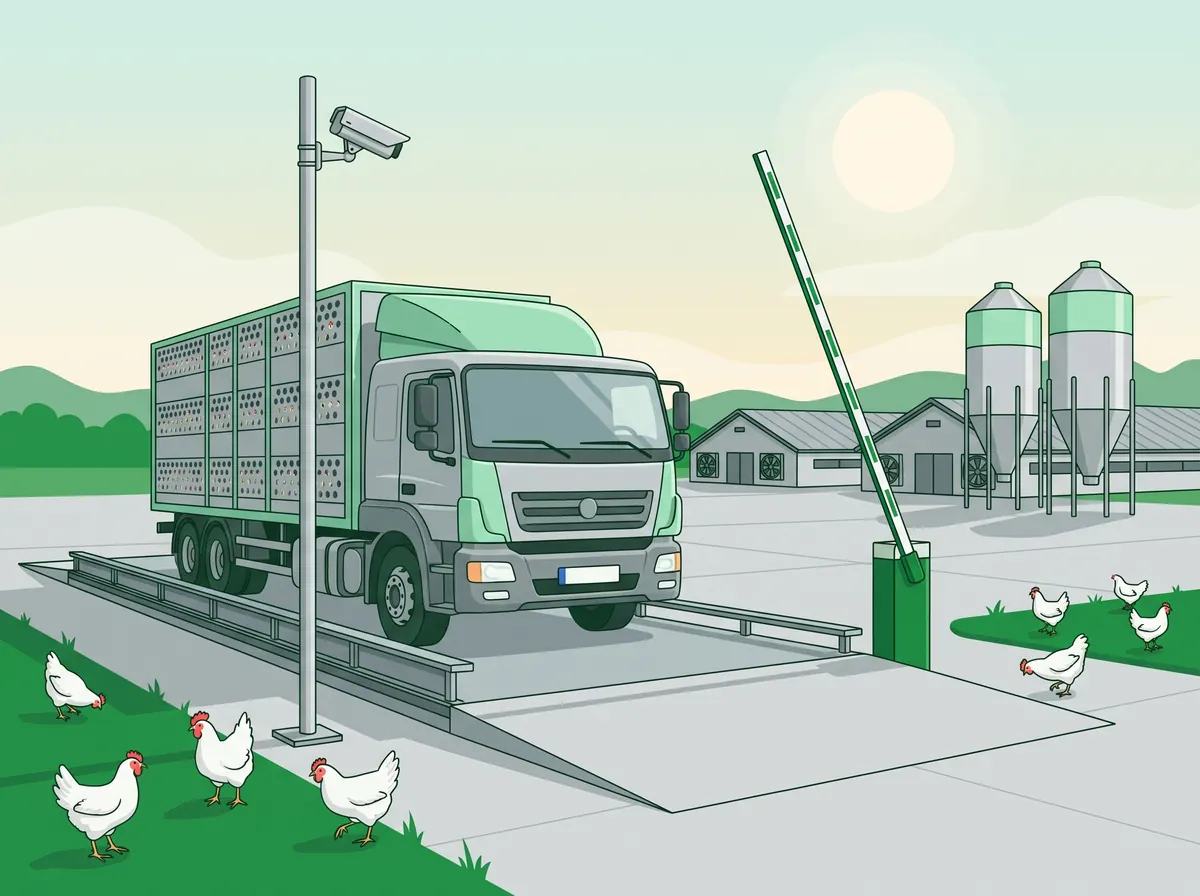
The basis for moving cattle in Poland is Council Regulation (EC) No 1/2005 on the protection of animals during transport. It sets out the carrier's duties, the requirements for vehicles and the rules for handling animals. When you send cattle to slaughter, to a market or to another farm, first work out who the carrier is, which documents go with the load and whether the vehicle meets the technical requirements of Annex I. We describe the legal state as of 22.11.2026.
Trailer and carrier
A livestock trailer here means a vehicle pulled by a tractor, as well as a truck with a body built for carrying animals. The type of vehicle matters less than whether it carries cattle without injury and without undue stress. The floor should be non-slip, and the inside free of sharp edges and protruding parts. For larger animals, use partitions that divide the space and limit movement when the vehicle brakes and starts.
Who is responsible for cattle transport
Carrier and licence
The carrier must give transport documents to the competent authority on request. The carrier moves animals in line with the technical rules of Annex I and assigns handling to staff trained in Annexes I and II. People who drive a vehicle carrying cattle must hold a licence under Article 17(2) of the regulation. The licence must be available to the competent authorities during transport. The carrier also makes sure a handler is present for each consignment, with the exceptions set in the rules. If you send cattle in your own vehicle, check that the driver meets these requirements.
Registration and identification
Commission Delegated Regulation (EU) 2019/2035 covers the registration of carriers moving certain land animals other than hoofed animals, and traceability requirements. For cattle, check the scope of your duties separately. According to a brochure from Poland's ARiMR (Agency for Restructuring and Modernisation of Agriculture), updated on 06.03.2025, the permitted ways to identify cattle are an ordinary ear tag, an electronic ear tag, a ceramic capsule (bolus) and an implanted transponder. Keep the data on your animals in one place, for example in the integrations module for IRZplus (ARiMR's online animal register) and sensors.
Cattle trailer: what to check
Interior and floor
The trailer floor must give animals a firm footing, also when wet and on the loading ramp. Walls and doors must have nothing an animal can injure itself on. Choose the height and width of the space to suit the size of the animals: a space that is too tight raises the risk of injury, and one that is too loose lets animals fall over. For calves, you work out the area from body weight, as described below.
Ventilation and cleaning
The trailer should have ventilation that prevents overheating and stops ammonia from urine and manure building up. After every trip, clean and disinfect the inside. This is the same approach as biosecurity on the farm: a vehicle coming back from a slaughterhouse or a market should not drive onto the farm without cleaning. We describe biosecurity rules in the biosecurity plan generator.
Calf transport: age and distance
Age and distance
According to an instruction from KPODR Minikowo (an agricultural advisory center, with authors from SGGW), calves you buy should be at least 7 days old. If the journey is to exceed 100 km, they should be at least 10 days old. Under EU rules, calves under 10 days old may not travel farther than 100 km. Animals under 2 weeks old may not take part in a transport longer than 8 hours, unless they travel with cows. If you can, avoid moving calves before day 21 of life, because they cope with stress better after that.
Space per animal
During transport, calves must have room to lie down. The KPODR instruction gives guide values of 0.3–0.4 m²/head for calves up to 50 kg and 0.6–0.7 m²/head for calves weighing 110 kg. Trailers should be in good technical condition. Too little space makes animals fall and get hurt, and too much lets them move around when the vehicle drives and brakes.
Stress after transport
According to the KPODR instruction, with proper transport conditions the level of cortisol, the stress hormone, returns to normal within 12 hours after the journey. Otherwise it can stay raised for up to 7 days after arrival at the farm. Oxidative stress and raised stress hormones are linked to the frequency of bovine respiratory disease (BRD) and to deaths. After calves arrive, watch the animals and talk to a vet if you see symptoms.
Certificates and documents for transport
Transport documents
For every consignment, the carrier must hold documents and show them on request to an inspection. On the farmer's side, the most important data are the identification details of each animal, matching the marking and entered in the register. After you sell or send cattle, record the departure date, the recipient and any treatment with its withdrawal period, because inspectors need these data. You keep treatment and withdrawal records in the treatment and withdrawal module.
Animals from a third country
Council Directive 2008/119/EC sets minimum standards for the protection of calves. Under it, animals from a third country may enter the Community only if they come with a certificate issued by the competent authority in that country. The certificate confirms that the animals were treated at least as well as animals of Community origin. If you buy calves from outside the EU, agree with your vet and the county veterinary office which documents must go with the consignment before you buy.
Planning transport on your farm
Getting ready to load
Plan loading so animals do not wait long on the ramp and are not starved before departure. The ramp and the walkway to the trailer should have no steep steps or slippery surfaces. If you send cattle to slaughter for your own use, check which requirements apply to the place of slaughter and to transport. We give details in the guide to slaughter for own use.
Animals that die in transit
If an animal dies during transport, do not leave it in the vehicle or by the road. Call a vet and follow the instructions of the Veterinary Inspection (Inspekcja Weterynaryjna). We describe collection and disposal of carcasses in the guide to disposal of dead animals. Similar rules apply to moving poultry, covered in the guide to poultry transport.
Frequently asked questions
Do you need a licence to transport cattle?add
Regulation 1/2005 says that people who drive a vehicle carrying cattle must hold a licence under Article 17(2). The licence must be available to the competent authorities during transport. Check the scope of the licence and how to get it with your vet or the veterinary office.
How much space does a calf need in a trailer?add
According to the KPODR Minikowo instruction, calves up to 50 kg need about 0.3–0.4 m²/head, and calves weighing 110 kg need 0.6–0.7 m²/head. Animals must have room to lie down. Agree the exact division of space with the carrier.
How old must a calf be to be transported?add
Calves you buy should be at least 7 days old, and at least 10 days old if the journey is over 100 km. Calves under 10 days old may not travel farther than 100 km. If you can, do not move calves before day 21 of life.
What cattle identification is allowed?add
According to the ARiMR brochure updated on 06.03.2025, cattle can be marked with an ordinary ear tag, an electronic ear tag, a ceramic capsule (bolus) or an implanted transponder. You can find current models of identification devices on the ARiMR website, in the legal acts section.
Do you need a certificate for animals from abroad?add
For animals from a third country, Directive 2008/119/EC requires a certificate issued by the competent authority of that country. It confirms the conditions in which the animals were treated. Agree the documents with your vet before you buy.
Sources & resources
- linkEU Publications Office — Council Regulation (EC) No 1/2005 on the protection of animals during transport (PL)
- linkEU Publications Office — Commission Delegated Regulation (EU) 2019/2035 — registration of establishments and traceability of animals (PL)
- linkARiMR — Information brochure — new act on IRZ (updated 06.03.2025)
- linkEU Publications Office — Council Directive 2008/119/EC laying down minimum standards for the protection of calves (PL)
- linkKPODR Minikowo — Rearing beef calves (instruction, authors from SGGW)
- linkEFSA AHAW Panel — Welfare of cattle during transport (EFSA Journal 20(9):7442)
Prepared by: DlaFerm Team based on data from the sources listed · Publisher: INSTA-TECH sp. z o.o.
Do you keep a beef herd and want identification under control?
The <a href="/integracje-irzplus-czujniki">integrations module for IRZplus and sensors</a> helps you keep data on your animals in one place. Create a free farm account on DlaFerm.pl or get in touch, and we will show you how it works in practice.
Phone
+48 796 258 151