Kholmogory goose — breed, weight and fattening
The Kholmogory goose is a large, white utility breed, kept mainly for meat. Its weight depends on sex, line, feeding and housing, not on the breed alone. We explain what is known about the breed's origin and build, how to run fattening and which records to keep.
verifiedFrom the team that has organised work on poultry farms for years.
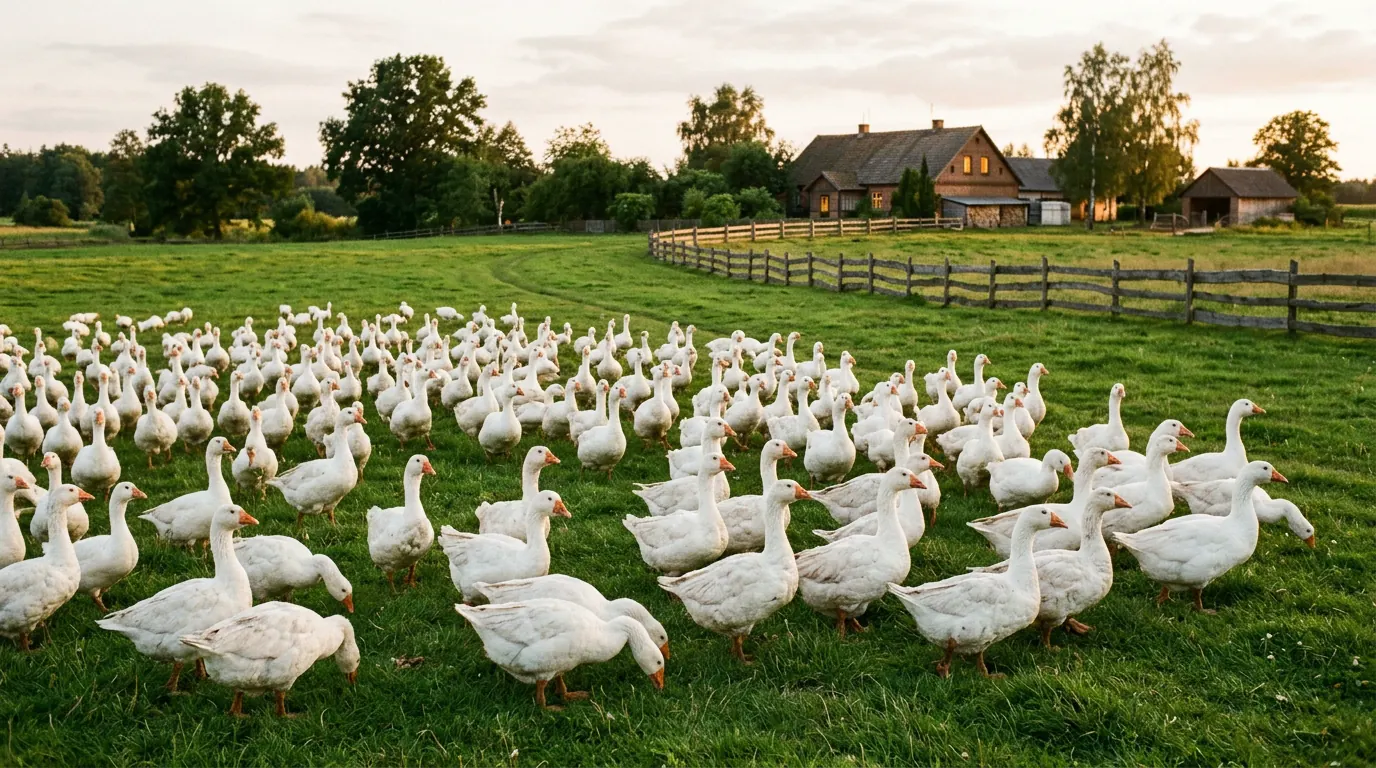
The Kholmogory goose is a large, white goose breed kept mainly for body mass and meat yield. It comes from the Kholmogory area in northern Russia and has long been one of the utility breeds mentioned most often for this species. To compare it with other breeds, start with Goose breeds — Landes, Kholmogory, Cuban, grain-fed. Below we describe what drives bird weight, how to run fattening and which housing conditions to set up on your farm.
Who this breed suits
Kholmogory suits a keeper who plans to fatten for meat and has room for larger birds. A big bird needs more feed, more space and more time for daily checks. Before you buy goslings, find out who will take the carcasses and at what weight they want them. Check that you have a run with access to water and dry bedding. Without these, even a good line will not reach its potential, and the birds in your flock will grow unevenly.
Where the Kholmogory breed comes from
Origin
The breed is named after the village of Kholmogory (Chołmogory) in the Arkhangelsk region of Russia. The geese developed in a cold climate, where hardiness and fast weight gain mattered. That is why the breed is fairly large and strongly built. In Poland fewer farms keep it than keep the white Kołuda goose, so before buying, find out where the goslings come from and what their breeding history is.
Plumage and typical traits
Kholmogory geese have white plumage and an orange bill and legs. The birds are massive, with a broad breast and a long body. Ganders clearly exceed geese in size and weight, which you need to allow for when planning batches for slaughter. When you assess birds, look at how even the flock is: big differences in size between individuals usually point to feeding mistakes, not to breed traits.
Weight of ganders and geese
What determines weight
A goose's weight is affected by sex, the line it comes from, age at slaughter, feed quality and conditions in the house. Ganders grow faster and reach a higher weight than geese, so keep separate records for each in one flock. Damp bedding, overcrowding and drafts reduce gains even on good feed. If weights across the flock are spread widely, check ventilation and feeder placement first, before you change the ration.
How to weigh and compare results
Weigh a sample of birds regularly, for example once a week. This shows the trend without stressing the whole flock. Record results in the same order and under the same conditions. Confirm the expected weight for a specific line with the breeder who sells the goslings and in materials from breeders' associations. Do not base your sales plan on figures from random sources, because differences between lines can be large.
Fattening Kholmogory geese step by step
Feeding during fattening
Geese on fattening need feed of a steady composition, given at set times. Change the recipe gradually, because a sudden change in feed composition quickly shows up in appetite and gains. We cover feeding standards for geese and ducks in a separate article: Feeding geese and ducks. When choosing feed, talk to a nutrition adviser, because needs depend on age, sex and the purpose of production.
Green feed and extras
Access to green feed supports digestion and lowers feed cost, but it does not replace a complete mix during fattening. Some keepers use grain from time to time, including oats. We describe oat fattening, the season and the economics in Oat-fed goose — oat fattening, season, prices. Before you add a new ingredient, note it in the flock records so you can link it to results later.
Housing conditions for Kholmogory geese
Space and ventilation
Large birds need more floor area than small breeds. Too dense a stocking rate leads to dirty feathers, higher humidity and breathing problems. We describe house requirements for geese, including ventilation and area per bird, in Housing requirements for geese. Before you change the stocking rate, check that ventilation keeps up with the greater mass of birds in the last week of fattening.
Water and run
Geese need constant access to clean water for drinking and for bathing, which helps keep their feathers in good condition. Clean drinkers and water tanks regularly, because dirty water favors gut diseases. A grass run cuts feed costs, but you need to rotate it so it does not turn to mud. In winter, provide dry bedding and protection from drafts.
Flock health and records
Most common threats
In geese, Salmonella infections and parasitic diseases are the most commonly discussed. We cover salmonellosis in Salmonella in geese and intestinal parasites in Worms in geese. Diagnosis and choice of treatment belong to a veterinarian. The vet sets the dose and the way of giving it for each case, and you make sure the record is complete.
Withdrawal period and records
Every medicine given has a withdrawal period that must pass before slaughter. Record the product name, the date given, the number of birds treated and the date the withdrawal period ends. The Treatment and withdrawal module helps you keep track of these dates. Also keep records in the house log, so you have one history of the flock from placement to pickup.
Frequently asked questions
How much does a Kholmogory goose weigh?add
Weight depends on sex, line, age at slaughter and fattening conditions. Ganders are usually clearly heavier than geese. The breeder who sells the goslings can give exact figures for a specific line.
Is the Kholmogory goose a meat breed?add
Yes. The breed is kept mainly for meat because of its high weight and massive build. Yield still depends on feeding and housing, not on the breed alone.
How do you fatten Kholmogory geese?add
The basics are complete feed given at set times, clean water and dry bedding. Track gains by weighing a sample of the flock regularly. Agree the feeding plan with an adviser and change feed gradually.
Do Kholmogory geese need water to swim in?add
Geese need constant access to water, which helps them keep their feathers in good condition. Water tanks and drinkers must be cleaned, though, because dirty water favors gut diseases.
What are the most dangerous diseases for geese?add
Salmonella infections and parasitic gut diseases are the ones named most often. A veterinarian sets the diagnosis, treatment and doses. Remember the withdrawal period of every medicine given before slaughter.
Where can I check the rules for keeping poultry in Poland?add
Check the law in ISAP, Poland's online legal acts system, and veterinary requirements on the website of the Chief Veterinary Inspectorate (Główny Inspektorat Weterynarii). This article reflects the legal position as of 22.11.2026, but before you change your stocking rate, confirm current requirements with your county veterinarian (powiatowy lekarz weterynarii).
Sources & resources
- linkNational Research Institute of Animal Production — izoo.krakow.pl
- linkChief Veterinary Inspectorate — gov.pl/web/wetgiw
- linkMinistry of Agriculture and Rural Development — gov.pl/web/rolnictwo
- linkInternet System of Legal Acts — isap.sejm.gov.pl
Prepared by: DlaFerm Team based on data from the sources listed · Publisher: INSTA-TECH sp. z o.o.
Keeping a goose flock alongside other poultry?
The <a href="/program-do-ewidencji-kurnika">house records</a> module helps you log stocking, health and treatment in one place. Create a free farm account in DlaFerm.pl or get in touch, and we will show you how it works for a goose flock.
Phone
+48 796 258 151