Oat-Fed Geese: Feeding, Season, Prices
An oat-fed goose is a goose finished mainly on oats, usually in the last stage of fattening before slaughter. Finishing takes longer than on high-energy feeds, so profit depends on the start date, feed cost and a steady buyer. Below we cover feeding, season, health and what drives the buying price.
verifiedFrom the team that has organised work on poultry farms for years.
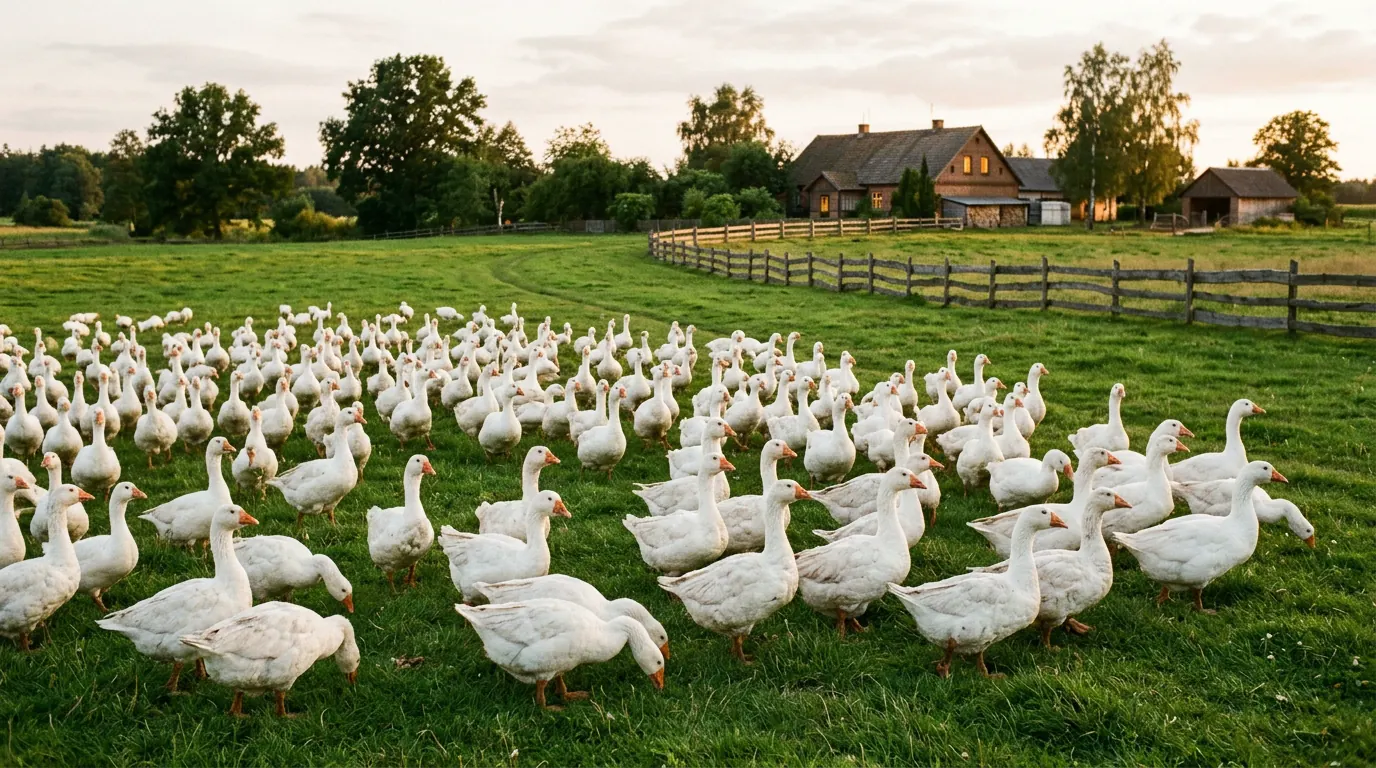
An oat-fed goose is a goose finished mainly on oats, used as the final feed. Oats have less energy than corn and wheat and more fiber, so finishing takes longer and the birds must be in good condition when you start. If you plan this kind of finishing, set the sale date, the feed cost and the buyer in advance. This description of oat-fed geese helps you choose the breed and how to manage the flock.
Why the season matters
Geese are usually fattened from late summer into winter, and demand peaks in the run-up to the holidays. Count back from the sale date by the full finishing cycle, including time to deliver to the buyer. Before you set the hatch or purchase date for goslings, check how many days finishing takes on your farm. Flock placement and cycle planning shows these dates in a calendar and helps you avoid overlapping batches on one site.
Oats in goose finishing
The role of oats in the mix
Oats alone do not give high energy, so they are usually fed as part of a mix with other grains. Geese are also herbivores and happily graze on the run, so grass lowers feed cost. Agree the mix with a feed adviser or your feed supplier, and change it gradually while watching appetite and condition. A sudden change in feed can cut appetite across the whole flock.
Water, feed access and the run
Geese need constant access to clean drinking water, and on a run also water where they can wash. Place drinkers and feeders so birds do not stand in mud or foul the water with droppings. Check the run daily: wet, churned-up ground quickly becomes a source of disease, and in a long winter geese need a dry place to rest indoors.
When to start finishing and when to sell
From placement to pickup
Start by setting a target weight and a pickup date with the buyer, whether a processor or a direct customer. For each batch, record the placement date, daily feed use and a weekly weighing of sample birds. This shows whether the flock is growing as planned, and you can move the sale date before it is too late. Keep records from day one, not only at pickup.
Weather and work organization
In autumn and winter, damp and mud on the run cause the most trouble. In frosty weather limit time outdoors, keep the litter dry and check that drinkers do not freeze. Schedule your crew so feeding, cleaning and flock checks happen at set times, and write every change in the farm log.
Avian influenza and biosecurity
Avian influenza season
The risk of disease in poultry changes from season to season, and restrictions are introduced depending on the epizootic situation. So we do not list specific requirements here, only the rule: before each season, check the current notices of Poland's Chief Veterinary Inspectorate (Główny Inspektorat Weterynarii). The avian influenza season summary describes how previous years went. Limit visits by outsiders and keep a visitor register.
Medicines and withdrawal periods
A vet who knows your flock always chooses the medicine and dose. You record each treatment, the date it ended and the resulting withdrawal period before the birds go to slaughter. Without such a record, mistakes at sale are easy. Treatment records and withdrawal periods help you keep these entries in one place.
Goose buying prices: what they depend on
What affects the price
The buying price depends on bird weight, delivery date, holiday demand and distance to the processing plant. A goose flock with even weights is usually easier to sell as a whole batch, while an uneven flock means deductions or worse terms. Before you sign a contract, ask how the buyer sets the price and on what basis they adjust it.
Where to check quotes
Official poultry prices are published by Poland's agriculture ministry, and local buying prices are worth comparing within your voivodeship. Compare prices from the same day and for the same bird weight, because a difference in weight class can change the result of a whole batch. Regular official quotes are in Minrol: official poultry prices.
Oat-fed goose vs duck: the calculation
Costs and time
With geese, feed cost grows with the length of finishing, and on a run you add the cost of fencing, litter and labor. When you compare with ducks, work out the cost per day of finishing, not just the price of the bird at the start. A sample comparison of costs and returns for both species is in Duck vs goose: profitability.
Settling each batch
Settle each batch separately: placement, feed, medicines, losses and sale. This shows which batch paid, and you can change the timing or feed mix in the next cycle. Recording entries and exits at the farm also helps biosecurity, because you know who was on site and when. The QR entry and exit log helps with that.
Frequently asked questions
How long does it take to finish geese on oats?add
Finishing time depends on breed, age at placement and target weight, so we give no single figure. Set it against your own plan and record weekly weights to see whether the flock is on schedule.
Can you fatten geese on oats alone?add
Oats are usually fed as part of a mix, because on their own they give less energy. Agree the feed with a feed adviser and change it gradually, watching appetite and condition.
When is the best time to sell oat-fed geese?add
Demand is highest before the holidays, but the date depends on bird weight and what you agree with the buyer. Plan placement so pickup falls when the flock's weight and condition are best.
How much does an oat-fed goose cost?add
The price depends on bird weight, delivery date, demand and region. Check current quotes in the official list from Poland's agriculture ministry and compare with local buyers before you agree a price.
Do you have to register a goose flock?add
Poultry flocks are registered and changes reported under the rules, with details from ARiMR (Poland's Agency for Restructuring and Modernisation of Agriculture). Check current requirements before you place a batch, as they depend on flock size and housing.
Is there a withdrawal period for geese after medicine?add
Yes. After a medicine is given, a withdrawal period applies, and its length follows the label and the vet's decision. Record every treatment and do not send birds to slaughter before it ends.
Sources & resources
- linkChief Veterinary Inspectorate — gov.pl/web/wetgiw
- linkARiMR — gov.pl/web/arimr
- linkMinistry of Agriculture and Rural Development — gov.pl/web/rolnictwo
- linkNational Research Institute of Animal Production — izoo.krakow.pl
Prepared by: DlaFerm Team based on data from the sources listed · Publisher: INSTA-TECH sp. z o.o.
Do you finish geese alongside other poultry?
The <a href="/program-do-zarzadzania-ferma-drobiu">farm management program</a> keeps batches, feed and sale dates in one place. Create a free farm account and see how it fits your cycle.
Phone
+48 796 258 151