Joint salmonella in chickens: signs, diagnosis and treatment
Salmonellosis in poultry is not only diarrhea. In some birds a generalized infection reaches the joints and shows up as lameness. We explain which signs should worry you, why your own observation cannot replace a lab test, and what happens once infection is confirmed in a flock.
verifiedFrom the team that has organised work on poultry farms for years.
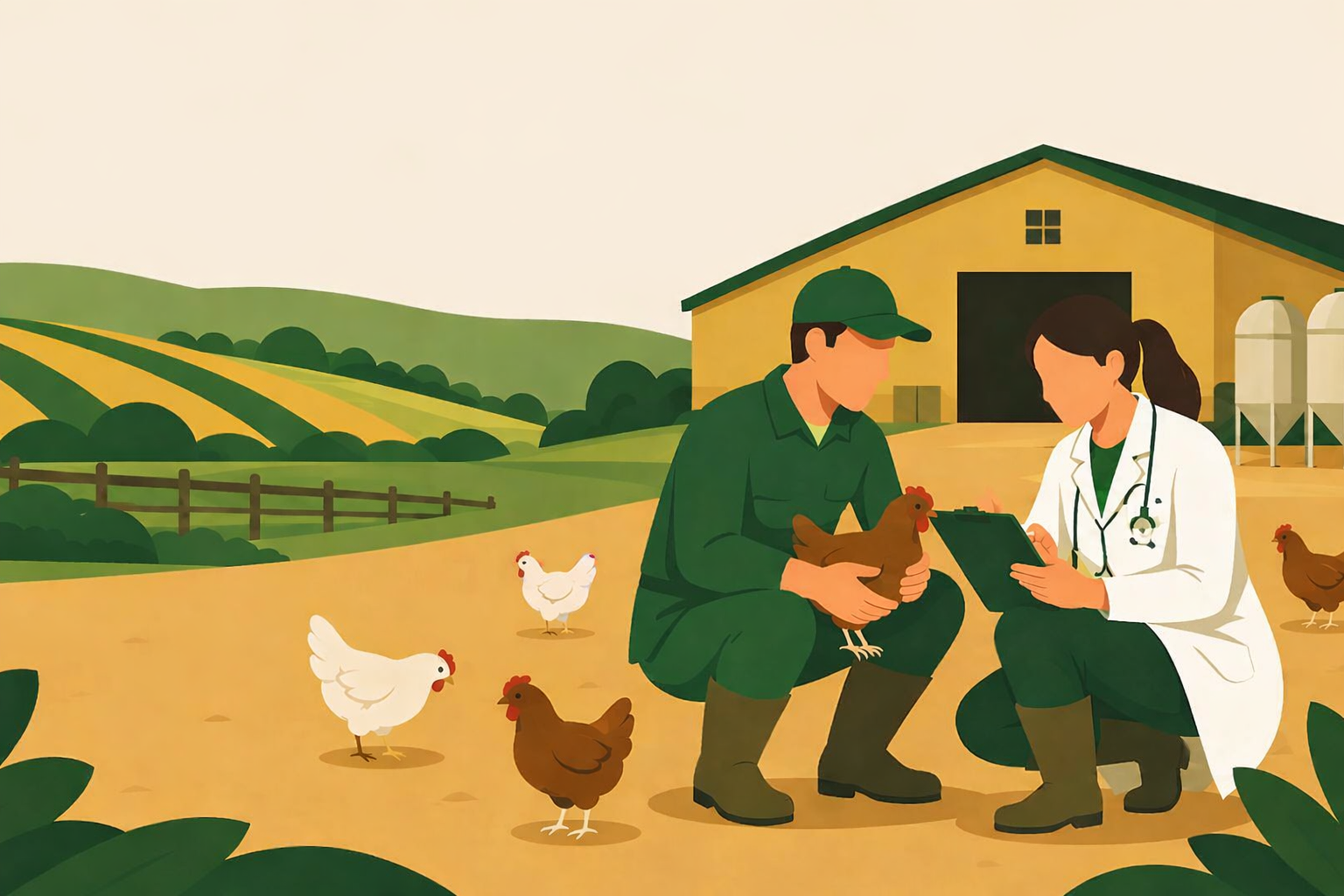
Salmonellosis is an infection with bacteria of the genus Salmonella. In poultry it can take several forms: a mild intestinal form in adult birds, a severe generalized infection in chicks, and a so-called joint form, where bacteria enter the blood, settle in the joints and inflame them. This last form is what people mean by "joint salmonella".
Joint salmonella: how it differs from ordinary salmonellosis
In classic intestinal salmonellosis, digestive signs dominate. In the joint form there is also bacteremia (bacteria in the blood) and the bacteria settle in the joints, most often the hock and hip. The result is pain, a swollen joint and limping. One caveat matters: lameness in a hen has many possible causes (injuries, Marek's disease, nutritional deficiencies, other bacterial infections). Limping alone never proves salmonella. Treat it as a cue to watch the whole flock and talk to a vet, not to diagnose it yourself.
Why you cannot ignore it
Salmonella is a zoonotic bacterium, meaning it can pass to people. Some serovars, including Salmonella Enteritidis, are covered in Poland and the EU by a national control program for poultry flocks, and in some cases infection is subject to oversight and must be reported to the Veterinary Inspection (Inspekcja Weterynaryjna). We cover the program and a keeper's duties in our guide to the Salmonella control program on a poultry farm.
Signs of salmonellosis in chickens: what to look for
First, general signs
The earliest signs are usually dullness, ruffled feathers, reduced appetite and lower activity. In laying hens a clear drop in egg production is a common signal. Watery or yellow-green diarrhea may appear, and the feathers around the vent can look pasted. In chicks the course is often much more severe, and high mortality is possible in the first days of life.
Lameness and swollen joints: the joint form
In some birds, especially with generalized infection, the joints become inflamed. You see reluctance to move, lameness, a swollen and warmer hock or hip joint, and the bird sits more. We stress it again: this is one possible cause of lameness in a hen, not the only one. Injuries, Marek's disease or other infections give similar signs. Telling them apart takes testing, not a look. See also Marek's disease signs in chickens.
When signs should make you act
A single dull bird turns up in every flock. The alarm signal is several signs at once in more than one bird: a drop in laying, diarrhea and a few cases of lameness within a short time. Then the best step is to contact a vet and, if the vet advises, take samples for testing.
Diagnosis, treatment and coop disinfection
How diagnosis is made
Clinical signs can at most raise suspicion. A certain diagnosis of salmonellosis, with the serovar identified (for example Salmonella Enteritidis), comes only from laboratory testing of samples (such as swabs, droppings or, in justified cases, a post-mortem of a dead bird). It is done by an accredited laboratory with a vet or the Veterinary Inspection (PIWet). Home methods can neither confirm nor rule out infection.
Treating salmonellosis in poultry
Only a vet decides on any treatment, including whether to use an antibiotic, which product, and the withdrawal period, after assessing the flock. We deliberately give no drug names or doses, because this is always a specialist's individual decision. Know that for regulated serovars (among them S. Enteritidis) antibiotic treatment can be limited by law and does not release the flock from the control program. In some cases the infection falls under oversight and control programs run by the Veterinary Inspection.
Disinfecting the coop after infection
Salmonella can survive in the coop environment, in droppings, dust, litter and equipment, even after the birds are gone. The basics are to remove manure and litter, wash surfaces thoroughly, then disinfect with a product effective against Gram-negative bacteria, following biosecurity rules. We describe the steps in disinfecting a coop with lime and more broadly in poultry farm biosecurity.
Salmonella and food safety
Salmonella is one of the most common causes of food poisoning in people linked to eggs and poultry meat. So hygiene when collecting eggs, washing hands after handling birds, and cooking eggs and meat thoroughly matter whether or not infection has been found in your flock. Still, you cannot say in general that eggs from a given flock are "safe" or "unsafe" without an assessment by a vet or the relevant inspection. Send questions about human health effects to a doctor. For laying flocks, see also salmonella in laying hens.
Frequently asked questions
What are the first signs of salmonella in chickens?add
Most often the first signs are dullness, lower appetite and activity, and a drop in laying in hens. Watery or yellow-green diarrhea may follow. These are signals to watch the flock, not to diagnose it yourself. Confirmation needs testing.
How can you tell if a chicken has salmonella, and is lameness always salmonella?add
No. Lameness and a swollen joint can go with the joint form of salmonellosis, but injuries, Marek's disease or other infections cause the same signs. Lameness together with diarrhea, a drop in laying and dullness in several birds at once is a reason to call a vet and test samples, not to guess by eye.
What is the treatment for salmonella in chickens?add
There is no single universal drug. Only a vet decides on treatment, including any antibiotic and its withdrawal period, after assessing the flock. For regulated serovars such as Salmonella Enteritidis, antibiotic use can also be limited by law, and the flock may fall under oversight within the control program.
How do you get rid of salmonella in a chicken coop?add
The bacterium can survive in the environment, so remove manure and litter, wash thoroughly and disinfect with a product effective against Gram-negative bacteria. For infections covered by the control program, also verify the result with a lab test before restocking the coop.
Sources & resources
- linkWOAH (World Organisation for Animal Health): Salmonellosis
- linkMerck Veterinary Manual: Salmonellosis in Poultry
- linkGłówny Inspektorat Weterynarii (Poland's Chief Veterinary Inspectorate): Salmonella control program
- linkEFSA: Salmonella control in poultry
Prepared by: DlaFerm Team based on data from the sources listed · Publisher: INSTA-TECH sp. z o.o.
Want to spot worrying signs in your flock sooner?
DlaFerm records signs, losses and vet interventions for each coop, so it is easier to catch a worrying pattern before it becomes a serious problem. See our <a href="/program-do-ewidencji-kurnika">coop records module</a>, create a free farm account or get in touch, and we will show you how it works.
Phone
+48 796 258 151