How long do ducks sit on eggs? Incubation time explained
A domestic duck usually sits on eggs for 28 days, and a Muscovy duck for about 35 days. Counting starts on the day the duck begins sitting on a full clutch, not on the day the first egg is laid. Below we show how to work out the hatch date and record it on your farm.
verifiedFrom the team that has organised work on poultry farms for years.
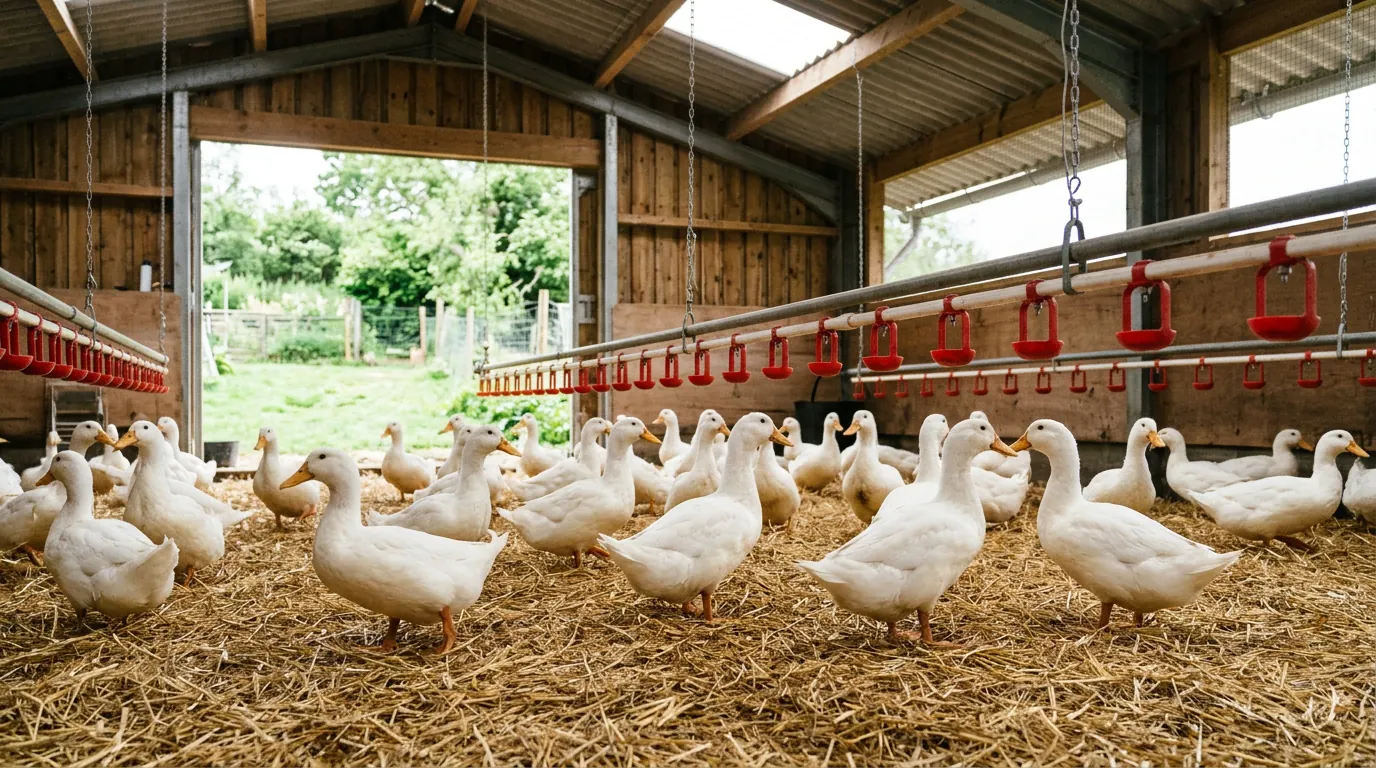
A domestic duck usually sits on her eggs for 28 days. This is the commonly accepted industry norm for most domestic duck breeds, including Pekin ducks. A Muscovy duck sits longer, usually about 35 days. The difference comes from the breed, not from your farm conditions. Conditions affect how many eggs actually hatch, but not how long incubation lasts. Before you plan a hatch, check which breed you keep, because a seven-day difference is a real problem when you set up many nests.
When to start counting the days
Day one of incubation is the day the duck begins sitting on a full clutch. Eggs laid earlier do not count, because the embryo only develops once the female warms the egg. A duck often lays for several days before she starts sitting, and only then is the clutch complete. So mark each egg in the nest with its laying date and write down the day the duck actually started sitting. This record is the starting point for every later date: hatch, rearing and checks. In a bigger flock it is easier to keep it in a system, for example in the flock placement planning module.
Muscovy ducks and other breeds
A Muscovy duck sits for about 35 days, a week longer than a domestic duck. In a mixed flock with both groups in one house, it is easy to mix up dates, especially when nests are not labeled. Label each nest with the duck's number and the start date of incubation. The same rule applies to every species: breed, date and the individual female are what count. If you plan to sell ducklings, check prices and buying rules for breeding birds in our guide How much does a hen, duck or goose cost.
How many days incubation takes in different breeds
Domestic ducks
Domestic ducks, including Pekin, usually sit for 28 days. Treat this as the standard period and log it on the day the duck starts sitting. You get the hatch date by adding 28 days to the start date. If a duck started sitting on a full clutch on 1 April, expect the first ducklings around 29 April. The date is approximate, because ducklings hatch over several days, not all at once. So when you check nests, watch for ducklings that appear earlier or later than you expected.
Muscovy ducks
A Muscovy duck sits for about 35 days. That is a week longer and changes the whole schedule: the hatch falls later and rearing moves back on the calendar. You calculate the date the same way, by adding 35 days to the start date. When you plan deliveries, allow for this difference, because a gap of a few weeks is a common cause of misunderstandings with buyers. If you keep both breeds on one farm, mark them and their nests separately.
Why the numbers differ
The difference comes from breed biology: ducks of different lines have a different embryo development time. Better feed or a higher nest temperature will not change it. A temperature that is too high or too low can lengthen or shorten development, but it is not a way to speed up the hatch. Do not cut the incubation period short on purpose, because instead of an early hatch you will get weak ducklings or dead embryos. It is better to accept the length for the breed and plan the rest of your farm work around it.
When incubation begins
A full clutch of eggs
A duck usually starts sitting only after laying a certain number of eggs. Not every female begins incubating at once, and some leave the nest while still laying. So watch whether the duck stays on the nest over several days and warms the eggs. When the behavior settles, write that date down as the start. Eggs added after the start hatch later than the rest, so mark every egg with its laying date if you want to know which ducklings come from later laying.
Eggs for the incubator
When eggs go into an incubator instead of under a duck, you also count from the day you set them. Hatching eggs should not lie around long before they go into the machine. Keep them in a cool, dry place and do not hold them for weeks. The number of days in storage affects hatchability, so record the collection date together with the batch number. Agree the details of storage and settings with your adviser or vet, because they depend on the species and your farm conditions. See also storing hatching eggs.
What a duck does while sitting
Turning and getting up
A duck gets up from the nest regularly, turns the eggs and goes back. In natural incubation this is normal, not a sign that she is abandoning the clutch. But if she gets up very often and stays away a long time, check whether noise, a predator or a damp floor is bothering her. Watching for a few days shows whether the behavior is steady or only temporary.
Water and feed
The duck leaves the nest to drink, eat and bathe. Make sure the drinker and feeder are within reach, because a long absence lengthens the breaks in warming the eggs. Water should be close to the nest, and the ground should not be slippery or muddy. Anything that makes food or water harder to reach directly affects the female's condition and the hatch result. For feeding norms see feeding geese and ducks.
Disturbing the nest
Do not look into the nest more often than necessary, and do not move eggs without need. Frequent startling makes the duck stay away longer, and the eggs cool. Do your checks at set times of day, quickly and calmly. If a duck leaves the nest for no reason and does not return, note the nest number and talk to a vet or adviser.
Candling and eggs without an embryo
Candling during incubation
Candling, which means shining a strong light through the eggs, shows whether the embryo is developing. It is most often done around the middle of incubation, and you should agree the exact date with your adviser, because it depends on breed and conditions. Eggs without an embryo can then be removed from the nest. Record the result with the nest number so you can compare it with the hatch later.
Eggs that did not hatch
After the due date, some eggs will not hatch. This is normal, but its scale should be recorded. Compare the number of eggs in the nest with the number of ducklings and note the difference. If the share of unhatched eggs is clearly higher than in previous seasons, tell your vet. Causes may be linked to infection, nest conditions or egg quality, and judging them is not the keeper's job.
How to record the hatch date
Date and nest in one place
Record each nest separately: number, breed, start date and the calculated hatch date. This lets you see at a glance which nests are in progress and which are already hatched. A simple table is enough in practice, but on a bigger farm digital records work faster. The poultry house records module helps you keep such records for individual houses and groups.
Data from one season to the next
The hatch date is only the beginning. After hatching you need to record the number of ducklings, their rearing and later checks. It pays to keep all data for one group in one place, for example in poultry farm management software. Then, when you return to the same cycle a year later, you have real data from the last season, not just memory.
Frequently asked questions
How many days do ducks sit on eggs?add
A domestic duck, including Pekin, usually sits for 28 days. A Muscovy duck sits for about 35 days. Start counting from the day the female begins sitting on a full clutch.
How long do Muscovy ducks sit on eggs?add
About 35 days, a week longer than a domestic duck. Work out the hatch date by adding 35 days to the start date of incubation. Record it separately for each nest.
Does a duck leave the nest while incubating?add
Yes, a duck regularly gets up, drinks, eats and turns the eggs. This is normal. It becomes a concern only when she leaves often and for long, because then the eggs cool.
What should I do if a duck does not return to the nest?add
Check whether noise, a predator or a wet floor is bothering her. If she stays away for a long time, talk to a vet or adviser. Do not give any medicine yourself, because the vet chooses the medicine and dose.
Can I hatch duck eggs in an incubator?add
Yes, many farms use an incubator. The eggs need the right conditions and should not be held too long before setting. Agree the details with your adviser, because they differ by species.
When should I check the eggs in the nest?add
Most often around the middle of incubation, by candling. You can then see which eggs have no embryo. Agree the check date with your adviser and record results with the nest number.
Sources & resources
- linkNational Research Institute of Animal Production (Instytut Zootechniki PIB) — izoo.krakow.pl
- linkChief Veterinary Inspectorate (Główny Inspektorat Weterynarii) — gov.pl/web/wetgiw
- linkMinistry of Agriculture and Rural Development — gov.pl/web/rolnictwo
- linkEFSA — efsa.europa.eu
Prepared by: DlaFerm Team based on data from the sources listed · Publisher: INSTA-TECH sp. z o.o.
Tracking hatch dates across several nests or poultry houses?
The flock placement and cycle planning module puts start and hatch dates in one place. Create a free farm account in DlaFerm.pl or get in touch, and we will show you how it works in practice.
Phone
+48 796 258 151