How long do ducks, geese, turkeys and guinea fowl live?
On a farm, ducks, geese, turkeys and guinea fowl usually do not reach their natural age, because the cycle ends with the goal of production: slaughter, sale or flock replacement. How long a bird stays depends on the species, the purpose and your plan. We explain how to set these dates and what to record.
verifiedFrom the team that has organised work on poultry farms for years.
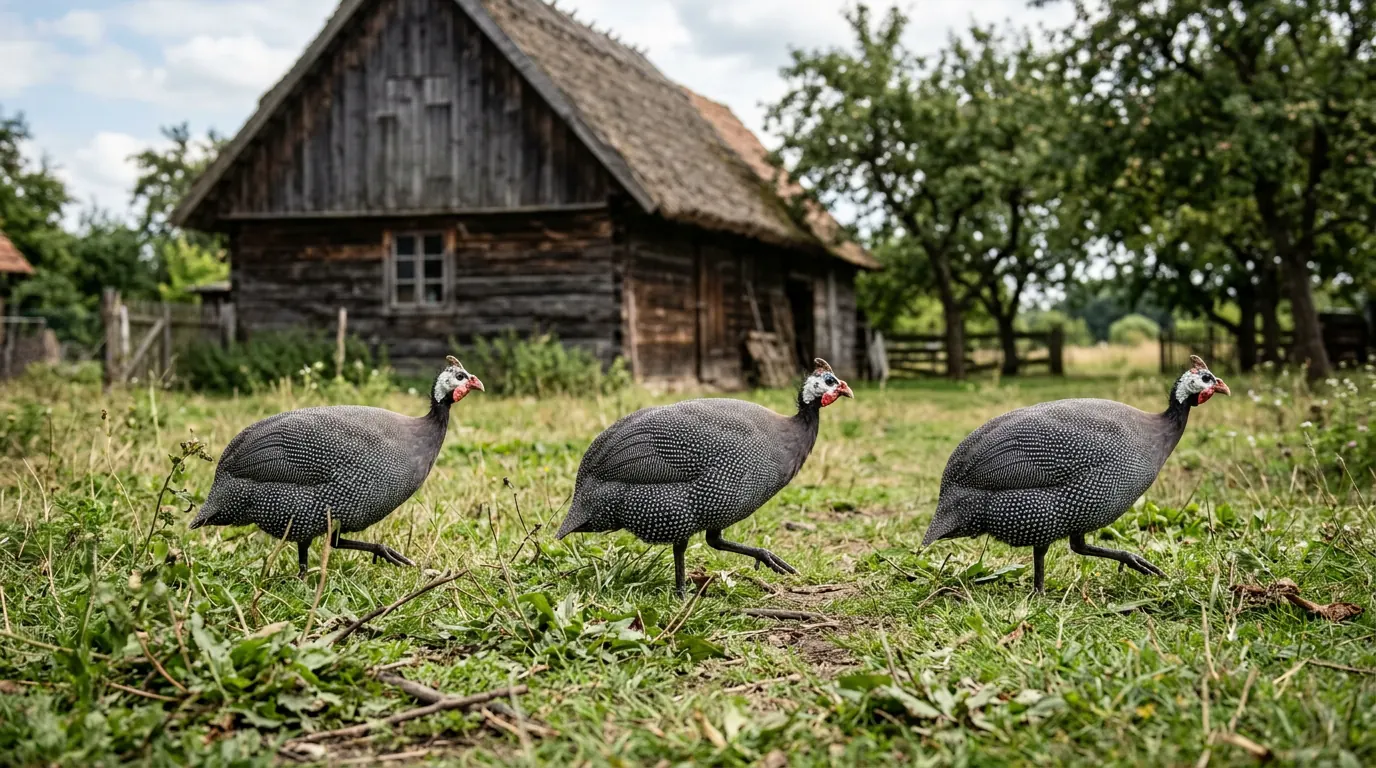
On a farm, ducks, geese, turkeys and guinea fowl usually do not reach their natural age, because the cycle ends with the goal of production: slaughter, sale or flock replacement. How long a bird stays in the flock depends on the species, the purpose and your plan, not on the biology of the species alone. Below we cover each species separately and how to set the dates.
What sets a bird's age on the farm
Three things decide how long a bird stays in the flock: the species and purpose, the genetic line, and whether the bird is raised for meat, for eggs or as a parent of the next generations. You plan a broiler for slaughter differently from a bird that should lay eggs for several seasons. The same logic applies to chickens, so compare it with our article on how long a chicken lives. Before you place a flock, write down the planned end date of the cycle. Then you know when to plan sales and bird replacement.
Natural age versus the farm cycle
Natural life versus farming
In nature, ducks, geese, turkeys and guinea fowl live many times longer than a typical farm cycle lasts. On a farm they leave earlier: for slaughter, for sale or to replace the flock. So in practice the question "how long do they live" becomes: how many days does rearing take, and at what age does the bird reach usable weight or start laying? The answer depends on your goal. Write the cycle length into your placement plan so you know when sales and flock replacement begin.
Breeder flocks live longer
Birds kept as parents of the next generations stay longer than broilers. The Aviagen handbook for broiler breeder chickens splits feeding into age stages, and the last stage starts after day 351 of the bird's life (Ross 308 Parent Stock Nutrition Specifications 2021). The data is for chickens, not ducks or turkeys, but the logic is similar: the longer a bird is in use, the more feeding stages and checks you need to plan. When you move to the next stage, change the feed composition on your nutritionist's advice, not by the calendar alone.
Ducks and Indian Runner ducks: how long they live on a farm
Indian Runner ducks in a small flock
The Indian Runner duck (kaczka biegus indyjski) is bred mainly for laying. In a small flock the keeper usually keeps it for several laying seasons and then decides when to replace the birds. Lifespan depends on housing, health and feed quality, not on one fixed value for the whole flock. Record each duck's age from hatching or purchase, because only then do you know when laying drops. You can read more about this breed in our article on Indian Runner ducks.
Meat ducks
Ducks raised for meat go to slaughter much earlier than laying birds. The date is set by live weight and growth rate, not by the lifespan of the species. Feeding rules for ducks and geese differ from those for chickens, so check them before every feed change. Before you place a batch, agree a pickup date with the buyer, because every extra day on the farm means more feed and labor. Record weighing dates so you can compare the result with your plan when the cycle ends.
Geese: long-lived birds and a longer cycle
Why geese are kept longer
Geese are long-lived birds and stay on the farm longer than ducks raised for meat. Slower growth means more days in the house or on pasture, so planning space and feed takes longer. A laying goose and a breeder goose need a different rhythm from a goose being fattened. Record the hatch date, sex and purpose, so after a few seasons you know which birds are still productive.
House and range
Geese need dry litter, constant access to water and space suited to the bird's weight. We describe the building requirements in our article on housing requirements for geese. A long stay makes flock health more important, because a disease that lasts for weeks costs more than in a short cycle. If you treat birds, a vet chooses the medicine and dose, and you keep to the withdrawal period before slaughter.
Turkeys: how long they live on a farm and when they go to slaughter
Age at slaughter
On a farm, turkeys are kept to a set live weight and age, not to the natural end of life. You agree the slaughter date with the slaughterhouse and the buyer, because transport and settlement depend on it. The list of slaughterhouses and the rules for live bird pickup are in our overview of turkey slaughterhouses in Poland. Before dispatch, record the weighing date and batch weight, so you have data for the invoice and for assessing results.
Gut health and rearing time
Gut problems lengthen rearing or lower feed use, so the bird reaches target weight more slowly. Discuss the basics of feeding and prevention with your vet and a feed adviser. If you see diarrhea, ruffled feathers or lower appetite, get the flock checked straight away. Do not choose medicines yourself and do not shorten the withdrawal period, because it directly affects meat safety.
Guinea fowl: how long they live and when they go to slaughter
Broiler and laying guinea fowl
Guinea fowl are raised both for meat and for eggs. A broiler guinea fowl goes to slaughter after a shorter rearing period than a laying bird, which stays in the flock longer. We describe rearing in our article on broiler guinea fowl. When planning, remember that the laying period and bird age differ between flocks, so each group should have its own record card.
Requirements and laying
Guinea fowl need a different house from chickens: they need calm, space and protection from predators. We describe house requirements for guinea fowl separately, and egg information in a separate article. Record the age and number of birds at every change in the flock, because this makes it easier to calculate performance and plan replacement.
How to set age and cycle length on your farm
Weight day by day
The Aviagen broiler handbook (Ross 308 / 308 FF Broiler Performance Objectives 2022) gives the bird's weight for every day of rearing. For day 20 it lists a weight of 2.060 lb, and for day 30 a weight of 3.980 lb. These values are for chickens, not ducks or turkeys, but they show why you should record weight every few days. By comparing your own weighings with the standard, you see a lag while you can still react with feed and conditions. You keep this record in your house records, and the system calculates FCR and EPEF.
Treatment and withdrawal period
Record treatment right after every intervention, with the product name, the date given and the withdrawal period. Check the withdrawal period before sending birds to slaughter, and you can keep the documentation in the treatment and withdrawal module. The documentation rules come from legislation, and you can check the current text in Poland's Internet System of Legal Acts (Internetowy System Aktów Prawnych) before changing any procedure.
Frequently asked questions
How long do ducks live on a farm?add
On a farm, ducks usually go to slaughter or flock replacement earlier than their natural lifespan. The exact time depends on the purpose: meat, eggs or breeding. Record the placement date and the planned end of the cycle.
How long do Indian Runner ducks live?add
The Indian Runner is a laying breed, and in small flocks keepers hold it for several seasons. Lifespan depends on health, feed and housing. It helps to record each duck's age from hatching or purchase.
How long do geese live?add
Geese are long-lived birds and stay on the farm longer than ducks raised for meat. The cycle lasts as long as your goal requires. When planning housing and feed, allow for the longer stay.
How long do turkeys and guinea fowl live?add
Turkeys and guinea fowl are usually raised for meat or for laying, so the slaughter or replacement date sets their time on the farm. Agree it with the slaughterhouse or take it from your flock plan. Natural age is not the reference point here.
What decides a bird's age at slaughter?add
Live weight, growth rate, the purpose and the buyer's requirements. Broiler handbooks give weight day by day, so you can judge growth rate. Compare your own weighings with the standard for the species.
Does treatment make farm birds live longer?add
You do not use medicine to extend the cycle. A vet chooses the medicine and dose, and you keep to the withdrawal period before slaughter. Record every treatment in your treatment records.
Sources & resources
- linkRoss Broiler Management Handbook 2025
- linkRoss 308 / 308 FF Broiler Performance Objectives 2022
- linkRoss Parent Stock Management Handbook 2023 (Interactive)
- linkRoss 308 Parent Stock Nutrition Specifications 2021
- linkChief Veterinary Inspectorate (Główny Inspektorat Weterynarii) — gov.pl/web/wetgiw
Prepared by: DlaFerm Team based on data from the sources listed · Publisher: INSTA-TECH sp. z o.o.
Do you keep several poultry species at once?
The placement planning module shows the cycle end dates for each group of birds. Create a free farm account in DlaFerm.pl and start with one flock.
Phone
+48 796 258 151