How a rooster fertilizes a hen, and how many hens per rooster
A rooster fertilizes a hen during mating, and sperm stored in the oviduct keeps fertilizing eggs for several days. One rooster usually covers several hens. The exact number depends on breed, age and condition of the birds. We explain how it works and what to watch in your flock.
verifiedFrom the team that has organised work on poultry farms for years.
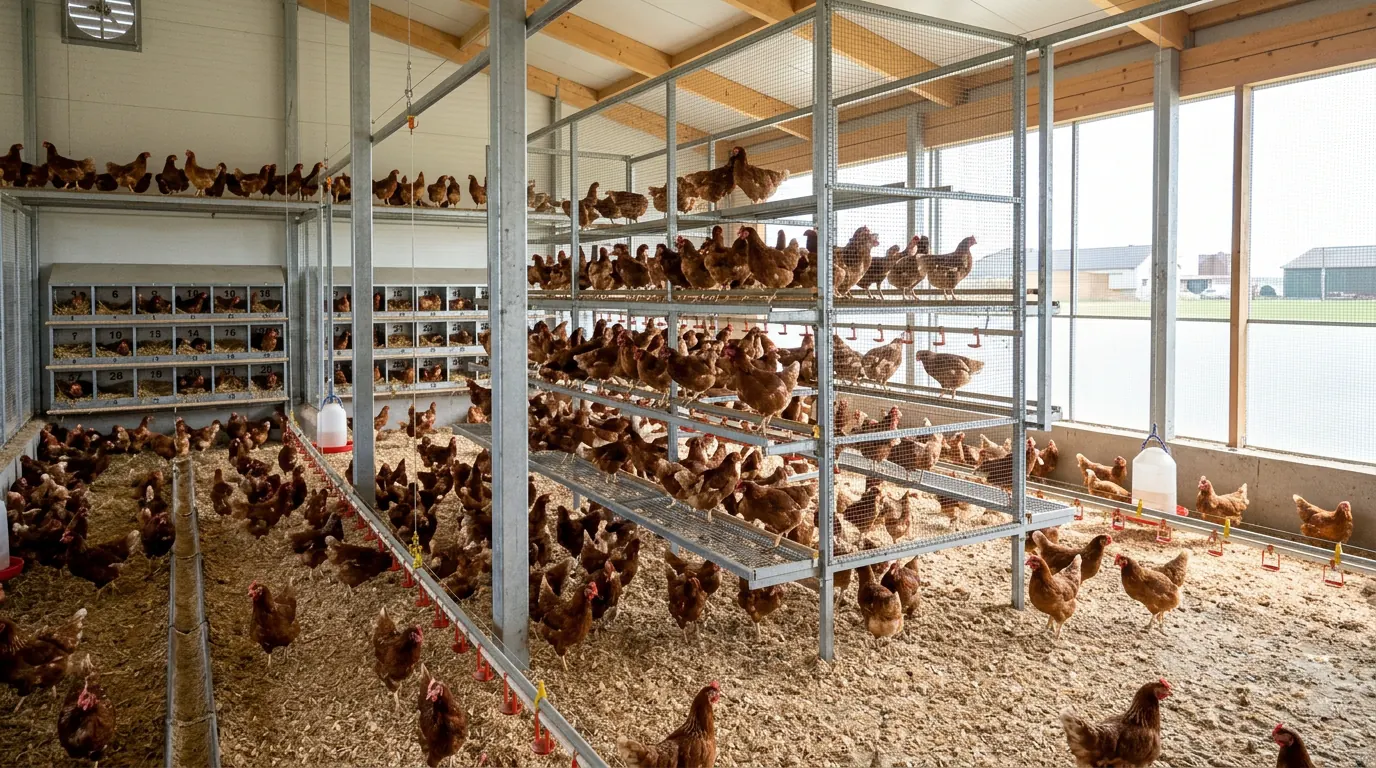
A rooster fertilizes a hen during mating, when sperm enters the hen's reproductive tract. The hen does not need to be mated every day. Sperm is stored in the oviduct, and for several days after mating her eggs stay fertilized, even if the rooster no longer has contact with the birds. One healthy rooster usually covers several hens, but the exact number depends on breed, age of the birds and how you keep them. Below we describe how this works in practice and what to check in your flock.
When a flock needs a rooster
Hens lay eggs without a rooster too. The difference is that the eggs are unfertilized and will not hatch. If you keep hens for table eggs, you do not need a rooster, and one may add stress for the birds. You need a rooster when you want hatching eggs or want to raise your own chicks. In that case choose a breed that fits your goal, check the health of your birds and plan mating so the flock always has access to a well-kept rooster. We cover laying breeds in a separate overview: Laying hen breeds.
How fertilization works in chickens
Mating and sperm storage
The rooster passes sperm during mating through cloacal contact. The sperm does not reach the egg cell right away. The hen stores it in special small tubules in the lower part of the oviduct and releases it gradually. Because of this, a single mating can produce fertilized eggs for several days. Breeding literature sometimes describes longer periods, but they depend on breed and the bird's condition, so do not plan a hatch around one mating. If you need to be sure which rooster fathered an egg, separate the birds a few days before you collect hatching eggs.
From fertilization to the shell
Fertilization happens in the upper part of the oviduct, before the egg is surrounded by albumen and shell. Forming the egg takes about a day, so an egg laid today was fertilized earlier. When you collect hatching eggs, the time from mating to laying matters. Store eggs for incubation in a cool, stable place and do not wash them with water, because you remove the shell's natural protection. Chicken eggs usually hatch in 21 days in an incubator with the right temperature and humidity.
How many hens per rooster
What decides the number of hens
There is no single number that suits every farm. Roosters of heavy breeds usually mate with more hens than roosters of light and ornamental breeds, but that is only a general rule. The result also depends on the rooster's age and condition, the size of the pen and whether hens have plenty of room to escape his attention. A young rooster that is still maturing is often less effective. Start by watching your own flock: count how many hatching eggs the flock gives with one rooster and compare results over later batches.
Too few and too many roosters
Too few roosters for the number of hens often leads to a low share of fertilized eggs, because some hens are not mated regularly. Too many roosters in one group leads to fights, injuries to the back and head, and stress for hens that are attacked all the time. Roosters should have separate spaces and perches, and if you see injuries, ask a vet to assess the bird. If the house is crowded, check that it has enough floor area per bird before you add another rooster. You will find more on dimensions in coop requirements for laying hens.
How to tell a fertilized egg
Candling eggs
After a few days of incubation you can candle an egg in a dark room with a strong light source. A fertilized egg shows a darker spot and a network of blood vessels, while an unfertilized one stays clear. The method takes practice, so at first compare eggs from different days and write down the results. If you see the same problem in many eggs, do not stop at changing the rooster. Check the birds and the way you store eggs.
Why eggs do not hatch
A failed hatch can come from lack of fertilization, but also from embryo death, wrong temperature or humidity in the incubator, eggs stored too long or bird disease. Record the laying date, the rooster number and the hatch result. This makes it easier to tell the cause. If losses repeat, ask a vet to run tests and do not choose medicines on your own.
Low fertility: what to check first
Condition of the rooster and the flock
A weak rooster, one that is too young or sick, fertilizes less well. Assess body weight, the state of feathers, legs and eyes, and behavior at feeding. Diseases of the eyes, legs or respiratory system can reduce a rooster's activity. If you suspect disease, contact a vet. We describe eye disease symptoms in our guide to conjunctivitis in chickens, but treatment and dose are always set by a vet.
Feeding
Feed deficiencies show up in fertility. The diet of roosters and laying hens should match age and production stage, not a general mix. You will find recommendations for laying birds in our overview of laying hen feeding. Talk to a feed adviser about the mix. Choose supplements, including vitamins, after assessing the flock, not only from advertising. Overfeeding also worsens the condition of the birds.
How many birds you can keep and how to report them
Flock registration
Rules for registering a poultry flock and the bird-number thresholds are set in regulations that can change. We give the legal status as of 22.11.2026, but it does not replace official advice. Before buying more birds, check current requirements with the county veterinarian (powiatowy lekarz weterynarii) and in ISAP, Poland's online legal acts database (Internetowy System Aktów Prawnych). We cover how many hens you can keep without reporting in our article on keeping hens without registration.
Records for roosters and hens
Write down which rooster mates with which group of hens, when the birds were placed and how many hatching eggs each flock gave. These records let you compare fertility between cycles and spot a drop quickly. In DlaFerm you keep them in the coop records module, and you can compare cycle data in placement planning.
Frequently asked questions
Do hens lay eggs without a rooster?add
Yes. Hens lay eggs without a rooster throughout the laying period, but those eggs are unfertilized and will not hatch. A table egg producer does not need a rooster. You need one when you want hatching eggs or your own chicks.
How many hens can one rooster mate with?add
There is no single number for all farms. The result depends on the breed, age and condition of the rooster, the size of the coop and run, and the temperament of the birds. Start by watching your own flock and record hatch results.
How long are eggs fertile after mating?add
Sperm stored in the oviduct lets a hen lay fertilized eggs for several days after mating. Breeding literature sometimes gives longer periods, and the exact time depends on the breed and the bird's condition. Do not base a hatch plan on one mating.
Why do eggs from my flock not hatch?add
The cause may be lack of fertilization, embryo death, incubation errors or bird disease. Record conditions and results, and if losses repeat, ask a vet to run tests.
Can a rooster harm hens?add
Yes, especially when there are too many roosters in a group or the coop is overcrowded. Fights and frequent mating attempts cause injuries to the back and head, plus stress. Give hens shelter and room to escape.
Can you tell a fertilized egg before hatching?add
Yes, you can candle it after a few days of incubation. A fertilized egg shows an embryo and a network of vessels, while an unfertilized one stays clear. The method takes practice, so compare eggs from different days.
Sources & resources
- linkChief Veterinary Inspectorate (Główny Inspektorat Weterynarii): gov.pl/web/wetgiw
- linkNational Research Institute of Animal Production (Instytut Zootechniki PIB): izoo.krakow.pl
- linkPoland's online legal acts database (Internetowy System Aktów Prawnych): isap.sejm.gov.pl
- linkEFSA: efsa.europa.eu
Prepared by: DlaFerm Team based on data from the sources listed · Publisher: INSTA-TECH sp. z o.o.
Do you keep a laying flock and want to record hatch results?
The coop records module in DlaFerm.pl stores matings, placements and results in one place. Create a free farm account and start with your next flock.
Phone
+48 796 258 151