Houdan chicken: the French crested breed
The Houdan is an old French chicken breed with a large crest, a beard and a fifth toe on each foot. We explain how to recognize it, what to expect from its eggs and meat, and how to care for the crest and coop so the birds stay healthy.
verifiedFrom the team that has organised work on poultry farms for years.
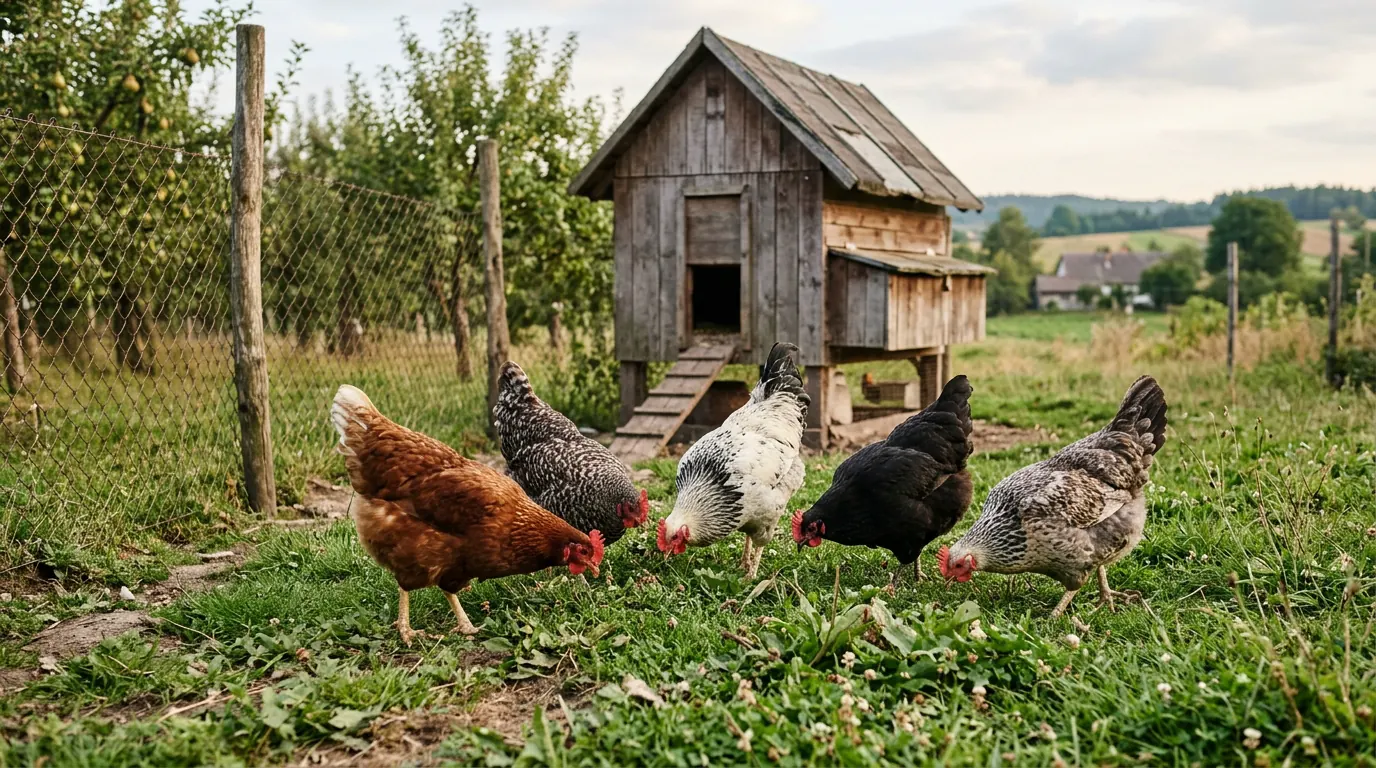
The Houdan is a French chicken breed from the area around the town of Houdan, west of Paris. You can recognize it by three features: a large crest on the head, a beard with muffs, and a fifth toe on each foot. It also has mottled black-and-white plumage. The Houdan is a crested breed, sometimes called the French crested chicken.
What the Houdan is used for
In the past it was kept for meat and eggs, and people valued its tender meat in particular. Today the Houdan is mainly an ornamental and show breed, and it also fits a backyard flock. On a larger scale you would usually choose laying or meat lines, because the Houdan needs more attention than breeds without a crest.
What to check before you buy
A bird with a crest needs a dry coop and well-planned drinkers. If you are just starting, first read the general description of what a crested chicken looks like and what breeds with feathers over the eyes need. It will help you decide whether the Houdan suits your farm.
How to recognize a Houdan hen
Origin
The breed is named after the French town of Houdan, where chickens with a crest and an extra toe were kept for a long time. French breeders valued them as table birds for the high-quality meat market. The breed then spread to other European countries and to poultry shows, where it settled in as an ornamental bird. For exact breed standards, including dimensions and body weight, see the breeders' associations and the materials of Poland's Institute of Animal Production (Instytut Zootechniki PIB). The numbers differ between national standards, so check the current standard before a show.
Distinguishing features
The Houdan has a full crest of feathers, a beard and muffs around the face, and a leaf comb, often described as butterfly-shaped, set just in front of the crest. The fifth toe grows above the fourth on each foot. The plumage is usually black with white spots at the feather tips, which gives the mottled look. Young birds have less white, and more spots appear with each molt. Cocks have a longer tail and a larger crest, hens usually a slightly smaller one. The bird is sturdy with a broad breast, but not as heavy as typical meat breeds.
Houdan eggs and meat
Eggs
Houdan hens lay eggs with white shells. Laying is moderate and depends on the breeding line, age, feeding and day length, so we do not give one figure for the whole breed. If you want a high egg count, compare it with typical laying breeds, for example how many eggs a Sussex hen lays. Treat the Houdan as a bird for a mixed flock, where looks and interest count more than output. Birds older than one year usually lay less, as we describe in the article on a laying hen after one year.
Meat
The breed was developed as a table bird, and its meat was seen as tender. Adult body weight is medium, so growth does not match modern meat breeds. When you slaughter for your own use, growing time and feed cost matter, because the Houdan grows more slowly than broiler chicks. To check how much feed the flock ate before slaughter, enter feed use and weights in the digital flock record. Data from several batches will show whether the Houdan pays off.
Crest, eyesight and moisture
The crest covers the eyes
A full crest limits the bird's field of view. The hen sees predators less well, reacts to danger more slowly and is easily startled. Conflicts in the flock are also more frequent, because birds that cannot see a rival clearly tend to get pecked. So keep Houdans with calm birds and put feeders and drinkers in several places. Do not trim feathers without need, but if the crest falls over the eyes, breeders gently trim it or tie it back. Do this carefully, preferably after talking to an experienced breeder.
Moisture and hygiene
A wet crest chills the head and gets dirty with feed and mud, and external parasites and skin diseases develop more easily under damp feathers. Choose closed drinkers, cup or nipple types, where the bird cannot wet its beard and crest. Every few days, check the head, neck and the underside of the feathers. If a bird is listless, read about the causes of a listless hen and contact a vet if in doubt. Only a vet chooses medicines and doses, and after treatment you must observe the withdrawal period for eggs and meat.
Housing conditions for Houdans
Coop
The Houdan needs a dry, well-ventilated coop without drafts. Change the litter when it gets damp, because wet bedding soils the crest and beard. Set perches at a sensible height so a bird with a heavy crest does not risk a knock when it jumps down. Do not forget protection from rodents and wild birds, which carry disease. A biosecurity plan generator makes planning these measures easier. Flocks registered in IRZplus, the online animal register run by ARiMR (Poland's Agency for Restructuring and Modernisation of Agriculture), must follow ARiMR rules, so check the requirements on the agency's website.
Winter and the run
The leaf comb is small and sits close to the head, so the risk of frostbite is lower than in breeds with a large single comb. In winter the problem is more often a wet beard and crest, which can freeze to the feathers. On frosty days watch the drinkers and give the birds a dry corner. Fence the run firmly and cover it from above, because a bird with limited sight falls prey to predators more easily. Keep the grass in the run short so it does not collect dew, which wets the crest.
The Houdan compared with other breeds
Alternatives
If you want a more productive bird, consider breeds with higher laying or weight. Popular choices include the Orpington, Wyandotte and Plymouth Rock. They are calm, tolerate cold well and have no crest that needs daily checking. Choose the Houdan when looks, breed history and poultry shows matter to you.
Managing the flock
If you keep several breeds, record laying, losses, treatment and feed use separately. In a coop record you can set up bird groups and compare Houdan results with other breeds. After a season you see which birds really pay off and which stay in the flock for decoration. You can keep all the farm's records in the farm management software.
Frequently asked questions
What is a Houdan chicken?add
The Houdan is a French chicken breed with a crest, a beard and a fifth toe on each foot. It comes from the area around the town of Houdan near Paris. Today it is kept mainly as an ornamental and show bird.
How many eggs does a Houdan hen lay?add
Houdan laying is moderate and depends on the line, age and conditions. The eggs have white shells. Ask the breeder you buy from for exact data on their line.
Why does the Houdan have a fifth toe?add
The fifth toe is a breed trait fixed by breeders. It appears on each foot and is part of the standard. Judges at shows check that it is present.
Can Houdans handle winter?add
The small leaf comb lowers the risk of frostbite. The problem is a wet crest and beard, which can freeze to the feathers. Provide a dry coop and drinkers where the bird does not wet its head.
Is a Houdan the same as a crested chicken?add
The Houdan is a crested breed, but it is a separate breed with its own standard. The combination of crest, beard, leaf comb and fifth toe sets it apart. You can read about other crested breeds in our article on the crested chicken.
Sources & resources
- linkInstitute of Animal Production PIB — izoo.krakow.pl
- linkChief Veterinary Inspectorate — gov.pl/web/wetgiw
- linkARiMR — gov.pl/web/arimr
Prepared by: DlaFerm Team based on data from the sources listed · Publisher: INSTA-TECH sp. z o.o.
Keeping several breeds in one flock?
The DlaFerm coop record lets you log laying, losses and feed use separately for each group of birds. Create a free farm account or get in touch, and we will show you how it works in practice.
Phone
+48 796 258 151