Goslings: Care in the First Weeks
In the first weeks, goslings need a dry, warm brooder, water and feed from the first hour, and daily observation of their behavior. This guide walks you through the steps without fixed norms, because those depend on breed and housing. We also show what to record so you can compare results after each batch.
verifiedFrom the team that has organised work on poultry farms for years.
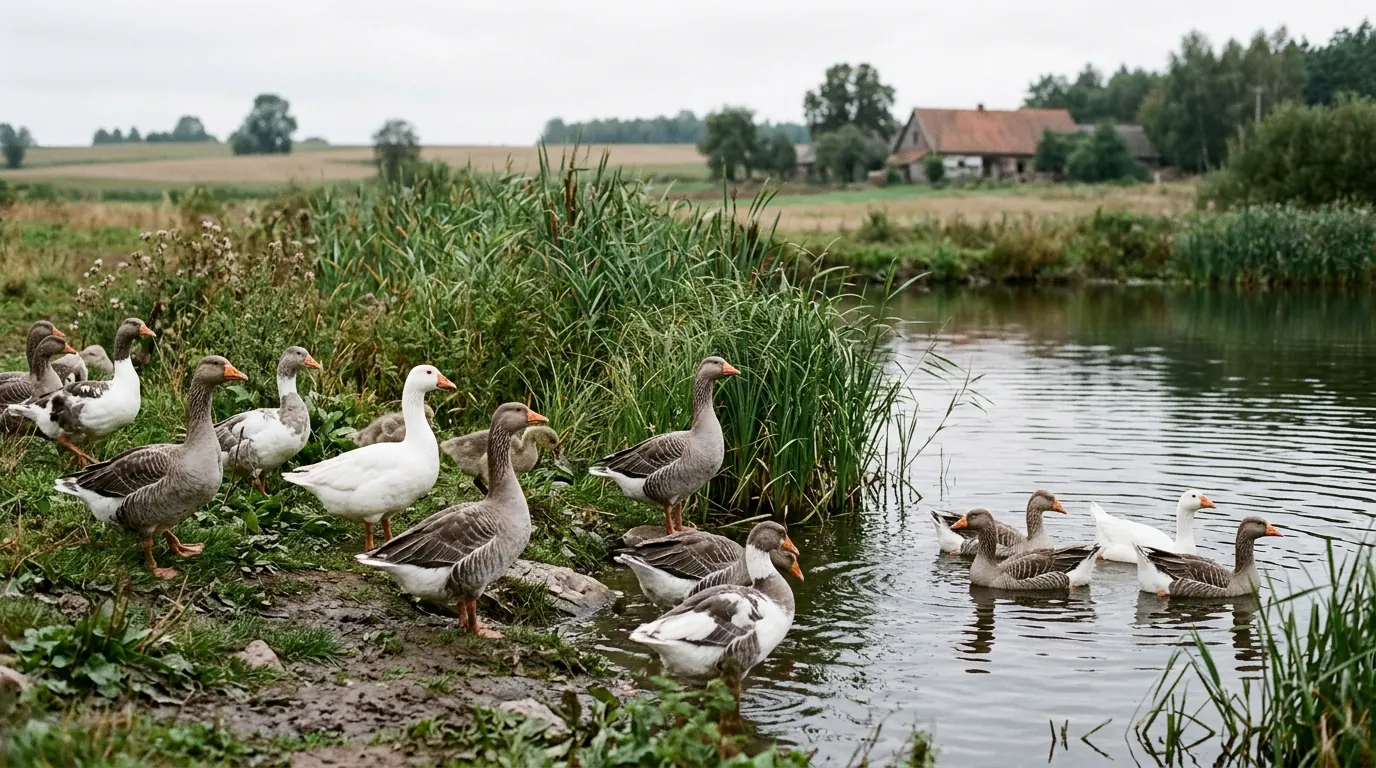
In the first weeks goslings need more attention than many other young poultry, because their temperature regulation and respiratory system are still developing. Mistakes at the start often show only after a few weeks, as slower growth and higher losses. Rearing begins before the goslings arrive: a heated brooder, dry litter, and constant access to water and feed. Goslings from a good hatchery, kept warm and watered from the first hours, grow more evenly. We cover the basics of the whole process in our article on raising geese.
Why the start decides the result
Goslings may be weak and dehydrated after transport. So the first contact with water and feed matters more than the amount. Neglect on day one affects flock uniformity: weaker goslings eat less, grow slower and are hard to catch up. We advise you to record the placement date, the batch origin and your first observations on the day of arrival, not to fill them in later from memory. Those records give you a baseline to compare later batches. Temperature and dose norms depend on breed, age and housing, so we leave checking them to your vet and research institutes.
Preparing the brooder before the goslings arrive
Heated brooder and litter
Warm the brooder early, so the floor and the air are at the right temperature when the goslings arrive. Litter should be dry, clean and thick enough that goslings do not slip or breathe in dust. Wet litter is a common source of problems with condition and with the skin of the legs. When you choose a heat source, make sure the goslings can move away from it when they get too hot. Note the bedding and equipment you used in your records, because it makes comparing results easier with later batches. We cover the building itself in housing requirements for geese.
Drinkers and feeders at the start
Place drinkers and feeders so the goslings find them easily but cannot climb into them. Water in a deep container risks drowning and soaked down, and wet down protects very poorly against cold. At first, put some feed on a flat tray or on the floor, because goslings do not find the feeder right away. Also keep spare water containers ready in case a drinker fails.
The first hours after placement
Assessing condition after unloading
After unloading, check the whole batch, not just a few birds from the top. A healthy gosling is active, stands and walks well, has clean down and a healed navel. Goslings that are listless, clumped together, standing in a corner or have dried droppings around the vent need quick action and a note in your records. If the batch looks worse than the paperwork says, tell the hatchery at once and document the condition with photos and the number of birds. Also record the number of goslings with visible defects at arrival, so you can later tell losses from defects apart from losses during rearing. You will find the hatchery list and ordering rules in our list of poultry hatcheries in Poland.
Water before feed
Goslings first learn to drink and only then to eat. So water must be available from the first moment, and starter feed should lie where the goslings will find it. Part of the flock may not start eating on its own for a while, so watching behavior at the feeder matters more than the amount of feed you put out. Make sure the feed is fresh and dry, and the water clean and changed regularly. We describe feeding principles in our article on feeding geese and ducks.
Heating and gosling behavior
Read the flock's behavior
When goslings huddle in a pile under the heat source, they are cold. When they spread out to the corners, pant or avoid the heat source, they are too hot. An even spread across the whole brooder usually means a comfortable temperature. Watch the flock several times a day, ideally at different times, because conditions in the building differ between morning and evening. Make changes to settings gradually and record them, so that after rearing you know which setting worked.
Ventilation without drafts
Goslings need fresh air but must not stand in a draft. Weak ventilation raises humidity and ammonia, which strain the airways. Too strong an airflow chills a huddled flock. Check the litter and how the goslings behave near the air inlets. If you see coughing, clumping or clearly poorer appetite, tell your vet before you change all the settings at once.
Feed and the move to a new diet
Starter feed
In the first weeks goslings need a starter feed suited to geese, not a general mix for chickens. The feed should be ground fine enough for the goslings to eat it, and fresh. Record the feed type, the batch number and the consumption per group, because after a few weeks you will see whether the flock eats as much as it should. Agree the exact recipe with a feeding adviser or the feed producer. Note feed changes by date, because they often explain later differences in growth between groups.
Greens and changing the diet
Geese are herbivores, so as they grow you introduce green feed. Introduce it gradually and watch that the goslings do not get diarrhea or start eating less starter feed. Greens should be fresh, dry and clean, with no sign of mold. Record the diet change with its date and the flock's reaction.
Health checks and keeping records
Deaths and their causes
Record every death with the date, the number of birds and a description of the symptoms. Keep this data in your flock house records, so after a batch you see a trend, not just single events. A series of deaths on one day or in one corner of the brooder is a signal for an urgent consultation. Do not assume the cause yourself and do not pick medicines on your own. The duties to report events on a farm are set out in regulations available in ISAP (Poland's Internet System of Legal Acts) and in information from the Chief Veterinary Inspectorate (Główny Inspektorat Weterynarii). If in doubt, ask your vet.
Treatment only with a vet
The vet chooses the medicine and dose for goslings. You record what was given, when and at what dose, and the date the withdrawal period ends. Without such a record, mistakes are easy when the flock ships out. Keep this information in the treatment and withdrawal module, which watches the dates before sale.
Frequently asked questions
How do you prepare a brooder for goslings?add
Warm the brooder early, lay dry, clean litter, and place drinkers and feed so the goslings find them right away. Check that the heat source is easy to adjust. Keep spare water containers ready in case of a failure.
Do goslings need to drink first?add
Yes, water should be available from the first moment, and starter feed should lie where the goslings will find it. Some goslings learn to eat only after they have had a drink. Water must be clean and shallow enough that the goslings cannot soak themselves.
What is the best temperature for goslings?add
The exact temperature depends on age, breed and housing, so we do not give it as a norm. It is best to agree it with your vet or adviser. In practice, the flock's behavior is the guide: an even spread means comfort, huddling under the heat means cold, and panting and spreading out mean overheating.
What should you feed goslings in the first weeks?add
The base is a starter feed suited to geese, fresh and dry. Green feed is introduced gradually once the goslings eat starter feed well. Agree the exact feeding program with a feeding adviser and record any changes.
How can you tell a sick gosling?add
A sick gosling is listless, stands hunched, moves away from the others and eats or drinks poorly. You may see diarrhea, stuck feathers around the vent, coughing, or discharge from the eyes and nose. With these signs, isolate the bird if you can and contact your vet. Do not choose medicines yourself.
Where can you buy goslings?add
You buy goslings from a hatchery or from a trusted breeder who gives the batch origin and the health records of the parent flock. Before buying, ask about the tests done and the transport conditions. You will find a list of hatcheries in a separate guide.
Sources & resources
- linkChief Veterinary Inspectorate (Główny Inspektorat Weterynarii) — gov.pl/web/wetgiw
- linkNational Research Institute of Animal Production (Instytut Zootechniki PIB) — izoo.krakow.pl
- linkMinistry of Agriculture and Rural Development — gov.pl/web/rolnictwo
- linkInternet System of Legal Acts (ISAP) — isap.sejm.gov.pl
Prepared by: DlaFerm Team based on data from the sources listed · Publisher: INSTA-TECH sp. z o.o.
Planning more batches of goslings and want the cycle under control?
The batch and cycle planning module in DlaFerm.pl helps you set rearing dates and house downtime. Create a free farm account or get in touch, and we will show you how it works in practice.
Phone
+48 796 258 151