German finishing pig exchange (VEZG): large and small quote, prices today
The German finishing pig quote is one of the main reference points for pig prices in Europe. We explain how the large and small exchange differ, what drives the quote and how to read it. We give no specific amounts, because they change every week. We show where to check them.
verifiedFrom the team that has organised work on poultry farms for years.
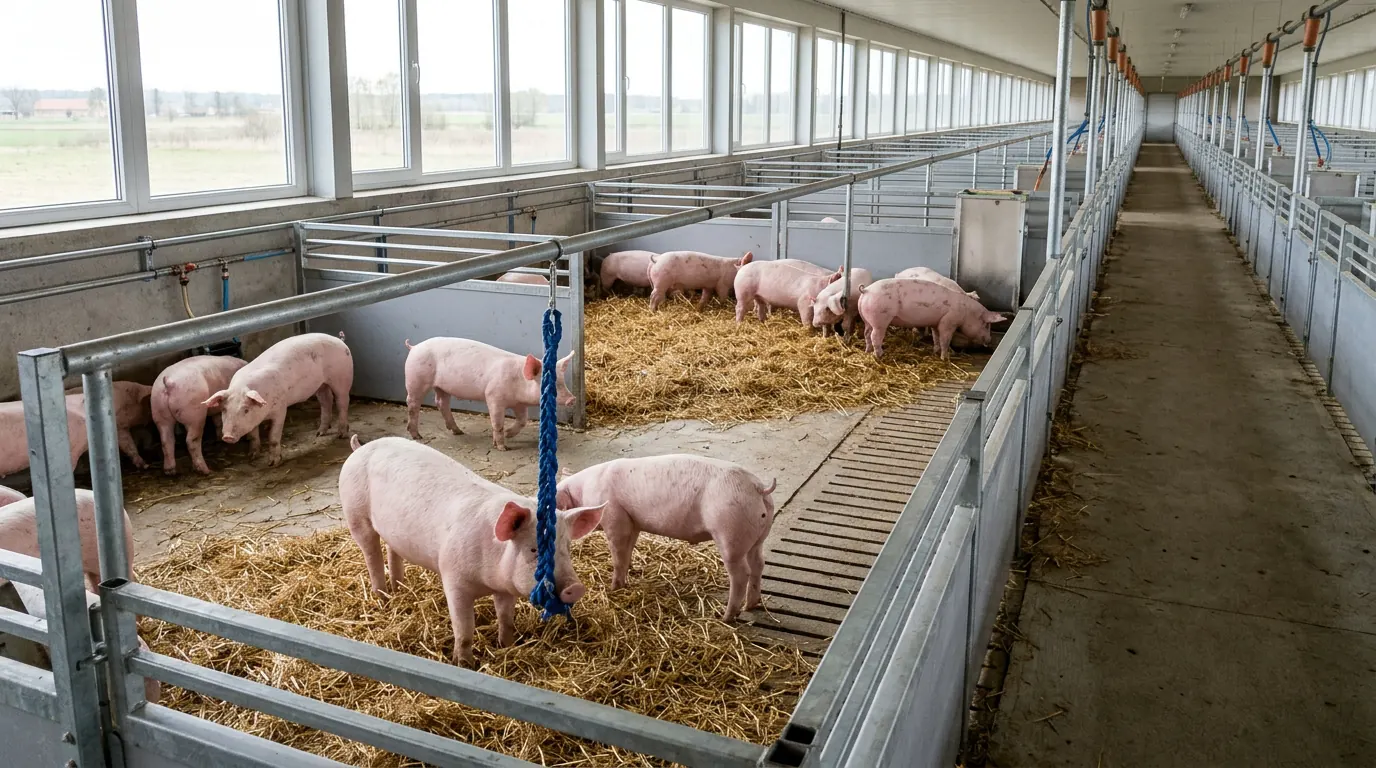
The German finishing pig exchange is a price quote published in Germany. Many producers and processors in Europe refer to it. The VEZG quote is a reference point for the price of live pigs and is updated every week, so last week's value may already be out of date. We give no specific amounts in this text. We explain how to read the quote, what drives it and where to check current values.
Why this matters for a Polish farm
Even if you sell finishing pigs in Poland, processing plants and buying stations often compare prices with the German market. The gap between the German quote and the price at home affects what a buyer pays and how sales go in a given week. A farmer who understands how the quote works can better predict the result of a batch and is less likely to be surprised by changes. The quote does not set the price on your farm by itself, but it frames your negotiation. See also finishing pig prices in Poland and Germany.
How the VEZG quote works
Where the quote comes from
The German quote is based on transactions and market agreements for finishing pigs in a given week. The price refers to a specific carcass class and weight, not to live pigs from any batch. So two batches with different weight or grading can get different prices even though there is only one quote. Before you compare your offer with the quote, check which category the quoted value refers to.
Who uses the quote
Slaughterhouses, exporters, buying stations and farmers all use it. For plants it is the basis of negotiation. For a farmer it is a way to check whether an offer is fair against the market. Remember that the quote is only a guide. The final price depends on the contract, the pickup date and the quality of the delivery.
Large exchange and small exchange
Large exchange
The large German exchange is the main quote. Farm media cite it most often and it is the reference for most deals. Its value is seen as a gauge of the general mood in the finishing pig market in Germany and neighboring countries. If you follow the market regularly, this is the figure that comes up most in talks with a buyer.
Small exchange
The small exchange is a quote with a narrower scope. It usually covers a smaller area or fewer transactions. Its value can differ from the large exchange, so do not treat the two as interchangeable. Before you decide to sell, check which quote your buyer uses in the contract. The rules of the quote can change, so refer to the current description at the source.
What affects the finishing pig price in Germany
Weekly supply and demand
The quote mostly reacts to the number of pigs ready for slaughter and to demand from processing plants. When supply grows faster than demand, pressure on the price rises. When plants have little raw material, the quote may go up. These effects are weekly, so when you plan sales, look at the trend over several weeks, not at a single value.
Exports and herd health
Prices in Germany are closely tied to exports and to the animal health situation in Europe. According to EFSA, its analysis of African swine fever in the European Union for 2025 shows the disease remains a major risk for the market. The regulation of Poland's Ministry of Agriculture and Rural Development (MRiRW) of 12.03.2026 on measures to control African swine fever (Dz.U. 2026 poz. 344, Poland's Journal of Laws) sets rules that affect trade. Legal status as of 22.11.2026. Rules can change, so check the current text in ISAP, Poland's legal acts database.
The exchange price and your farm's result
Gross margin
According to KPODR Minikowo (a regional agricultural advisory center), the value of finishing output is the final weight of the pigs times the price the farmer gets. You subtract direct costs such as feed, veterinary costs, medicines and cleaning products, then the cost of replacing the herd, meaning the weaners. The result is the gross margin. Each drop of one zloty per kilogram of live weight goes straight into that margin, so run your batch numbers with several price scenarios. FCR and EPEF indicators show whether feed cost eats up the margin.
Planning sales
When the quote moves, the sale date should follow the readiness of the batch, not just one week's price. A schedule of placements and deliveries helps you avoid sending a large batch to market in a weak week. Plan the cycle so the pigs reach target weight while respecting medicine withdrawal periods.
Where to check the quote and how to use it
Where to look for values
Check current quotes with your buyer, in the farm press and in publications of supervisory bodies. The Chief Veterinary Inspectorate (Główny Inspektorat Weterynarii) publishes information on the animal health situation, which often explains sudden price changes. Always compare the same category of pigs and the same week, because differences between quotes can come from definitions, not from a real market move.
Herd safety and sales
Selling finishing pigs requires respecting withdrawal periods after medicines. The treatment record lets you show that a batch is ready for slaughter. Biosecurity rules protect the herd from diseases that can close exports overnight. A vet always chooses the medicine and dose, and the farmer is responsible for keeping to withdrawal periods.
Frequently asked questions
What is the German pig exchange?add
It is a price quote for finishing pigs published in Germany. It is a reference point for many deals in Europe. The price refers to a specific carcass class and weight. So always check which category the quoted value covers.
How often does the German pig quote change?add
The quote is updated every week. A single value can be out of date after a few days. When you plan sales, look at the trend over several weeks.
What is the difference between the large and small exchange?add
The large exchange has a wider scope and farm media cite it most often. The small exchange covers a narrower area or fewer transactions, so its value can differ. Check which quote your buyer uses in the contract.
Why do German prices affect Polish finishing pig prices?add
Polish plants and buying stations compare offers with the German market, and exports and trade in Europe are linked. A change in the German quote can therefore affect negotiations at home. How much depends on the current market.
Where can I check current pig prices in Germany?add
The best sources are your buyer, who gives the price in the contract, and the farm press. The Chief Veterinary Inspectorate publishes animal health information. Specific amounts change every week, so do not fix them in a plan.
Does ASF affect pig price quotes?add
Yes. The disease affects exports and market mood, because it can limit trade with some countries. ASF control rules change, so check the current text of the regulation. A healthy herd protects you from a sudden stop to sales.
Sources & resources
- linkChief Veterinary Inspectorate — gov.pl/web/wetgiw
- linkEFSA — Epidemiological analysis of African swine fever in the European Union during 2025
- linkMRiRW / Journal of Laws — Regulation of 12.03.2026 on measures to control African swine fever (Dz.U. 2026 poz. 344)
- linkKPODR Minikowo (PROW 16 Cooperation) — A quality system as a guarantee of good pork
Prepared by: DlaFerm Team based on data from the sources listed · Publisher: INSTA-TECH sp. z o.o.
Working out your finishing result at a changing price?
The DlaFerm module for FCR and EPEF shows batch results in one place, and placement planning helps you set the sale date. Create a free farm account and see what your result looks like.
Phone
+48 796 258 151