Hog prices: current quotes in Poland and Germany
A finishing pig is priced per kilogram of live weight, and the price changes every week. We show where the quotes in Poland and Germany come from, how to compare them, and how to set them against your production cost before you sell a batch. We give no specific amounts here because they change weekly. Check them in the current quotes.
verifiedFrom the team that has organised work on poultry farms for years.
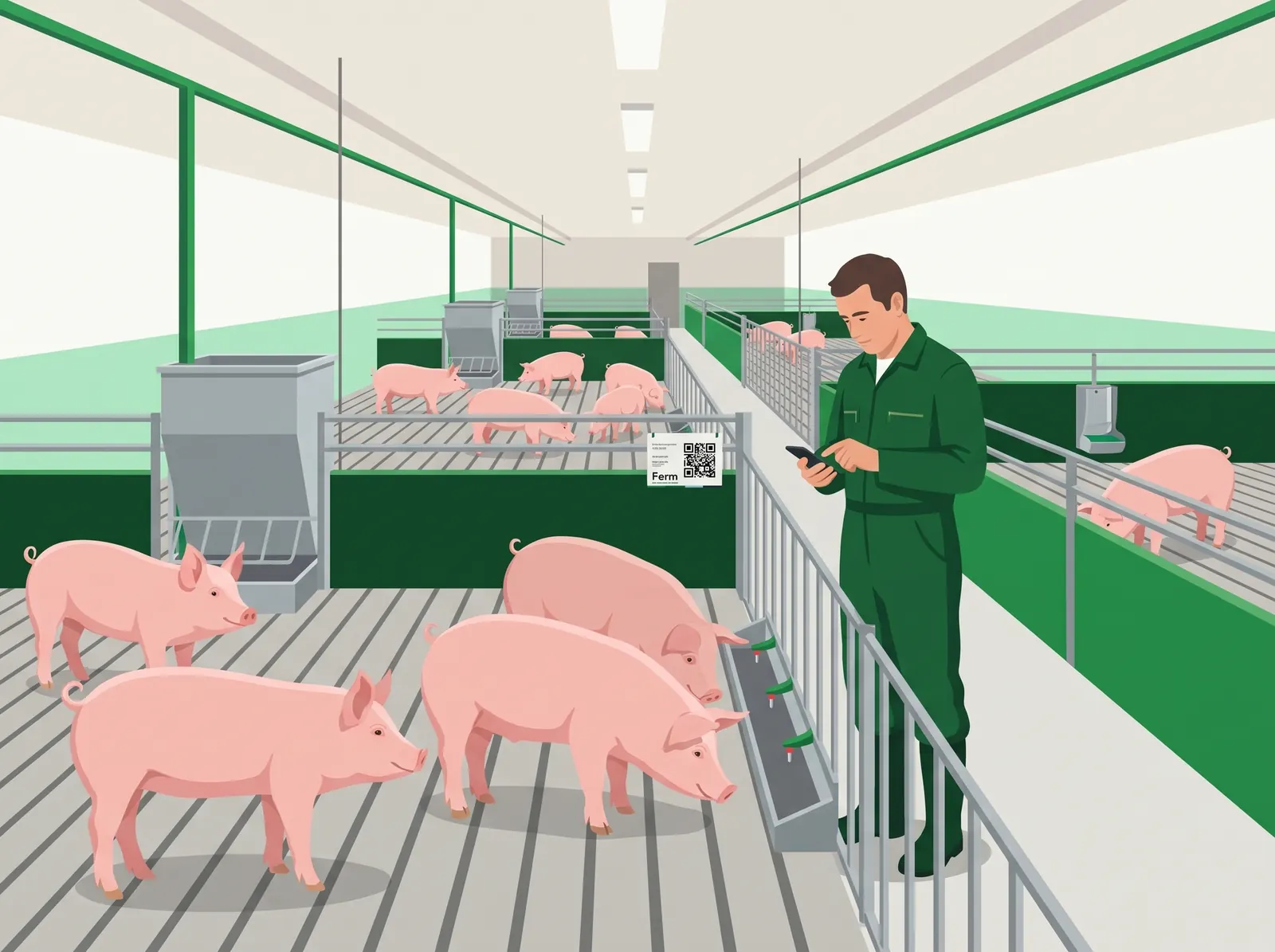
The price of a finishing pig is the live-weight price that a slaughterhouse or buyer pays the farmer per kilogram. Quotes change every week, so we give no specific amounts here. We show what drives the price, how to read quotes in Poland and Germany, and how to turn them into a result for your finishing house before you sell a batch.
Poland and Germany: two markets, one logic
Polish quotes are based on data on purchases of slaughter pigs collected by the Ministry of Agriculture. German slaughter quotes are set by a separate industry organization (VEZG). Its result often affects sentiment in Poland, because some live pigs go across the western border. Differences between the two countries usually come from demand, carcass classification standards and the exchange rate, not from one factor alone. When you compare prices, always check that both values are in the same currency and per kilogram of the same type of weight.
Where finishing pig quotes come from
Data collection in ZSRIR
The Ministry of Agriculture and Rural Development collects market data in the Integrated Agricultural Market Information System (ZSRIR). A 2023 methodology describes who reports data on slaughter pig purchases, which products are quoted, how the purchase price is calculated and how trade volume is recorded. For you this means the quote is an average, so your own price can be higher or lower. The result depends on carcass class, live weight, how even the batch is and the terms of your contract with the slaughterhouse.
What really moves the price
The live price depends mainly on the number of pigs on offer that week, slaughterhouse demand and exports, feed prices and the animal health situation in the country. Prices are an external factor that a farmer can hardly influence. That is the conclusion of the KPODR Minikowo analysis (a regional agricultural advisory center). So work on the costs you control: feed use, length of finishing and losses. FCR and EPEF show how much feed you use per kilogram of gain, and at the same live price the farm that uses less comes out ahead. You collect this data in FCR and EPEF online.
Hog prices in Poland and in Germany
Currency, unit and class
Quotes in Poland are given in zloty and German ones in euro. When you convert, use the exchange rate from the quote date, not from the day you read the text. Also check whether the price is for live weight or for carcass. A carcass is the live animal minus the inedible part, so the difference after conversion can be large even when the prices look alike. Carcass classification in the two countries is not always identical, so compare quotes for the same class, not general averages.
Why the direction can differ
Poland and Germany have different production and slaughterhouse structures. When supply rises in Germany, prices in Poland may react with a delay, and a change in export demand can move the market faster. There is no single rule for every week. Instead of guessing the move from one week to the next, check the trend over several weeks and compare it with the sales calendar for your batch. Read German quotes as a signal, not as a ready price for your slaughterhouse.
Hog price forecasts: how to read them
What a forecast depends on
Hog price forecasts rest on how many pigs are put into finishing and when they go to slaughter. The production cycle matters: pigs placed several months ago set the supply later on. Analysts also look at feed prices, slaughterhouse stocks and animal health risks. A forecast changes when any of these factors changes, so treat it as a reference point for your plan, not as certainty.
Turning a forecast into a sales plan
Before you decide on the next placement, set the planned slaughter date against the price calendar. If the forecast points to a fall just when your pigs are ready, consider selling earlier or spreading deliveries over time. Two large deliveries in the same week raise the risk more than an even spread. The placement and cycle planning module in DlaFerm helps you set batch dates in the herd calendar.
Live price versus production cost
The break-even threshold according to KPODR
The KPODR Minikowo analysis, done under PROW 16 Cooperation (a Polish rural development program measure), shows by how much the price would have to rise to cover direct costs. On farms feeding industrial compound feed, the average rise in live price needed to cover these costs was about 30% in the first finishing batch and about 20% in the second, according to the analysis. The publication is not a current quote, so do not carry its figures straight over to today's market. The method is still useful: work out the cost per kilogram of live weight on your own farm and compare it with the price you will actually get.
Calculating income from finishing
ODR Lubań (an agricultural advisory center), in a PODR publication, presents a sample calculation of farm income from pork production, with a bought-in piglet and different intensity levels. It shows that at the same live price the result depends on feed cost, piglet cost and how fully the finishing house is used. Put your own assumptions into a spreadsheet instead of copying someone else's results. Data from your own herd is the most useful, because it replaces general assumptions with your own numbers.
What to check before pigs leave the farm
Withdrawal period and treatment records
Before shipping, check that the withdrawal period has passed since the last medicine was given. Its length comes from the product's specification and the advice of the vet, who chooses the medicine and the dose. Keep records of treatments and dates, because the slaughterhouse and the inspection may ask for them. You keep treatment records and withdrawal dates in the treatment and withdrawal module, so the safe slaughter date is visible next to the batch.
The invoice for the delivery
Pig sales are settled by invoice, and turnover and VAT depend on it. Check with your accountant whether your invoice must be sent through KSeF, Poland's national e-invoicing system. It helps to have the delivery data in one place before you issue the document: number of pigs, weight and price per kilogram. The KSeF invoicing module in DlaFerm helps you prepare an invoice from data saved on the farm.
ASF, exports and price changes
What the EFSA analysis shows
EFSA published an epidemiological analysis of African swine fever (ASF) in the European Union in 2025. For a farmer the key point is that outbreaks affect trade and export restrictions, and these feed through to live prices. We do not apply the figures from the analysis to your region, because they do not describe the situation in your county directly. Write your biosecurity rules into a plan, and the biosecurity plan generator helps you build it step by step.
Rules as of 22.11.2026
The Ministry of Agriculture regulation of 12.03.2026 on measures to control African swine fever (Dz.U. 2026 poz. 344, Poland's Journal of Laws) sets the measures that apply in fighting the disease. These measures affect the live pig trade, so before a bigger sales decision check the current text in the Internet System of Legal Acts. The disease status of a region is announced by the Chief Veterinary Inspectorate (Główny Inspektorat Weterynarii), and a change of status can change where and to whom you can sell pigs.
Frequently asked questions
Where can I check current hog prices in Poland?add
Market data is collected by the Ministry of Agriculture and Rural Development in ZSRIR. Check quotes for the specific category, not just the general average. Quotes change every week, so compare them with the publication date, not with a text from months ago.
Do German hog prices affect Polish prices?add
Yes, indirectly. German slaughter quotes are set by a separate industry organization, and the markets are linked by cross-border trade in live pigs. The effect is neither automatic nor constant, so treat the German quote as a signal of the trend, not as a ready price.
How do I compare a price in zloty with a price in euro?add
Bring both values to the same unit: per kilogram of live weight, or of carcass of the same class. Use the exchange rate from the quote date. Also check that both prices cover a similar weight and the same carcass class.
Are hog price forecasts reliable?add
No. A forecast shows direction and risk, because it rests on supply, the production cycle, feed prices and the health situation. Use it to plan sale and placement dates, not to set a fixed budget.
What should I do when the price does not cover my costs?add
Start by working out the cost per kilogram of live weight on your own farm, because prices are an external factor. The KPODR Minikowo analysis points out that a farmer mainly influences internal costs. Review feed use, losses and length of finishing, and base any decision to change production on results over a longer period.
Does the withdrawal period affect when I can sell finishing pigs?add
Yes. Animals that have been given a medicine are not sent to slaughter before the withdrawal period set for that product has passed. The length comes from the product's specification and the advice of the vet, who chooses the medicine and the dose.
Sources & resources
- linkMRiRW (ZSRIR) — Methodology for recording market data on purchases of slaughter pigs on the pork market
- linkKPODR Minikowo (PROW 16 Cooperation) — A quality system as a guarantee of good pork
- linkODR Lubań (PODR publication) — Sample calculation of farm income from pork production (bought-in piglet, different intensity levels)
- linkEFSA — Epidemiological analysis of African swine fever in the European Union during 2025
- linkMRiRW / Dziennik Ustaw — Regulation of the Minister of Agriculture of 12.03.2026 on measures to control African swine fever (Dz.U. 2026 poz. 344)
Prepared by: DlaFerm Team based on data from the sources listed · Publisher: INSTA-TECH sp. z o.o.
Want your cost per kilogram of live weight at hand for every sale?
The pig farmer module in DlaFerm keeps your herd data in one place, and FCR and EPEF show your cost of gain. Create a free farm account and see your own numbers before the next sale.
Phone
+48 796 258 151