Frizzle pigeons: breed, looks and care
Frizzle pigeons (gołębie loczki in Polish) are a fancy breed known for feathers that curl into tight ringlets. People keep them for looks and shows, not for meat. We explain how to recognize the breed, how to set up the loft and how to keep your records.
verifiedFrom the team that has organised work on poultry farms for years.
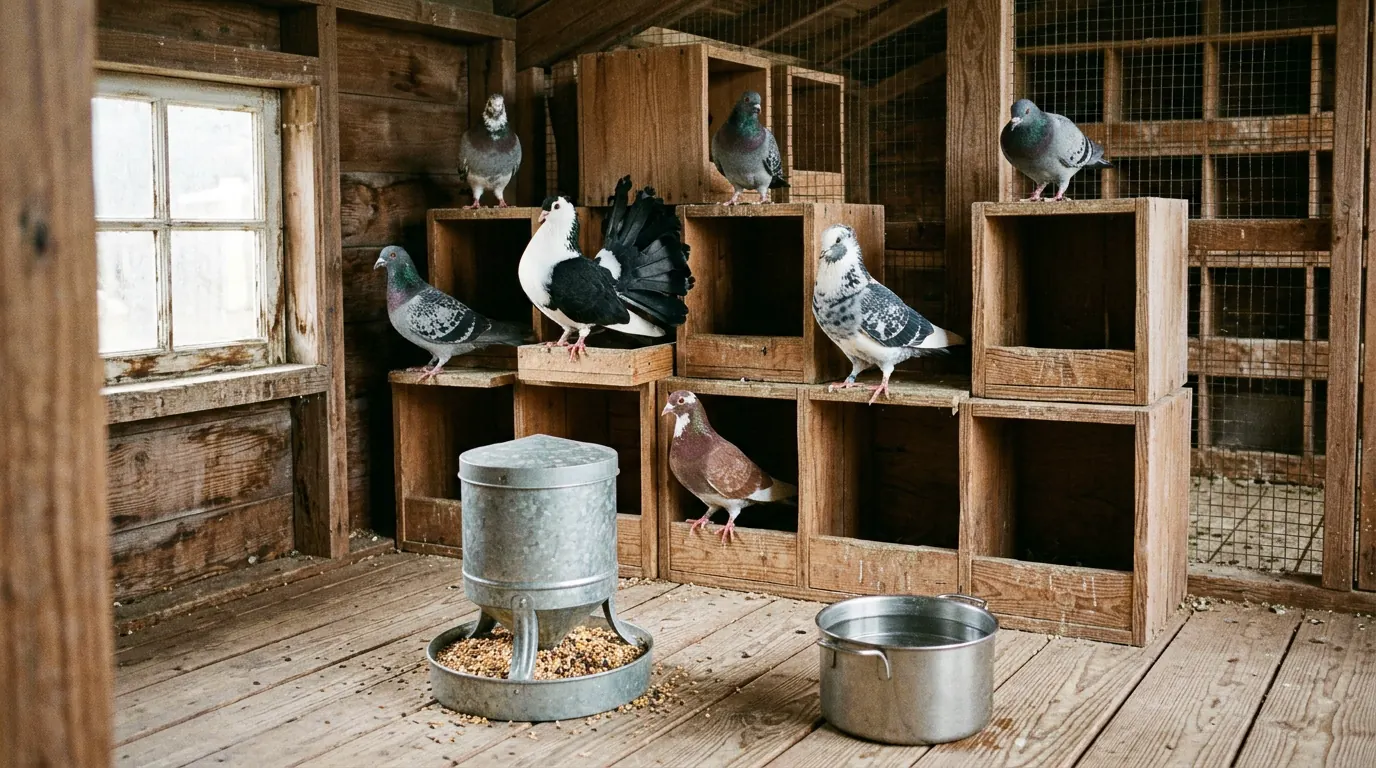
Frizzle pigeons are a fancy pigeon breed with one clear trademark: curled feathers. The feathers on the chest, wings and tail twist upward or forward, so the bird looks covered in curls. The breed belongs to the show pigeons. Breeders select birds by the breed standard, and show judges score the feathers, body build and stance. Frizzles are not kept as utility pigeons, so their value lies in their looks, not in production.
How to recognize a frizzle pigeon
The main trait is twisted feathers over the whole body, not only on the neck. The tail feathers and flight feathers can also be curled, which sets frizzles apart from pigeons with normal plumage. When you judge a bird, look at how even the curls are, how balanced the body is and how calm the stance is. Young birds often do not have their full curl yet, so it is best to wait for mature plumage before you make a final judgment. Compare several birds from different lines before you decide to buy.
Color varieties
Frizzles are kept in many colors and feather patterns. Color does not change the bird's behavior, but at shows each variety has its own judging criteria. Before you buy, check which varieties local breeders' clubs keep and which standard the birds are judged by in the current season.
Body build and feathering of frizzles
Feathers that curl
The curls form because each feather twists. The more clearly a feather curls, the better the bird does at a show. Judges look at how even the curl is across the whole body, because single smooth feathers lower the overall impression. Check that the curls are symmetrical on both sides of the bird. Plumage changes during the molt, so judge a bird in full plumage, not at a single point in the year.
Body shape and stance
The standard describes body shape, height of stance and the proportion of head to body. The bird should have a compact, balanced build, without overly long legs and without clear structural faults. Also check that the pigeon moves freely and has no trouble keeping its balance. Structural faults are often inherited, so when you pair birds, assess both parents, not just the offspring.
Frizzles as fancy pigeons
Kept for looks, not for meat
Frizzles are not kept for meat or eggs. Their value depends on feather quality and how well they match the standard. If you aim at shows, expect a longer selection process and results that depend partly on luck within your line. If you are starting from scratch, read up on the basics of pigeon keeping before you buy your first birds.
Behavior in the flock
Fancy pigeons usually get along well with similar birds. Introduce new birds gradually and watch for conflicts at the feeder and in the nests. To learn how to start and what the basic care rules are, see our guide to keeping pigeons.
Loft and equipment
Space for nests
Each pigeon needs its own nesting place that is easy to clean and check. Place nests where they stay dry, out of drafts and within easy reach. Plan your nest bowls, drinkers and feeders before the breeding season. A check of your equipment helps you avoid running short at the worst moment. You will find the details in our list of loft equipment.
Water and feed
Birds need constant access to clean water and a grain mix matched to their age and condition. Clean drinkers regularly, because dirty water quickly becomes a source of health problems. Agree the mix and any additives with an experienced breeder or a vet, not with home recipes from forums.
Bird health and biosecurity
Quarantine for new birds
Isolate every new pigeon from the rest of the flock before you move it into the loft. Agree the length of quarantine with a vet, because it depends on where the bird comes from and the health situation at its previous location. During this time watch behavior, appetite and feather condition. Pigeons can also carry Newcastle disease (in pigeons called paramyxovirosis), and Poland's Chief Veterinary Inspectorate (GIW) notes that disease surveillance must take pigeons into account, since infected birds can pass the virus to chickens. Our biosecurity plan generator helps you set out a procedure for entries to the loft.
Treatment and withdrawal period
A vet always chooses the medicine and the dose. You are responsible for recording every treatment and for working out the period after which the bird can be used again, as advised. Keep all entries in one place, for example in a treatment and withdrawal period record, so you do not lose any date.
Rules, duties and keeping records
What to check in the rules
Rules on keeping animals change, so check them in the current text on ISAP, Poland's online system of legal acts (Internetowy System Aktów Prawnych). The general welfare rules are also described in our overview of the Animal Protection Act. For registration and notification duties as a bird keeper, ask your county veterinary inspectorate (powiatowy inspektorat weterynarii) and the Chief Veterinary Inspectorate (Główny Inspektorat Weterynarii), because the requirements may depend on the number of birds and how you keep them.
Keeping loft records
Records of bird numbers, origin and events in the flock let you answer questions from inspectors and buyers quickly. The poultry house records module in DlaFerm.pl lets you record bird numbers and changes in one place. Updating entries regularly is easier than rebuilding them from memory before an inspection.
Frequently asked questions
What are frizzle pigeons?add
Frizzle pigeons are a fancy breed with curled plumage. The feathers across the body twist into curls, which is the breed's key trait. People keep them for looks and shows, not for meat.
How do you recognize a frizzle pigeon?add
Look for twisted feathers on the chest, wings and tail. Judging depends on how even the curls are and on body build. Young birds often do not have their full curl yet, so wait for mature plumage before a final judgment.
How much does a frizzle pigeon cost?add
The price depends on the breeding line, the bird's age, feather quality and whether its origin is documented. Ask breeders and local clubs directly for typical prices. Compare birds of a similar class, not just those in classified ads.
Can you keep frizzle pigeons with other pigeons?add
They usually get along well with similar birds. Introduce new birds gradually and watch for conflicts at the feeder and in the nests. Talk to an experienced breeder before you combine different lines.
Do you have to register a pigeon loft in Poland?add
Registration duties depend on the rules in force on the day you start keeping birds and on the number of birds. Check them with your county veterinary inspectorate and the Chief Veterinary Inspectorate. Do not rely only on forum posts.
How often should you clean the loft and drinkers?add
Clean drinkers regularly, because dirty water quickly becomes a source of health problems. Agree the cleaning schedule for the loft with a vet. Write down the work you do so you can check when it was last done.
What should you do after giving a pigeon medicine?add
Record the medicine name, dose and date, and the withdrawal period set by the vet. A vet always chooses the medicine and the dose. An entry in your records helps you avoid mistakes when you use the bird again.
Sources & resources
- linkChief Veterinary Inspectorate (Główny Inspektorat Weterynarii) — gov.pl/web/wetgiw
- linkNational Research Institute of Animal Production (Instytut Zootechniki PIB) — izoo.krakow.pl
- linkInternet System of Legal Acts (Internetowy System Aktów Prawnych) — isap.sejm.gov.pl
- linkARiMR (Agency for Restructuring and Modernisation of Agriculture) — gov.pl/web/arimr
Prepared by: DlaFerm Team based on data from the sources listed · Publisher: INSTA-TECH sp. z o.o.
Keeping pigeons alongside utility poultry?
The poultry house records module in DlaFerm.pl helps you keep bird numbers and changes in one place. Create a free farm account and see how it works in practice, or get in touch with us.
Phone
+48 796 258 151