Even-Toed and Odd-Toed Farm Animals
Even-toed animals carry their weight on two toes, and the axis of the foot runs between them. Odd-toed animals carry their weight on one toe, and the axis of the foot runs through it. On a farm, pigs, cattle, sheep and goats are even-toed. Horses and donkeys are odd-toed.
verifiedFrom the team that has organised work on poultry farms for years.
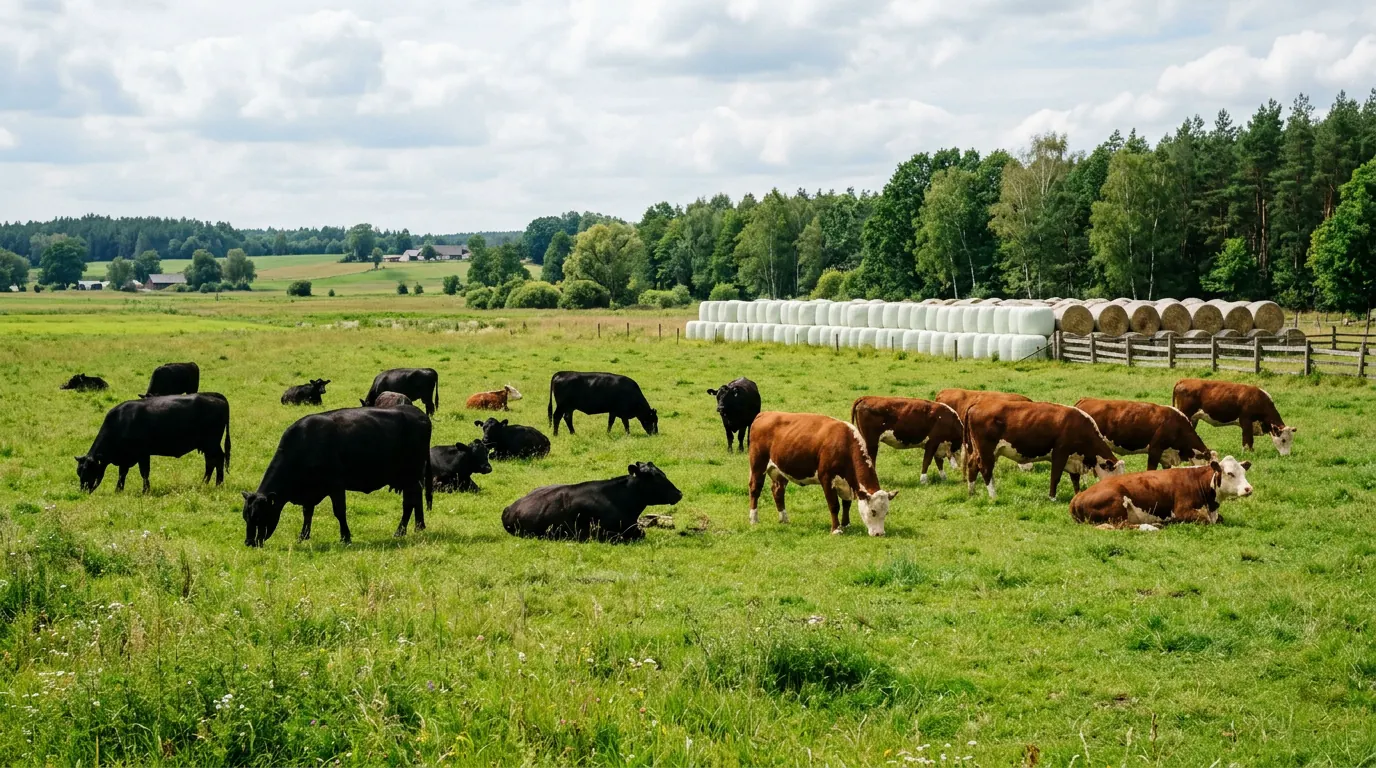
Even-toed animals (Artiodactyla) are mammals whose foot axis runs between the 3rd and 4th toe, so the body weight rests on two toes. On a farm, this group includes the domestic pig, cattle, sheep and goats. Odd-toed animals (Perissodactyla) have the foot axis running through the 3rd toe, and one toe carries the weight. These are the horse and the donkey. Poultry belongs to neither group, because chickens, ducks and geese are birds without hooves.
Why this split matters to you
The zoological split does not decide how you run your herd. What matters is what follows from it: records, notifications and treatment are written by species, not by zoological group. If you keep pigs and cattle next to horses, each animal needs its own entry with species, number and date of the event. We describe the legal position as of 22.11.2026. For any specific duty, check current information on official websites and with your vet.
Even-toed species on the farm
Pigs
The domestic pig carries its weight on two main toes. The two smaller toes usually do not touch the ground in a normal walk. This build affects how the animal moves on a run and on a slippery floor. In practice, pens with a slippery surface cause limb injuries more often than they do in cattle. Pigs are recorded as a herd and as individual animals in the litter and in fattening. If you keep pigs, the DlaFerm app for pig farmers will help.
Cattle
Domestic cattle are the largest animals in this group. Hooves need regular checks and care, because hooves that are too long or inflamed make walking hard and reduce feed intake. Keep beef and dairy cattle in separate age groups, and give every animal an ID number recorded in the register. When you buy or sell animals, you need a current entry, because without it the origin of the animal is hard to prove. We describe herd registration in the guide to IRZplus (ARiMR's online animal register): logging in and registering your herd.
Sheep and goats
Sheep and goats are smaller, but they are also even-toed. Their hooves grow fast and need trimming more often on wet ground. Small ruminants are often kept in small flocks on pasture, where health checks happen less often than in a barn. So recording every treatment and every withdrawal period matters here just as much as it does for cattle. Your vet sets the withdrawal period, and it is best to record it straight away, right after the event.
Horse and donkey: odd-toed species
Structure of the horse's foot
The horse stands on one main toe that ends in a hoof. The two side toes are reduced and do not touch the ground. This build gives strength and speed, but the hoof needs regular farrier work, at intervals matched to the animal's paddock and workload. Neglected hooves lead to gait problems that often show only at a late stage. Record hoof work and treatments in the same register as your other animals, with the date and the name of the person who did the work.
Donkey
The donkey is built like the horse, but has a smaller hoof and different feeding habits. It copes with many conditions, yet you should not assume it needs no veterinary care. A donkey's hooves and teeth also need checks. Lameness is easy to miss, so report any change in gait to your vet without delay.
What the split means when you run a farm
Records and registration
In practice, registers and notifications describe the species, not the zoological group. In your documents you record a pig, cattle, sheep, goat, horse or donkey as separate entries, each with its own number, date of birth or arrival, and location. Herd changes are reported in IRZplus. You can read about linking data from sensors in the description of integrations with IRZplus and sensors.
Treatment and withdrawal periods
Each species has its own rules for giving medicines, and at slaughter the withdrawal period counts. Your vet always chooses the medicine and the dose. In your records you note the product name, the date given and the end of the withdrawal period. This entry protects you from sending an animal to slaughter too early. We describe this record keeping in the treatment and withdrawal period module.
Slaughter and fallen animals
Slaughter for your own use and fallen animals each have their own rules. Before slaughter, check the requirements that apply in your case. If an animal dies, contact your vet and report the event to the relevant authorities. Collection and disposal of carcasses must go through an authorized business only. We cover the details in our articles on slaughtering farm animals for your own use and on disposal of fallen animals.
Hoofed animals and farm biosecurity
Entries and vehicles
Any species in your herd can carry infectious diseases, and visits by people, vehicles and equipment are a common way to bring them in. Write down the rules for entry and for moving between zones, and make everyone follow them, guests included. Fit your biosecurity plan to the animals you keep and the layout of your buildings. The biosecurity plan generator prepares a ready outline of the document.
Watching the herd
Daily observation of legs, gait and behavior lets you spot lameness, injuries or changes in feed intake early. Write down every deviation with the date and the number of the animal or group, because without a record it is hard to tell whether a problem is growing. If you suspect a disease, call your vet. Do not try to diagnose it yourself.
Poultry is not hoofed
Birds on the same farm
Many farms keep poultry next to hoofed animals. Chickens, ducks and geese are birds, so they have no hooves, and their flocks are kept in different registers with different deadlines. So the even-toed and odd-toed split does not carry over to poultry. On a mixed farm, each species should have its own record card, even if all the animals share one building or one site.
One record system for several species
Separate records for each species make checks easier, but you do not need a separate program for each. A well-built system lets you run different species side by side without mixing their data. For poultry, see the farm management software module. For pigs and cattle, use the entries described above.
Frequently asked questions
Which animals are even-toed ungulates?add
Even-toed animals are mammals that carry their weight on two toes, for example pigs, cattle, sheep and goats. The foot axis runs between the 3rd and 4th toe. This group covers most of the commonly kept farm animals other than horses.
Which animals are odd-toed ungulates?add
Odd-toed animals have the foot axis running through the 3rd toe and carry their weight on one toe. On a farm, these are mainly the horse and the donkey. Poultry does not belong to this group.
Is a chicken an even-toed animal?add
No. A chicken is a bird and has no hooves, so it belongs to neither group. Chickens, ducks and geese are kept in poultry records, not among hoofed animals.
Is a pig an even-toed animal?add
Yes. The domestic pig is even-toed, and its weight rests on two main toes. The two smaller toes usually do not touch the ground in a normal walk.
Does the even-toed and odd-toed split matter for farm records?add
The zoological split itself does not change the rules, but records and notifications work by species. So you record each animal under its species name, with a number and the date of the event. We describe the legal position as of 22.11.2026.
How do I check current rules for farm animals in Poland?add
You can find current legal acts in Poland's Internetowy System Aktów Prawnych (online legal acts database). Veterinary requirements are published by the Chief Veterinary Inspectorate (Główny Inspektorat Weterynarii), and subsidies and registers are handled by ARiMR (Agency for Restructuring and Modernisation of Agriculture). Talk to your vet before you decide.
Sources & resources
- linkChief Veterinary Inspectorate (Główny Inspektorat Weterynarii): gov.pl/web/wetgiw
- linkARiMR: gov.pl/web/arimr
- linkMinistry of Agriculture and Rural Development: gov.pl/web/rolnictwo
- linkNational Research Institute of Animal Production (Instytut Zootechniki PIB): izoo.krakow.pl
- linkInternetowy System Aktów Prawnych (online legal acts database): isap.sejm.gov.pl
Prepared by: DlaFerm Team based on data from the sources listed · Publisher: INSTA-TECH sp. z o.o.
Do you keep pigs or cattle alongside other species?
The DlaFerm module for pig farmers keeps your herd in one place, and each species has its own records. Create a free farm account or get in touch, and we will show you how it works in practice.
Phone
+48 796 258 151