Egg cartons: types, sizes and what to check before you buy
An egg carton protects eggs in storage and transport. Which one you need depends on the type of egg and the number of eggs per pack. Match the carton to the egg size, because a badly fitting cup leads to cracks and chips. Below we cover the types of cartons, their sizes and what to look at when you buy.
verifiedFrom the team that has organised work on poultry farms for years.
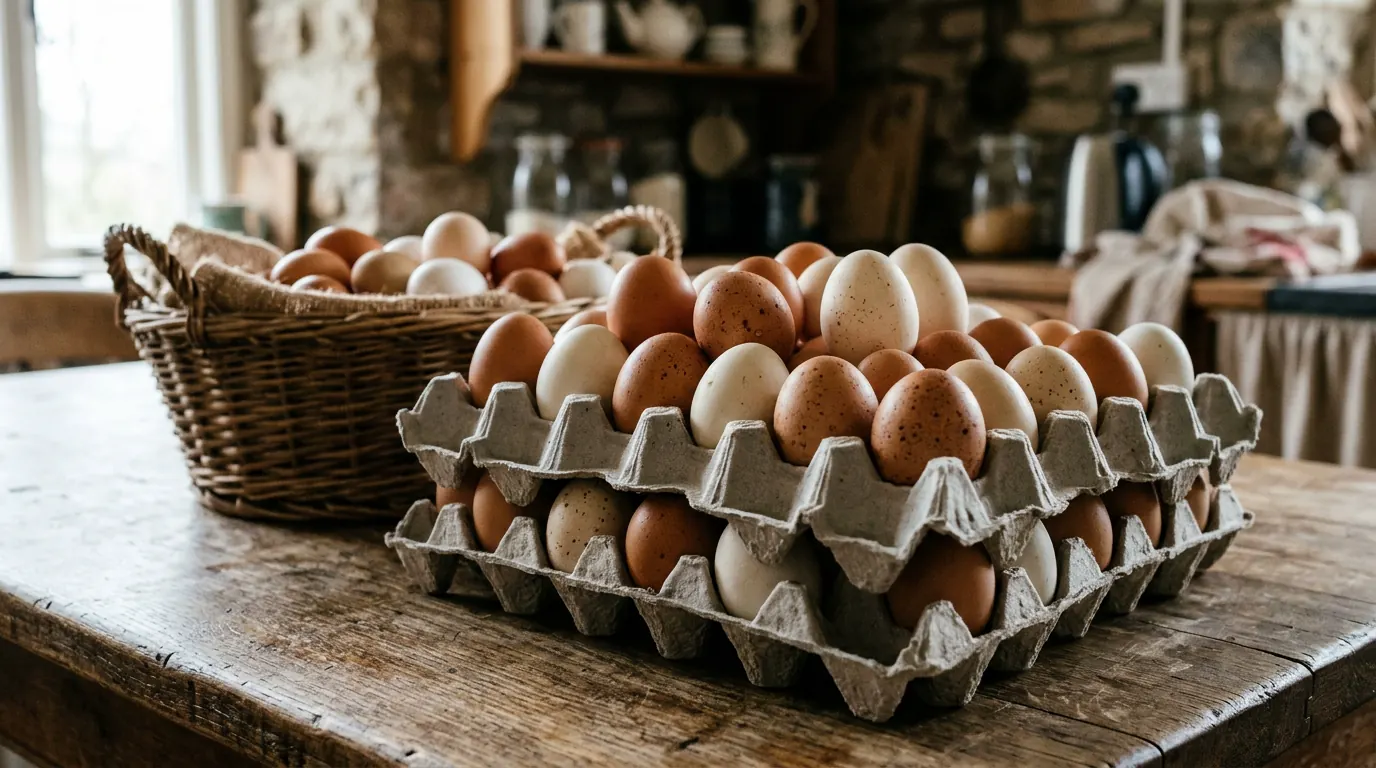
Egg cartons are packs with separate cups, so each egg sits on its own. You choose them by two things: the type of egg (chicken or quail) and the number of eggs per pack. The most common sizes hold 6, 10, 15 and 30 eggs, but what is available depends on the wholesaler and the manufacturer. Separate cups reduce shell-on-shell rubbing, which means fewer losses on every trip.
Chicken or quail: start here
Quail eggs are clearly smaller than chicken eggs, so a chicken egg carton will not hold them. Cups in a quail carton are smaller and closer together. If you keep both species, you need two types of cartons, not one universal pack. Before you order a bigger batch, measure a few eggs from your own flock and compare them with the cup dimensions given by the manufacturer. For quail, also read quail eggs: information for keepers.
Types of egg cartons
Cardboard, paper and plastic
Cartons made of recycled cardboard are light and most often chosen for single use. They absorb moisture, though, so in a damp store they warp more easily and pick up dirt. Plastic cartons are stiffer, easier to wash and disinfect, and many let you see the eggs inside. Their downsides are a higher price and harder disposal than paper. Your choice depends on whether the pack is single-use or reusable.
With a window or without
Cartons with a window let you check the eggs without opening the pack, which helps with direct sales. Cartons without a window are usually cheaper and protect better against light, which is not good for eggs kept longer. If you sell eggs from your farm, choose the carton to suit how you present them, not just the price. Material and looks do not change what happens to the shell, so keep eggs clean and store them dry whichever you pick.
Cup sizes and number of eggs
Matching the cup to the egg
A cup that is too loose lets the egg move, and that ends in cracks and chips. A cup that is too tight presses on the shell and also raises losses. So when you buy, compare the cup dimensions with the eggs your own flock actually lays, not with eggs from a shop shelf. Chicken egg size varies with breed, the age of the hen and the season, so a carton that fits once may not fit all year. Egg weight classes and labeling are set by regulations, which you can check in the selling section.
Number of eggs per pack
A 6-egg carton works for selling small lots to neighbors and for your own use. Packs of 10 and 15 suit regular pickups, and 30-egg packs are the choice for wholesale or collection points. A bigger pack costs less per egg, but needs storage space and faster turnover. If you sell eggs, check the rules in selling eggs from the farm: rules and labeling before you order cartons.
Cartons for quail eggs
Smaller cups and a delicate shell
A quail eggshell is thinner and more porous than a chicken eggshell, so it needs gentler handling. A quail carton should have cups matched to the small egg and not too deep, so the egg does not knock against the wall. When you buy, check that the carton has stiff dividers and does not warp when stacked. Quail keepers also need to keep things clean along the whole path of the egg, from the nest to the store.
Hygiene at collection and in storage
Collect quail eggs regularly and place them in clean, dry cartons. Do not put dirty eggs into the same pack. We describe the risk of bacteria, including salmonella, in salmonella in quail. If you suspect a health problem in the flock, treatment and handling decisions belong to the vet who looks after your flock.
Where to buy and what to look for
Wholesalers and manufacturers
Egg cartons are sold by packaging wholesalers, manufacturers and shops for keepers. Prices depend on the material, the print run, the type of pack and delivery costs, as well as swings in raw material markets. We do not give amounts because they change fast. Check the current offer directly with the supplier and compare several sources before you order. Look at minimum quantities, delivery time and whether you can return a damaged batch.
What to check before you order
Before you order, ask for a sample or a photo of the cup with its dimensions. Check that the pack fits the type of eggs in your flock, that it is clean and does not smell of chemicals, and how it handles damp in your store. It also helps to ask whether the supplier issues the documents needed for selling eggs. If you buy for the first time, start with a smaller batch and see how many eggs arrive undamaged.
Selling eggs: cartons and labeling
What the regulations say
Rules for labeling and selling eggs come from national and EU law. The legal state this text is based on is 22.11.2026. You can find the current text of the regulations in ISAP, Poland's Internet System of Legal Acts (isap.sejm.gov.pl). We do not quote act numbers here, because they can change. Before you sell eggs, check the list of acts in laws and regulations for poultry keepers.
Records and templates
Keeping a simple record of production and sales makes inspections and accounts easier. Cartons do not change the duty to keep documents, but well-organized templates let you fill them in quickly. You can find ready templates and forms in templates and forms for keepers: where to find them. If you have doubts about a specific case, consult your county veterinary officer (powiatowy lekarz weterynarii).
Frequently asked questions
What is the best egg carton for chicken eggs?add
There is no single best carton. Choose a pack with cups that fit the size of your flock's eggs and the way you sell. Cardboard is cheaper and single-use, while plastic is more durable and easier to disinfect.
Can I use a chicken egg carton for quail eggs?add
Usually not. Quail eggs are much smaller, so in chicken cups they slide around and crack. For quail, choose a carton with smaller, well-fitting cups.
How many eggs does an egg carton hold?add
The most common packs hold 6, 10, 15 and 30 eggs. Pick the count to match how you sell eggs and how often you collect them from the farm. Available options depend on the manufacturer and wholesaler.
Are plastic egg cartons better than cardboard ones?add
Plastic is stiffer and easier to wash, so it suits repeated use better. Cardboard is light, cheap and single-use, but it absorbs moisture. The choice depends on how you store eggs and whether cartons go back into circulation.
How much does an egg carton cost?add
We do not give amounts, because prices change with raw material markets and delivery costs. The price depends on the material, the type of pack and the size of the order. Check a current quote directly with the supplier, ideally comparing several offers.
Do egg cartons need labeling when I sell eggs?add
Egg labeling requirements come from regulations that are updated regularly. Check the current text in ISAP, Poland's Internet System of Legal Acts, and with your county veterinary officer. Do not assume markings from memory, because the rules can change.
Sources & resources
- linkMain Veterinary Inspectorate (Główny Inspektorat Weterynarii) — gov.pl/web/wetgiw
- linkMinistry of Agriculture and Rural Development (Ministerstwo Rolnictwa i Rozwoju Wsi) — gov.pl/web/rolnictwo
- linkInternet System of Legal Acts (Internetowy System Aktów Prawnych) — isap.sejm.gov.pl
Prepared by: DlaFerm Team based on data from the sources listed · Publisher: INSTA-TECH sp. z o.o.
Do you keep laying hens and sell eggs?
The DlaFerm.pl <a href="/program-do-zarzadzania-ferma-drobiu">farm management software</a> keeps your flock and production in one place. Create a free farm account in DlaFerm.pl and see how it works in practice.
Phone
+48 796 258 151