Do cows have horns? Calf disbudding and the rules
Yes, cows have horns, and you can see the horn buds already on calves. Disbudding means removing the buds, usually in the first weeks of a calf's life, when the procedure is least stressful. Below we cover timing, methods and the welfare rules to know before you start.
verifiedFrom the team that has organised work on poultry farms for years.
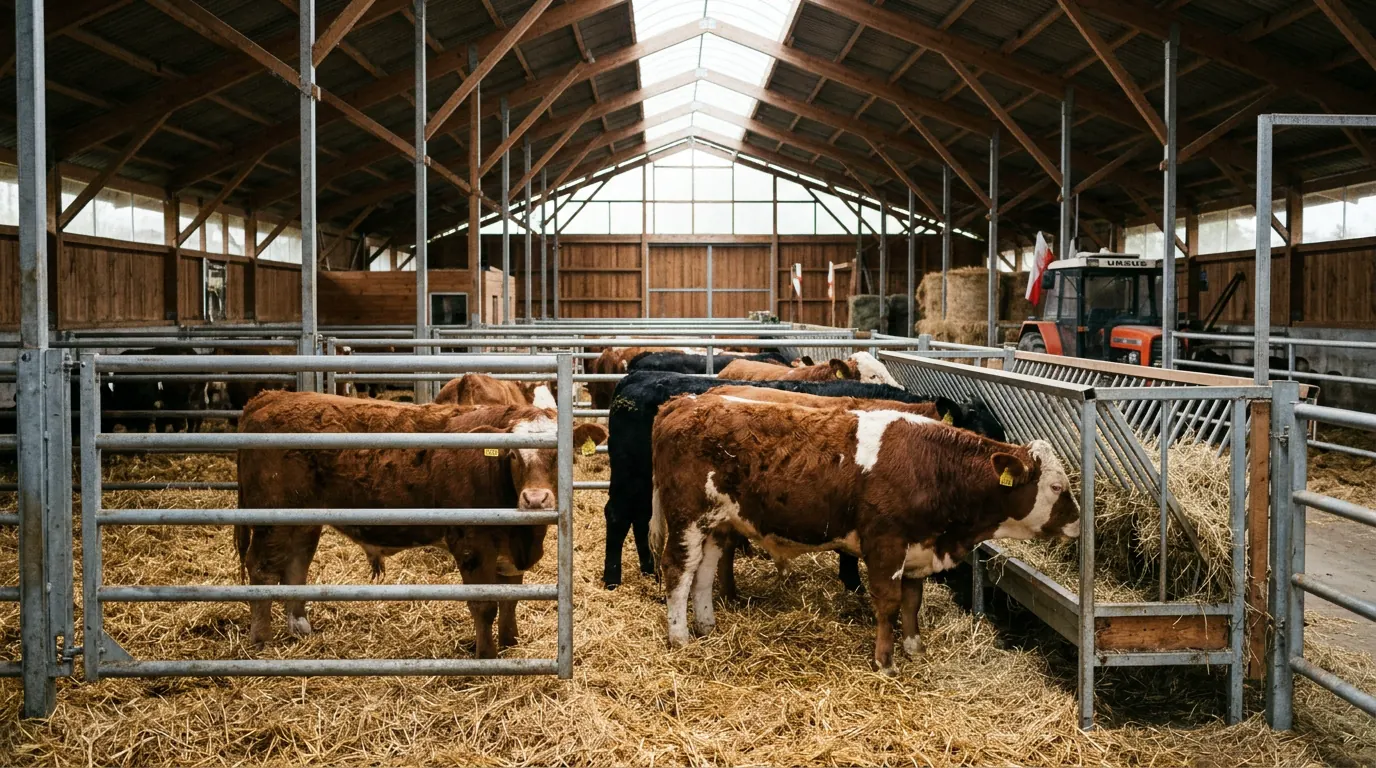
Yes, cows have horns. In cattle, horns are permanent bony growths of the skull covered in horn tissue, and the buds start to form in the calf. Removing the buds, known as disbudding or dehorning, is standard practice in many beef herds. Hornless animals are safer to handle, need less space at the feed barrier and are less likely to injure people or other animals. You decide whether and when to do it, but you do it within animal protection law and after talking to your vet. See also our guide to beef cattle.
Why calves are disbudded
The KPODR Minikowo manual (a regional agricultural advisory center in Poland), written with authors from SGGW (Warsaw University of Life Sciences), says that animals without horns are easier to care for and that the risk of injury to people and other animals falls. Animals without horns need less room in the pen and at the feed table or trough. At higher stocking densities horns can cause injuries in the herd, so many farmers choose to disbud. For you that means fewer risky moments at the pen, when loading for transport and when working in an enclosed space.
When to remove horn buds in calves
Age and bud size
Horn buds should be removed before they become permanently attached to the skull. According to the KPODR manual, this is usually done in the first 4–6 weeks of a calf's life, when the buds are 5–10 mm. At that stage tissue damage is smaller and the procedure is less stressful than in older animals. Small calves are also easier and safer to handle. If a bud is clearly larger, that is a sign the procedure needs more care and a talk with your vet.
When horns have already formed
If the right moment was missed and the horns have formed, dehorning is a more serious procedure. The KPODR manual points out that removing horns from older animals causes greater tissue trauma. Do not decide alone in this case. Your vet assesses the animal, chooses the approach and decides on any anesthesia. Note the animal's age and the date of the procedure in your herd records so you know later what was done.
Calf disbudding methods
The thermal method
The KPODR manual lists several methods. It puts the thermal method first: burning off the buds with a hot tool. It is used on calves while the buds are still small and not attached to the skull. The procedure needs a steady hand and safe restraint of the animal. Before you choose this method, agree with your vet how pain will be controlled and whether you or a specialist will carry it out. The full description of methods is in the KPODR manual.
Other methods and pain
Other methods exist besides the thermal one. The choice depends on the animal's age, your farm conditions and your vet's advice. Whatever the method, limiting pain and stress always matters. We give no doses or product names here, because the vet chooses the medicine and dose, knowing your herd and the animals' health. If a calf will not eat after the procedure, bleeds or seems restless, call your vet the same day.
Welfare rules for disbudding
EU standards for calf protection
Council Directive 2008/119/EC sets the minimum standards for the protection of calves. Its requirements cover general animal care and form the background for all procedures. EFSA (European Food Safety Authority) scientific opinions on calf welfare describe procedures, including dehorning, as a source of pain and stress. So plan them early, carry them out quickly and limit pain. Dehorning itself is regulated by national animal protection law, so check the current text before you start.
Polish rules and legal status
In Poland, the rules for carrying out procedures on animals come from the Animal Protection Act and its implementing regulations. This article describes the legal position as of 22.11.2026 and does not replace reading the act. Inspections are carried out by the county veterinary officer (powiatowy lekarz weterynarii). In practice inspectors look at whether the procedure was done without unnecessary pain and whether it is documented. Before your first procedure, check the current text in ISAP (Poland's online database of legal acts) and ask your vet about the requirements in your county. More paperwork guidance is in rules and documents for beef cattle farmers.
Aftercare and records
Watching the calves
Watch the calves for several days after the procedure. Check that they eat and drink milk, do not bleed, have no fever and stand calmly. Wounds should heal, and changes in behavior or apathy call for a vet visit. Give them dry, clean bedding, because damp encourages infection. Do not give painkillers or antibiotics on your own. The vet chooses the medicine, dose and route.
Recording the procedure and withdrawal period
Write down the date, the calf's age, the method and who did it. If a medicine was given, record its name and withdrawal period. The easiest way to keep treatment and withdrawal records is the DlaFerm.pl treatment and withdrawal module, so you do not lose track of dates when you sell animals. Keep your general herd records in the farm management software.
Polled genetics and herd registration
Breeds and the polled gene
Some beef breeds are naturally hornless because of the polled gene. The best-known polled breed is Angus, but hornlessness also appears in other breeds, especially after crossbreeding. When you plan a herd, it helps to know whether an animal carries the polled gene, because then no procedure is needed. The livestock breed atlas on the ZPE platform (Poland's Integrated Educational Platform) helps you compare breeds before you choose a bull or a breeding herd.
Registration and the herd cycle
Animal data goes into farm registers, and some of it can be sent to IRZplus, ARiMR's online animal register (ARiMR is Poland's Agency for Restructuring and Modernisation of Agriculture). The IRZplus and sensor integration cuts manual retyping. Also plan your calving cycle so that procedures on calves fall at a convenient time of year. Stocking and cycle planning helps with that.
Frequently asked questions
Are cows born with horns?add
Calves have horn buds from birth, and the horns develop over the first months of life. The buds are clearly visible on the young animal's skull before they attach permanently. Some breeds are naturally hornless, so not every animal has horns.
When is the best time to disbud a calf?add
According to the KPODR manual, it is usually done in the first 4–6 weeks of life, when the buds are 5–10 mm. At that stage tissue damage is smaller and the procedure is less stressful. Agree the exact timing with your vet.
Does disbudding calves require anesthesia?add
Your vet decides on anesthesia, assessing the animal's age, the method and your farm conditions. The procedure on older animals with formed horns causes greater tissue trauma, so it is worth planning earlier. We give no doses or medicine names here.
Is cattle dehorning legal?add
The procedure is covered by animal protection law and must be done without unnecessary pain. Check the legal status as of 22.11.2026 in ISAP. Discuss the requirements in your county with the county veterinary officer.
How do I keep records after dehorning?add
Write down the date, the calf's age, the method, who did the procedure and any medicine with its withdrawal period. These records help at inspections and when you sell animals. You can keep them in the DlaFerm.pl treatment and withdrawal module.
Sources & resources
- linkKPODR Minikowo — Raising beef calves (manual, SGGW authors)
- linkEU / Publications Office of the EU — Council Directive 2008/119/EC laying down minimum standards for the protection of calves
- linkEFSA AHAW Panel — Welfare of calves (EFSA Journal 21(3):7896)
- linkInternet System of Legal Acts (ISAP) — isap.sejm.gov.pl
- linkZPE / MEiN (Integrated Educational Platform) — Farm animal breeds, interactive atlas (e-material ROL.11)
Prepared by: DlaFerm Team based on data from the sources listed · Publisher: INSTA-TECH sp. z o.o.
Do you run a beef herd and want all procedures in one place?
The DlaFerm treatment and withdrawal module records procedures, medicines and withdrawal dates in one place. Create a free farm account or get in touch, and we will show you how it works in practice.
Phone
+48 796 258 151