Canadian turkey: breed, weight and how to raise it
Farmers and sellers use the name "Canadian turkey" loosely, so the first step is to confirm which breeding line you actually mean. The line sets body weight, growth rate and housing needs. Below we explain how to check where your birds come from, how to track weight and what data to keep on the farm.
verifiedFrom the team that has organised work on poultry farms for years.
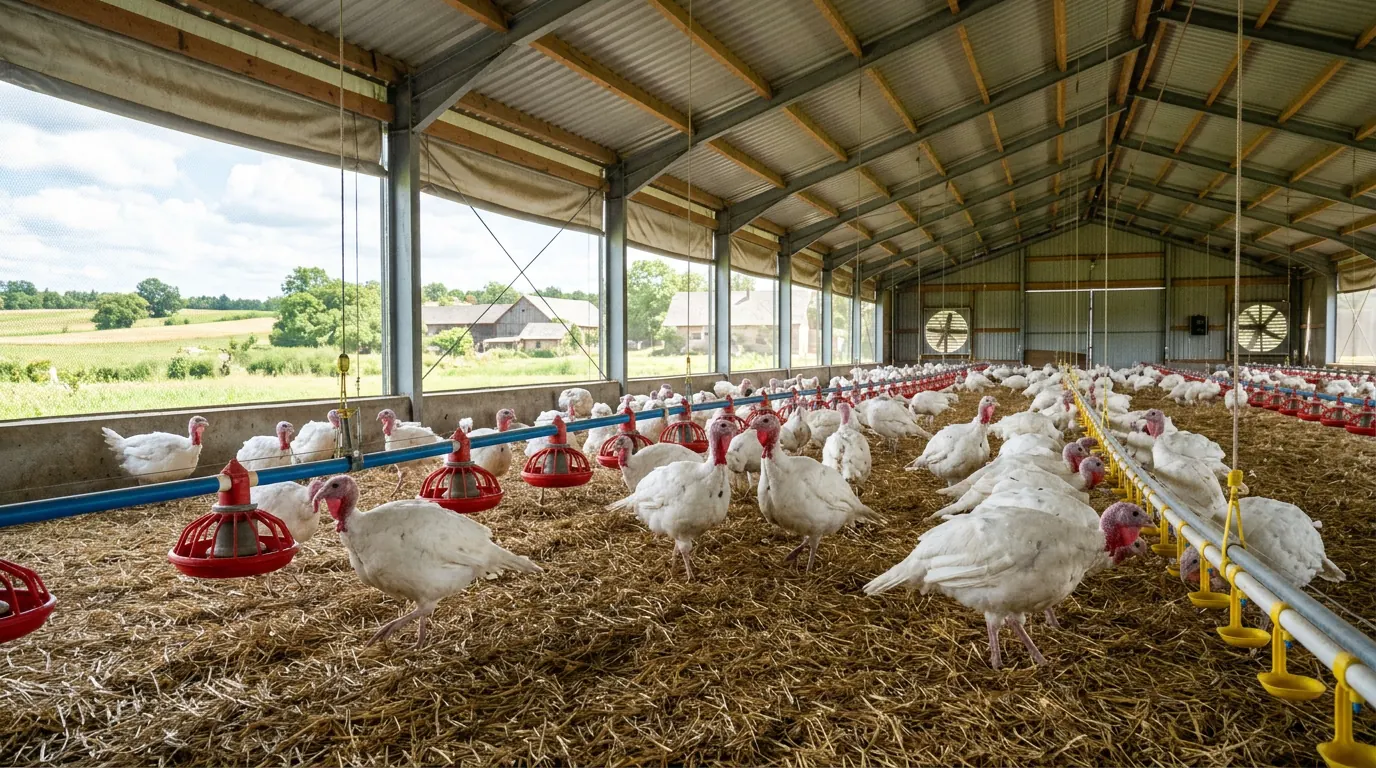
"Canadian turkey" is a term used in trade and in talk between keepers, but it does not always mean the same bird. Before you buy poults or young turkeys, ask the seller for the line name, the origin of the flock and the paperwork. Without these details you cannot compare body weight or results with other batches. So the line matters more than the trade name. Base every later decision on feeding, housing and health checks on that documentation.
How do you know what you are buying?
Feather color can mislead, because birds from different lines can look alike. A safer source is the breeder's paperwork: line name, hatch date, type of parent flock and health test results. Enter these details in your farm records from day one, because after a few weeks it is hard to trace where a batch came from. If a breeder will not share them, treat that as a warning sign.
How to recognize a Canadian turkey on your farm
Outward features
When you assess a bird, look at body build, leg length, feather color and general condition. A healthy turkey is lively, has clear eyes and smooth plumage, and moves with confidence. A visual check lets you reject clearly weak birds, but it will not show whether a bird belongs to the line the seller claims. For that you need documents and a comparison with the standard the breeder gives you.
A native breed for comparison
If you are also considering native birds, read about the Old Polish turkey (indyk staropolski), a native Polish breed. The differences lie mainly in growth rate, body weight and feed needs, not just looks. The best comparison uses results from your own farm, recorded over several production cycles.
Body weight and growth control
What body weight depends on
A turkey's body weight depends on sex, line, age at slaughter, feed quality and housing conditions. Males grow clearly faster and reach a higher weight than females, so do not judge them by the same norms. The breeder should give target values in the line's documentation, as reliable tables for every line are not found in one source. Compare your flock with those values, not with data from other farms.
How to weigh and what to record
Sample weighing, done regularly on the same part of the flock, gives a reliable picture. Record the average weight, the spread of weights in the batch and the age at which you weighed. A wide spread usually points to a problem with access to feed or water, not a trait of the line. Such records let you react before differences become fixed.
Performance indicators
Besides weight, it is worth calculating feed use, meaning the feed conversion ratio (FCR), and the production efficiency factor (EPEF). They let you compare batches with different final weights and judge profitability. Keep the data in one place, FCR and EPEF online, instead of jotting it on paper by each pen.
Housing and cycle planning
Housing and microclimate
Turkeys need dry litter, even temperature and good ventilation without drafts. Wet litter and excess ammonia quickly worsen flock condition and raise the risk of respiratory disease. Record house temperature and humidity, and litter changes, because these data help explain drops in performance. Exact norms for a given line come from the breeder or a vet.
Stocking density and range
Too many birds per square meter limits access to feed and water, and that hurts weight uniformity. Before placement, measure the floor area and plan how to split the birds into groups. Keeping house records lets you log stocking density, placement date and bird movements between houses, which makes it easier to control the cycle.
Planning placements
Your schedule should allow for the slaughter date, the downtime between flocks for cleaning and disinfection, and feed deliveries. Batches placed a short time apart get mixed up in the stores and make results hard to judge. Record each cycle separately, with placement date, slaughter date and final result.
Treatment, withdrawal periods and biosecurity
Treatment only under supervision
A vet who knows the flock and the test results always chooses the medicine and dose. The keeper records the administration, product name, route and date. The withdrawal rule is simple: between the last dose and slaughter, the period stated in the product's summary of characteristics and in the vet's advice must pass, and the birds must not go to slaughter earlier. Always check exact periods in the product documentation.
Treatment and withdrawal records
Keep the treatment log in one place so there is no doubt at slaughter about which medicine was given and when. The Treatment and withdrawal module in DlaFerm.pl matches doses with slaughter dates, so it is easier to check compliance before a batch ships.
Biosecurity and people movement
Limited entry to the farm, protective footwear, disinfection and a split between clean and dirty zones are the basics of flock health. Record visits by people and vehicles, because if disease appears, such a list helps trace how it spread. You can build your action plan step by step in the biosecurity plan generator and log entries in the QR entry and exit book.
Duties and registration
Rules on keeping poultry, registering flocks and reporting events are set out in acts in ISAP (Poland's online legal database) and in guidance from the Chief Veterinary Inspectorate (Główny Inspektorat Weterynarii). Check the legal position as of 22.11.2026 in official sources, because rules change. Handle payments and registration in the systems of Poland's ARiMR (Agency for Restructuring and Modernisation of Agriculture) according to the agency's current rules.
Records and profitability
What drives the financial result
Profitability depends on feed price, the price of birds placed, losses in the cycle and the buying-in price, which changes over time. We describe market prices only in general terms, because quotes change often. You can check current rates with buyers and in trade publications, and you should record your own costs in every cycle.
Comparing cycles
Putting several cycles side by side shows whether changes in feeding or stocking pay off. Before you change the line or the scale, work out the result per unit of weight and per bird. The turkey farming profitability tool helps you set up such a comparison, and the DlaFerm.pl farm management software keeps flock records from placement to slaughter.
Frequently asked questions
What is a Canadian turkey?add
It is a term used in trade and in breeding practice for turkeys from certain lines. It does not always mean the same bird, so before you buy, ask for the line name and the paperwork. These data let you compare your flock's results with the declared parameters.
How much does a Canadian turkey weigh?add
Weight depends on sex, line, age at slaughter and feeding. Males usually reach a clearly higher weight than females. The line's breeder gives the target values, and you compare them with your own flock using sample weighing.
How do I start raising turkeys as a beginner?add
Start by checking where the birds come from and preparing a house with dry litter and good ventilation. From day one, record weight, stocking density, feed use and treatments. You will find more tips in the guide to raising turkeys for beginners.
Who chooses the medicine and dose for turkeys?add
A vet always chooses the medicine and dose. The keeper is responsible for recording each treatment correctly and keeping to the withdrawal period. Do not give products on your own without a visit and a diagnosis.
How do I work out the withdrawal period before slaughter?add
The withdrawal period is given in the product's summary of characteristics and in the vet's advice. At least that much time must pass between the last dose and slaughter. Record the date of treatment and the planned slaughter date to avoid mistakes.
Is it enough to keep records on paper?add
Paper is possible, but it makes it harder to compare cycles quickly and check withdrawal periods. Electronic records let you compare results across several years and react faster to drops in weight. Choose the form you will keep up regularly.
Sources & resources
- linkChief Veterinary Inspectorate (Główny Inspektorat Weterynarii) — gov.pl/web/wetgiw
- linkARiMR — gov.pl/web/arimr
- linkNational Research Institute of Animal Production (Instytut Zootechniki PIB) — izoo.krakow.pl
- linkInternet System of Legal Acts (ISAP) — isap.sejm.gov.pl
Prepared by: DlaFerm Team based on data from the sources listed · Publisher: INSTA-TECH sp. z o.o.
Do you raise turkeys alongside other poultry?
DlaFerm.pl keeps flock records, weights and withdrawal periods in one place. Create a free farm account or get in touch, and we will show you how it works in practice.
Phone
+48 796 258 151