Canada goose: breed, looks and keeping
The Canada goose is a bird of the species Branta canadensis. It comes from North America and is now also found in Europe. It is not a farm breed, so keeping it calls for a different approach than keeping domestic geese. We explain how to recognize it, how to set up housing and which rules to check in Poland before you buy birds.
verifiedFrom the team that has organised work on poultry farms for years.
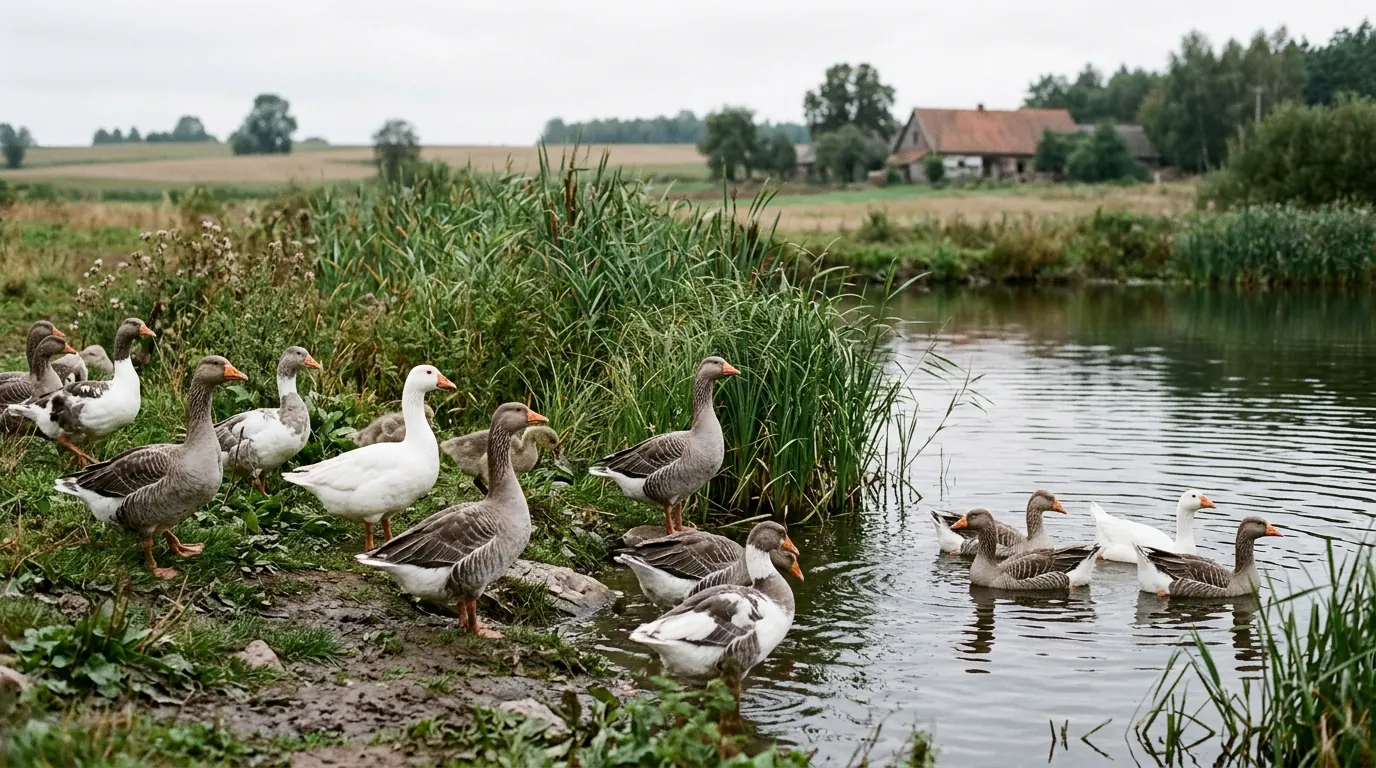
The Canada goose is a bird of the species Branta canadensis, native to North America. In Europe it lives in the wild and is also kept in parks and on farms. It was not bred for meat, feathers or eggs the way farm geese were. So before you plan to keep it, decide what the birds are for and check that the rules allow it. Below we describe the species' looks, space needs, health, rules in Poland and record keeping.
How to recognize a Canada goose
Head and neck coloring
The most striking features are the black head and long black neck, with a clear white patch on the cheeks and chin. The body is brownish gray with a paler underside. Adult birds keep this color pattern, so you can identify the species at a glance.
Build and behavior
The Canada goose is clearly slimmer than domestic geese and has a longer neck. The birds live in pairs, and outside the breeding season they often form larger flocks. Males and females are hard to tell apart by sight. For your records, rely on the marking from the seller or on an exam by a vet.
How it differs from domestic geese
Domestic geese descend from the greylag goose and come in many plumage varieties. The Canada goose is a separate species. When you buy, check the birds' origin in the breeding documents, not just their looks.
Space, water and feed
A body of water
The Canada goose is a waterbird. It needs a pond or other water where it can swim, forage and clean its feathers. Without water, plumage condition gets worse and skin problems become more likely. The banks should slope gently, and the area around the water should not be flooded with runoff from the yard.
Fencing and shelter
Fence the run so the birds cannot leave, and protect it from foxes, raccoon dogs and dogs. The birds need shelter at night and in rain. If you use wire mesh, check that the bottom edge is buried, because predators often dig under it.
Feed and drinking water
The base of the diet is fresh grass and bulky feed, with a smaller amount of concentrate. Geese readily eat greens from the garden. Agree the feed mix and amounts with a vet or a nutrition adviser, because they depend on age, condition and season. Always provide clean drinking water.
Health and biosecurity
Wild birds and your farm
According to EFSA (the European Food Safety Authority), waterfowl, including free-living birds, are an important source of avian influenza viruses. Limit contact between the run and wild birds, and keep wild birds away from the water you provide. Risk depends on region and season, so check the current situation with the Chief Veterinary Inspectorate (Główny Inspektorat Weterynarii). The biosecurity plan generator in DlaFerm.pl also helps.
New birds under observation
Bring in each new goose only after an observation period in a separate place. Check appetite, breathing, droppings and the behavior of the flock. Write down what you see, so you can judge whether a bird is healthy before it joins the rest.
Treatment and withdrawal periods
A vet always chooses the medicine and dose for the bird. After treatment, keep to the withdrawal period, the time during which birds or their products must not be used as food. Record each treatment with the product name, date and withdrawal end date in the treatment and withdrawal module.
Rules and documents before you buy
Nature protection
The Canada goose is a non-native species in Poland, and in the wild it falls under nature protection rules. Before you buy, check in the nature protection act and its implementing regulations whether keeping the species in captivity needs permission. Current legal acts are in ISAP, Poland's online database of legislation (Internetowy System Aktów Prawnych).
Flock registration and records
Keeping poultry requires registering the premises and keeping records. Ask your county veterinarian which documents apply to keeping a non-native waterfowl species. In practice, veterinary offices can be stricter than the rules themselves, so confirm the requirements with the office before you start.
Subsidies and support
Some subsidies and programs for keepers are run by ARiMR (Agency for Restructuring and Modernisation of Agriculture), and conditions can change. Before you plan a budget, check the current rules on the ARiMR website and on the site of the Ministry of Agriculture and Rural Development.
Keeping flock records
Run records
Write down how many birds are in each run and when they arrived and left. For free-ranging and semi-free birds, also note the number of dead birds and the causes. The poultry house records in DlaFerm.pl help with this.
Visitor log
Everyone who enters the area with the birds should be logged with date and time. You can keep the visitor log on paper or in the QR entry and exit log module. For biosecurity, it is a simple way to know who had contact with the flock.
Costs and profitability
What sets the price of a bird
The price of a Canada goose depends on age, sex, origin and whether the bird has documented breeding. Prices change through the season, so we give no amounts. You will find current comparisons in the article on how much a hen, duck or goose costs, and you should agree the price directly with the breeder.
Running costs
The biggest items are the run with water, predator-proof fencing, feed and veterinary care. Waterfowl are not kept for meat or feathers on the scale of farm geese, so return on investment is usually not the basis for the decision. Before you invest, set your purpose, for example an ornamental flock, and check that it complies with the rules. For general principles, see goose farming profitability.
Canada goose vs farm geese
Farm geese
If you want meat or feathers, domestic geese are the better starting point. We describe keeping them in the goose keeping guide. If you are starting out, we also have a separate guide: keeping geese for beginners.
Do not swap species
The Canada goose and the bean goose (gęś owsiana) differ in looks, behavior and needs. Do not treat one as a substitute for the other, and always confirm which species you are getting before you buy.
Frequently asked questions
How is a Canada goose different from a domestic goose?add
The Canada goose is a separate species from North America, with a black head and neck and a white patch on the cheeks. Domestic geese descend from the greylag goose and have very varied plumage. They also differ in behavior and in what they need from a run.
Do you need permission to keep a Canada goose?add
The species falls under nature protection rules, so check the requirements in ISAP, Poland's legal database, before you buy. Also confirm them with your county veterinarian, because office practice can be stricter than the rules. Do not assume that a standard poultry flock registration is enough.
How much does a Canada goose cost?add
The price depends on age, sex, origin and whether the bird has documented breeding. We give no amounts because they change through the season. Agree the price directly with the breeder and compare it with current live poultry price lists.
Does a Canada goose need water?add
Yes, it is a waterbird. It needs a pond or other water to swim in and clean its feathers, plus clean drinking water. Protect the water from wild birds and from contamination from the yard.
How do you protect geese from disease?add
Keep new birds apart for an observation period, limit contact with wild birds and keep a visitor log. A vet always chooses the medicine and dose, and after treatment you must keep to the withdrawal period. Check the current situation with the Chief Veterinary Inspectorate.
Can you keep Canada geese for meat?add
The species is not a farm breed, so it is not kept for meat on the scale of domestic geese. If production is the aim, consider farm geese instead. Before you decide, check with a vet the rules on trading birds and their products.
Sources & resources
- linkChief Veterinary Inspectorate (Główny Inspektorat Weterynarii) — gov.pl/web/wetgiw
- linkInternet System of Legal Acts (ISAP) — isap.sejm.gov.pl
- linkNational Research Institute of Animal Production (Instytut Zootechniki PIB) — izoo.krakow.pl
- linkEFSA — efsa.europa.eu
- linkMinistry of Agriculture and Rural Development (Ministerstwo Rolnictwa i Rozwoju Wsi) — gov.pl/web/rolnictwo
Prepared by: DlaFerm Team based on data from the sources listed · Publisher: INSTA-TECH sp. z o.o.
Keeping a goose flock alongside other birds?
The poultry house records in DlaFerm.pl let you log bird numbers and movements in one place. Create a free farm account and see how it works in practice.
Phone
+48 796 258 151