Campylobacter in poultry: where it comes from on the farm and how to reduce it
Campylobacter is a bacterium that usually causes no signs in birds but causes campylobacteriosis in people. According to the EFSA and ECDC report for 2023, it was the most commonly reported zoonosis in people in the EU. We describe how the bacteria get into the house and which steps lower the risk.
verifiedFrom the team that has organised work on poultry farms for years.
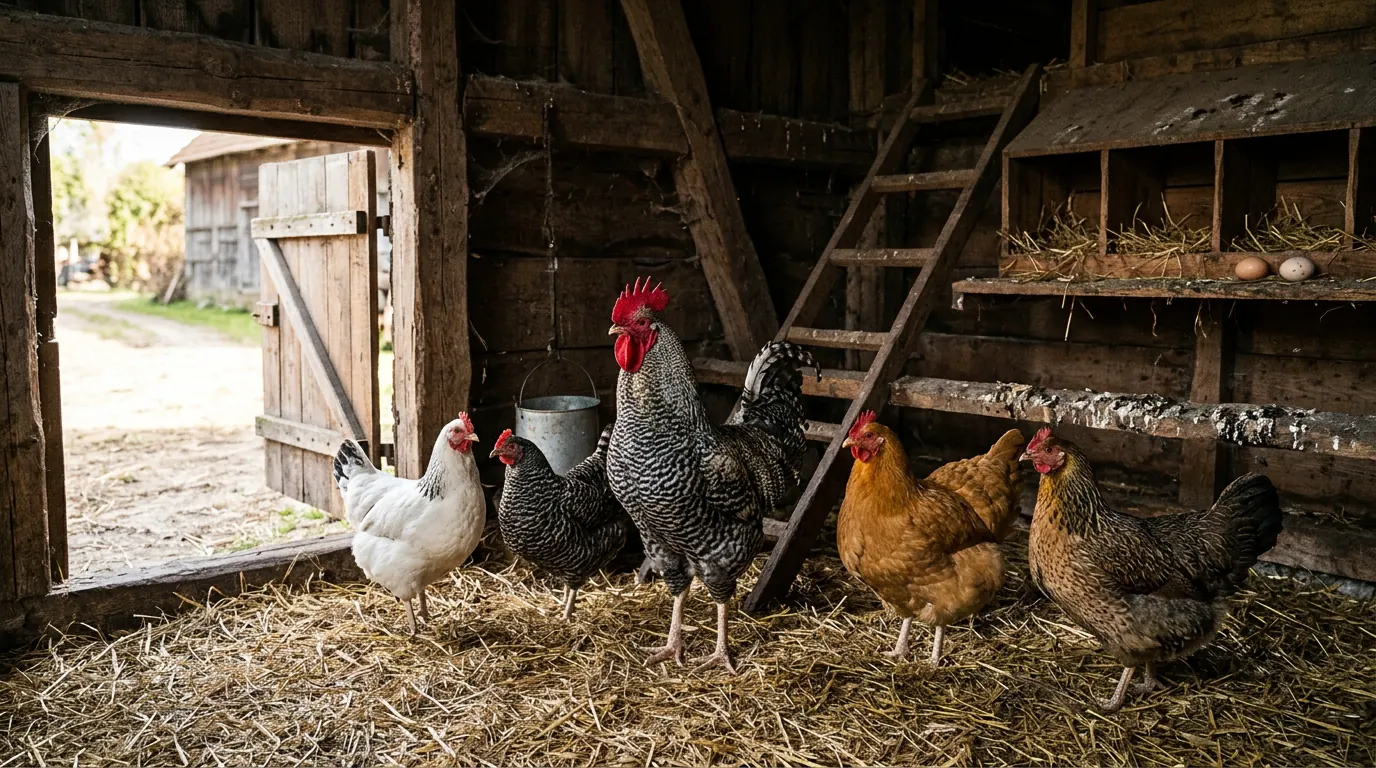
Campylobacter is a gut bacterium that can live in the digestive tract of poultry without any visible signs in the birds. That makes it a hard opponent: the flock looks healthy, and the problem only shows up when carcasses are checked at the slaughterhouse. You limit it with order, not with medicines: zones, hygiene at entry points, clean water and pest control.
The scale of the problem in the European Union
The EFSA and ECDC zoonoses report for 2023 covers 27 member states, Northern Ireland and 10 non-EU countries. According to this report, campylobacteriosis was the most commonly reported zoonosis in people in 2023, and salmonellosis was second. In both cases the number of cases rose compared with 2022. For this reason slaughterhouses and processing plants look at results from farms more and more closely.
What you will find below
We explain how Campylobacter reaches the house, how carcass checks work at the slaughterhouse and which biosecurity steps give the most benefit. We also show how farm records help when you talk to your buyer and to the inspection. Similar rules apply to Salmonella on a poultry farm.
How Campylobacter gets into the house
People, footwear and equipment
The most common way in is dirt brought from outside: on boots, coveralls, cart wheels, crates and tools. Anyone who enters the house, whether a worker, service technician, driver or catching crew, can bring the bacteria from another site. That is why it matters who comes in, where they come from and what they wear. We describe entry rules in the article on the clean and dirty zone. When many people come and go, a digital entry and exit log with a QR code helps.
Water, pests and wild animals
The second source is water in drinkers and water lines when it is contaminated or builds up sediment. Rodents, insects and wild birds that can reach the house, feed or litter can also carry the bacteria. Gaps in walls, open vents without screens and spilled feed make it easier for them to get in. For details on rodent protection, see the article on rodent control on the farm, and for water condition see water management on the farm.
The previous flock and the chicks
Risk also comes from poor cleaning and disinfection after the previous flock and from too short a gap between placements. Leftover litter, sediment in drinkers and dirt in the entry room are places where bacteria can survive until the next cycle. A good placement plan leaves time for cleaning, disinfection and checks. Order chicks from reliable hatcheries; you will find a list on the page about poultry hatcheries in Poland.
How to reduce Campylobacter on your farm
Zones, entry room and clothing
Divide the farm into a clean part and a dirty part, and set one place where you change footwear and clothing. Each house should have its own footwear and its own tools, and hand washing and boot disinfection should happen at every entry. Workers do not move from one house to another without changing clothes. Plan the order of work so that you start with the youngest flocks. We describe practical work rules in the article Working on a poultry farm. You can build a ready plan in the biosecurity plan generator.
Clean water and acidifying
Keep water lines clean: flush them between flocks and check for sediment in drinkers. Acidifying water is used in poultry production, and its effect on Campylobacter was studied by Haughton and coauthors in a 2013 paper in British Poultry Science, which tested a commercially available acidifying product before slaughter. Results depend on the product and the conditions, so discuss the choice of product and how to use it with your vet. We write more about this method in the article on acidifying drinking water.
Pests, feed and litter
Close gaps, fit screens on vents and do not leave spilled feed around the building. Store litter in a dry, closed place that wild animals cannot reach. Run pest control with a record of where baits are placed and the dates of checks. Silo monitoring makes it easier to keep watch over silos and feed. Treat any sign of rodents in the house as a signal to act at once.
How Campylobacter is assessed on carcasses
The limit in Regulation 2073/2005
Slaughterhouses take neck skin samples from chilled broiler carcasses in line with Commission Regulation (EC) No 2073/2005. The result is compared with the process hygiene criterion (PHC) limit for Campylobacter. The EFSA and ECDC report for 2023 lists the share of samples above this limit by who took the samples and in which country. Check the exact limit value in the text of the regulation in Poland's legal acts database (ISAP) or with your vet.
Official controls and own testing
According to the EFSA and ECDC report for 2023, samples for quantitative Campylobacter counts from broiler carcasses were more often positive when an official authority took them than when the plant tested itself. The simple lesson for you: a good result in your own test gives no certainty. Rely on steady hygiene, not on single results. Ask your buyer for the results of batches from your farm and compare them between flocks.
Records that help you control the risk
What to record in every cycle
Record the dates of cleaning and disinfection, drinker checks, pest control checks, visits by outside people and events in the flock. When the buyer reports a slaughterhouse result, you compare it with your records and work out what set that cycle apart from earlier ones. In DlaFerm you keep this in the house records and in the digital flock card. All entries are in one place, including on a worker's phone.
Quality schemes required by buyers
Poultry buyers often require farms to take part in quality schemes, which set out hygiene procedures and records. We describe the rules in articles on the QS system, QAFP and HACCP and ISO 22000. Check the detailed requirements in the documents of the scheme and with your buyer. Well-kept records shorten an audit and make it easier to answer inspectors' questions.
Frequently asked questions
Does Campylobacter cause signs in chickens?add
Birds usually show no signs, so the problem is found only in tests, including at the slaughterhouse. In people the bacterium causes campylobacteriosis. If you suspect a problem in a flock, talk to your vet.
Is Campylobacter the same as Salmonella?add
No, they are two different bacteria. According to the EFSA and ECDC report for 2023, campylobacteriosis was the most commonly reported zoonosis in people and salmonellosis was second. Hygiene rules are similar, but control programs differ, so read about Salmonella separately.
How does Campylobacter get into a chicken house?add
Most often with footwear, clothing and equipment, with water, through rodents, insects and wild birds, and from leftovers of the previous flock. That is why you limit it with zones, cleaning, disinfection and pest control.
Does acidifying drinking water get rid of Campylobacter?add
There is no guarantee. The effect of acidifying products was studied by Haughton and coauthors in 2013, among others, but the result depends on the product and the conditions on the farm. Treat acidifying as an addition to biosecurity and agree it with your vet.
Where can I check the Campylobacter limit on carcasses?add
In Commission Regulation (EC) No 2073/2005, which sets microbiological criteria for foodstuffs. You will find the text in Poland's legal acts database (ISAP) and on the website of the Chief Veterinary Inspectorate (Główny Inspektorat Weterynarii).
How do I document my Campylobacter control measures?add
Record cleaning and disinfection, drinker checks, pest control checks and visits by outside people in every cycle. Records help you find the cause when the buyer reports a poor slaughterhouse result.
Sources & resources
- linkThe European Union One Health 2023 Zoonoses Report (EFSA Journal / ECDC)
- linkWelfare of broilers on farm (Scientific Opinion, EFSA Journal 21(2):7788, 178 pp)
- linkChief Veterinary Inspectorate (Główny Inspektorat Weterynarii) — gov.pl/web/wetgiw
- linkPoland's Internet System of Legal Acts — isap.sejm.gov.pl
Prepared by: DlaFerm Team based on data from the sources listed · Publisher: INSTA-TECH sp. z o.o.
Keep your biosecurity records in DlaFerm house records
House records and the QR entry log let you record cleaning, disinfection, pest checks and visits by outside people in every cycle. Create a free farm account in DlaFerm or get in touch.
Phone
+48 796 258 151