California quail: variety and egg laying
In Poland, "California quail" (przepiórki kalifornijskie) is the name sold for a colored variety of the Japanese quail, kept mainly for eggs and looks. Egg laying depends on the flock's origin, feed, day length and calm in the house, not on the variety name. Below we cover what these birds need in housing, feed and disease prevention.
verifiedFrom the team that has organised work on poultry farms for years.
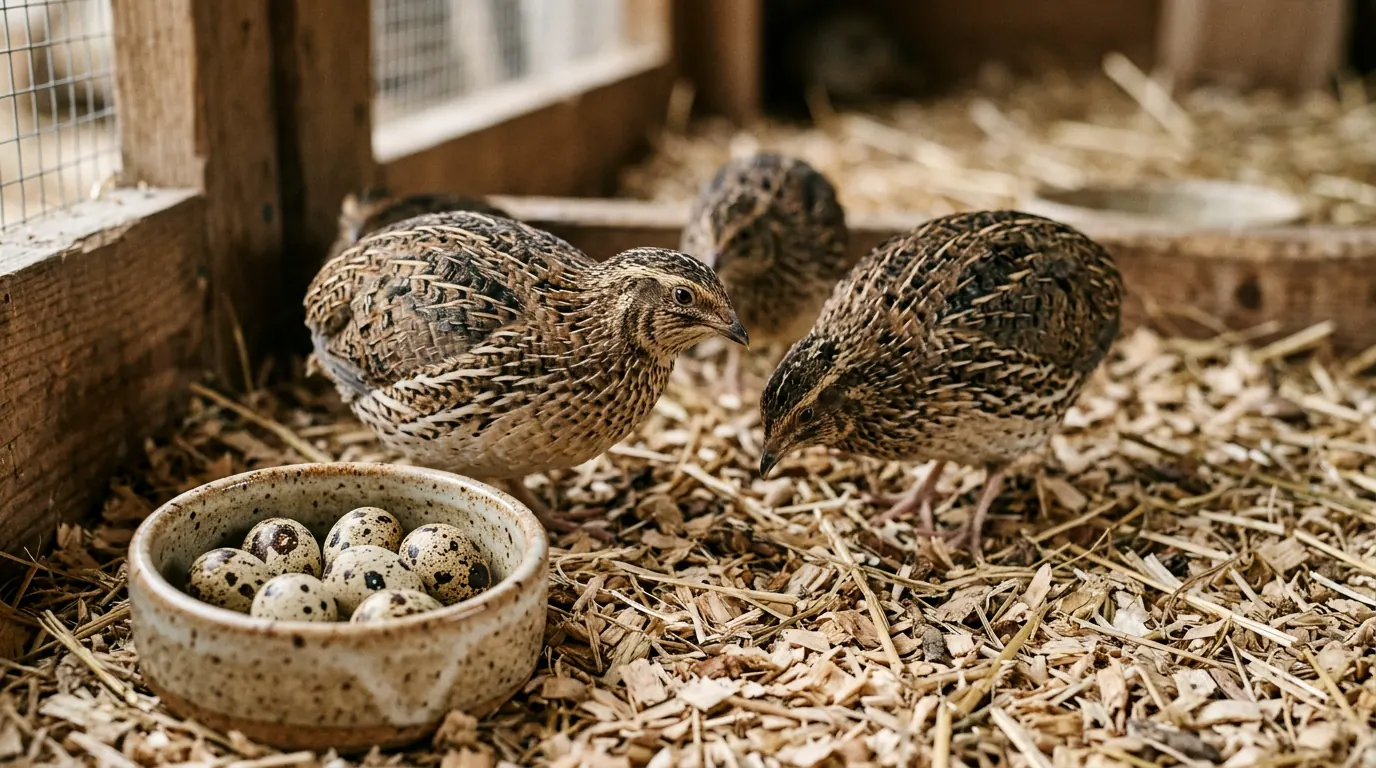
Poland's "California quail" are a colored variety of the Japanese quail (Coturnix japonica). Sellers and breeders usually use this name for birds kept for eggs and decorative plumage. The birds are small, mature early and need little space, so they suit a farm with limited room. Egg laying still depends on the flock's origin, feed, day length and calm in the house. Before you buy your first birds, check that you can keep them as a group.
Variety versus production traits
A color variety is not a separate production line. Plumage color helps you recognize the birds, but how fast they mature and how many eggs they lay comes from the genetics of the specific breeder. When you buy, ask where the parent birds came from, how their ancestors laid and whether the flock was tested for disease. The variety name alone says little about flock performance.
Egg laying in California quail, in practice
What affects egg numbers
Several factors act at once: genetic line, bird age, day length, feed composition and stress in the flock. The most common mistake is hunting for one cause of a drop. Note feed and lighting changes in a log, because laying often reacts with a delay. Layer hen feeding standards do not carry over directly to quail, so use data for the species. The layer hen feeding standards show how to think about nutrients, but they give no quail rations.
Laying records
Without records it is hard to tell a seasonal dip from a health problem. Write down eggs, deaths, feed use and events in the house every day. After a few weeks the record shows a trend and lets you compare batches. The poultry house records module in DlaFerm.pl keeps this data in one place and shows changes on a chart, so you do not have to count everything by hand.
House and room for quail
Space and stocking density
Quail cope badly with crowding and jostling at the feeder. A good room or cage has clearly separate zones for feeding, drinking and nesting. Too high a density raises the risk of injuries and fast disease spread in the group. We describe specific housing needs in housing requirements for quail. Before you buy cages, compare them with the dimensions of your own building.
Light and temperature
Day length affects quail laying, so change lighting gradually, not in jumps. Sudden changes in light intensity and noise startle the birds. Keep room temperature stable, with no drafts at bird level. On cold days check that the water in drinkers is not freezing and that the litter is dry. Agree the lighting program with an adviser and write every change in the farm log.
Feed for laying quail
Protein and calcium
Laying quail need feed with high protein and enough calcium, which builds the shell. A calcium shortage shows quickly on the eggs: they are thinner and crack more easily. Feed for laying quail differs from chicken feed, so do not give a chicken mix without checking its composition. We cover the details in our article on feeding quail. Agree rations and the mix with a feed adviser or a vet.
Water and feed changes
Water must always be available, and drinkers clean and working. Change feed gradually over several days, mixing old and new feed. Record feed use per group, because a sudden drop in intake is often the first sign of a health problem. In a larger flock, watch the feed level in the silo so it does not run out before the next delivery.
Diseases worth knowing
Salmonella
Salmonella matters most because it threatens human health through eggs and poultry meat. Birds can carry it with no visible signs, so no signs does not mean no problem. Prevention rests on hygiene, keeping flocks apart, rodent control and strict entry rules for the house. Read more in our article on Salmonella in quail. Testing and treatment are ordered by a vet. If you give a medicine, record it and calculate the withdrawal period in the treatment and withdrawal module, because these dates decide when you may sell eggs.
Worm infections
Worm infections are gut parasite infestations. The signs can mislead, because a drop in laying and weight loss also appear with other diseases. If you suspect worms, report it to a vet instead of choosing a product yourself. We describe prevention and observation in our article on worm infections in quail.
Selling eggs and the rules
Selling eggs from the farm
Selling eggs from the farm is subject to rules on marking, hygiene and storage. We describe the legal position as of 22.11.2026, but rules change. Before you start, check current acts in ISAP (Internetowy System Aktów Prawnych, Poland's online legal database) and the requirements of the Chief Veterinary Inspectorate (Główny Inspektorat Weterynarii). We collected the details in our article on selling eggs from the farm. Ask about registration with the vet responsible for your county (powiat).
Transporting birds
Moving quail to another farm or to slaughter needs a clean vehicle and transport documents. The rules for poultry are set in an act available in ISAP. Check the current requirements before every trip, and write the date and destination in the flock log.
Frequently asked questions
Are California quail a separate breed?add
California quail are a colored variety of the Japanese quail (Coturnix japonica), not a separate production line. Plumage color helps you recognize them but says nothing about laying. Flock performance depends on the breeder the birds come from.
How many eggs does a California quail lay?add
It depends on the line, the bird's age, day length, feed and calm in the flock. We give no rough figure without a source. The best approach is to keep your own laying records and compare them over time.
When do quail start laying?add
Quail mature early, and the first eggs usually appear when the bird is young. The exact time depends on the line and on housing conditions. Write down the date of the first egg, as it is a good reference for later batches.
Can you keep quail with chickens?add
Keeping them together raises the risk of stress, injuries and disease passing between species. Decide after assessing the conditions on your own farm. If in doubt, ask a vet.
What should you feed laying quail?add
Laying quail need feed with the right protein and calcium, not an ordinary chicken mix. A feed adviser or a vet sets the rations and the mix. Change feed gradually and note it in the log.
Can you sell quail eggs from your farm?add
Selling eggs from the farm is subject to rules on marking and hygiene. Check current requirements in ISAP and with the vet responsible for your county. Put your flock records in order before the first sale.
Sources & resources
- linkChief Veterinary Inspectorate (GIW) — gov.pl/web/wetgiw
- linkInternet System of Legal Acts (ISAP) — isap.sejm.gov.pl
- linkNational Research Institute of Animal Production — izoo.krakow.pl
- linkEFSA — efsa.europa.eu
Prepared by: DlaFerm Team based on data from the sources listed · Publisher: INSTA-TECH sp. z o.o.
Keeping quail alongside other poultry?
The poultry house records module in DlaFerm.pl stores batches, laying and health events in one place. Create a free farm account and try the module on your own data.
Phone
+48 796 258 151