Young farmer grant in Poland 2026: conditions, amount, deadlines
The young farmer grant is support for a person starting to run a farm who meets the conditions set in law. The amount, age limit, qualifications and application dates are set by regulation and announced by ARiMR, Poland's Agency for Restructuring and Modernisation of Agriculture. Below we show what to check before you apply and what data to keep on a poultry farm so you can prove the conditions at an inspection.
verifiedFrom the team that has organised work on poultry farms for years.
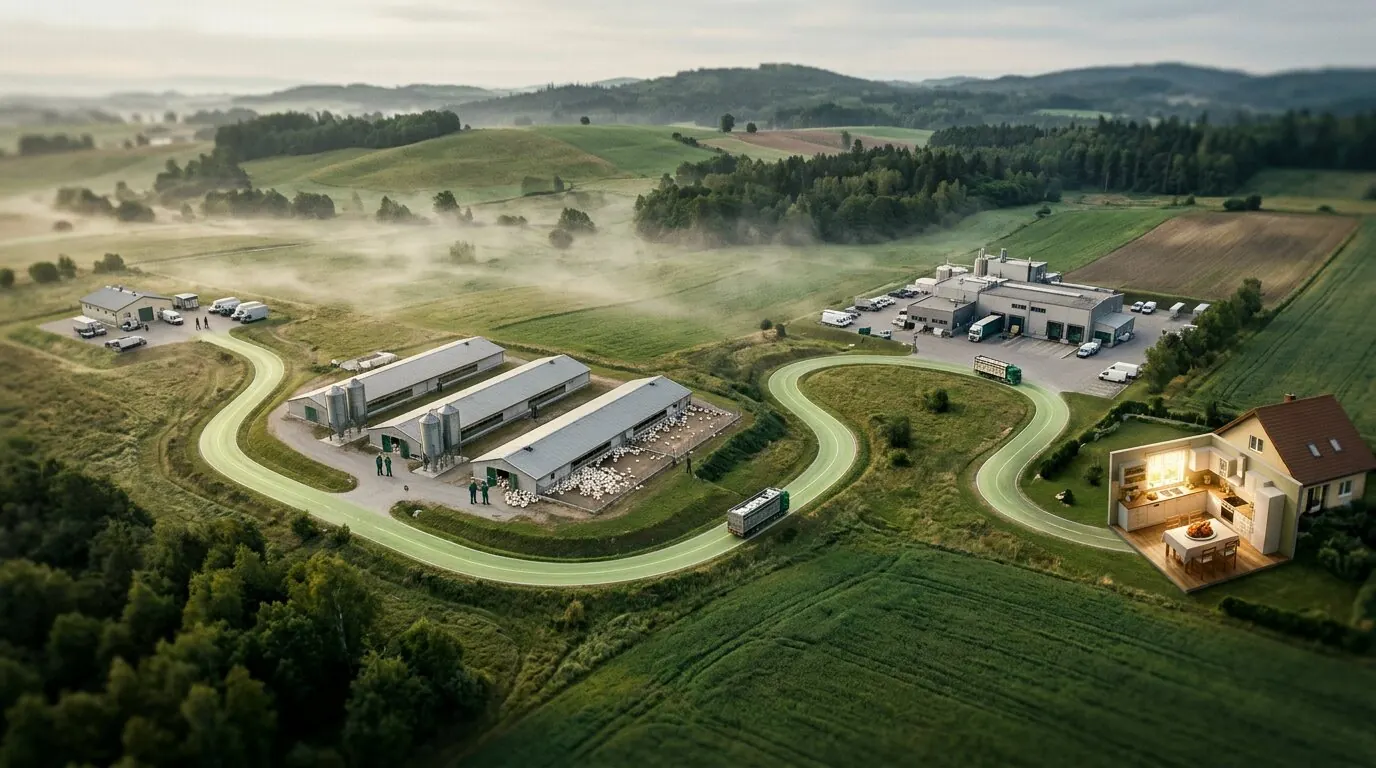
The young farmer grant is financial support for a person who starts running a farm and meets the conditions set in law. The amount, age limit, qualifications and application dates are set by regulation and announced by ARiMR. This guide explains the rules and where to find current data, as of the legal status on 22.11.2026. We give no specific amounts or dates, because they change with each application round.
Why poultry farmers should start with documents
The grant comes with an application, evidence and later obligations. A poultry farmer who plans to take over a farm or build a new house should keep proper records from day one: flock, feed, treatment and sales. Without those records it is harder to prove the conditions during verification. If you start with records, you do not have to rebuild data from memory when the office asks for it.
Who can apply for the grant
Age and start date
The regulation sets the maximum age of the applicant and the point by which you must start running the farm. You will find these values in the legal acts in ISAP (Poland's online database of legal acts), not in guides, so check them before you decide. Look at whether the requirement applies to an individual only, or also to a partner or family member running the business. If you take over the farm from a parent, agree with an adviser who becomes the formal holder of the farm, and when. That decides whether your application meets the requirements on the day you file it.
Qualifications and business plan
In practice, applicants often have to show agricultural education or qualifications, or present a farm development plan. The regulations and ARiMR guidelines set how to document this and what the plan must cover, and they may be updated. Base a poultry farm plan on concrete data: the number of places in the houses, the number of cycles per year, stocking and feed costs. Such figures are easier to defend in verification than general statements. If you have no flock yet, describe the investment stages and the timetable for carrying them out.
Size of the grant and how it is paid
What the amount depends on
The amount of support follows the rules in the regulation that applies in a given round. It does not depend on current poultry or feed prices. You will find the current value in the ARiMR announcement for that round and in the legal acts published in ISAP. Before an investment decision, calculate farm costs without the grant, and treat the support as an addition to financing, not its basis.
How payment works
Payment follows a positive decision on your application and the meeting of formal conditions. It may be preceded by an on-site inspection or a document check. Keep the confirmations: contracts, invoices for investments, and purchase documents for animals and feed. Take the document list from the current ARiMR notice, not from requirements you remember from earlier years.
Application dates and preparing your application
Where to check dates
ARiMR announces each round for a set period. Dates change between rounds, so do not carry them over from earlier years. Follow the notices on the ARiMR website and on the site of the Ministry of Agriculture and Rural Development. Set your own schedule: when you gather documents, when you finish the plan and when you file, leaving spare time for any additions.
What to prepare in advance
Prepare extracts from your records, documents on the buildings and the register entries required in the announcement. For a poultry farm, records of stocking, cycles and sales will help. If you keep data in a spreadsheet, move it into a system before you file, so you do not retype it at the last minute. Also check that the data in the application matches your invoices, because discrepancies usually call for explanations.
Duties after the grant is awarded
Keeping the farm running
An award usually comes with a duty to run the farm for a set time and to meet the conditions during that period. The regulation and your agreement with ARiMR set the length of the period and the scope of the commitments. Read the documents before you sign. If you plan to change the production profile, sell part of the buildings or change the legal entity, first check the consequences with ARiMR. The requirements we describe in our guide to cross-compliance for payments apply at the same time.
Records through the whole period
An inspection can cover documents from several years, so records must be continuous: the flock register, treatment records with withdrawal periods observed, and feed and sales documents. In DlaFerm you keep this in the poultry house records and in the treatment and withdrawal period module, and the entries do not disappear when a cycle closes. A vet always chooses the medicine and dose. In your records you note the actions taken, the dates and the end of the withdrawal period.
Documents and invoices on a poultry farm
Invoices and KSeF
You issue and store invoices for investments, feed and poultry sales under the rules in force. We describe the rules of KSeF, Poland's national e-invoicing system, in our guides KSeF for farmers and KSeF for poultry farms 2026. With the grant application, collect the full set of invoices linked to the investment. Each invoice must clearly relate to an expense you describe in the application.
Flock and sales in one place
A digital flock record lets you log placements, stocking, losses and dispatches without copying data between notebooks. You can compare invoices and sales documents more easily when they are linked to flock data. KSeF invoicing and the farm management software, which gathers production data in one view, both help. Before you send the application, check that its figures match what you recorded during the year.
Frequently asked questions
Is the young farmer grant the same for every farm?add
No. The conditions and scope of support depend on the regulation in force in a given round and on how you meet the formal requirements. Two poultry farms of similar size can get different results if their documents or takeover dates differ.
Where can I check current conditions and deadlines for the young farmer grant?add
First on the ARiMR website, in the announcement for the specific round. You will find the regulations in ISAP, Poland's online database of legal acts. The legal status in this guide is 22.11.2026, so check before you file that nothing has changed.
Do I need farm records to get young farmer support?add
The announcement of the round and the regulations set the documentation requirements. In practice, an applicant running a poultry business must present data on the flock and the investments. Continuous records make this easier and reduce the risk of gaps at an inspection.
What if my young farmer application is rejected or needs additions?add
Read the reasons and check the deadline for additions. Usually it is enough to attach the missing documents or explain discrepancies. If you are unsure, talk to an agricultural adviser or directly to ARiMR.
Can I combine the young farmer grant with other payments?add
The regulation and the rules of the specific program set how support can be combined. Do not assume that one payment rules out another. Before you file applications, ask ARiMR and check the cross-compliance requirements.
Does buying animals before I file the application matter?add
It can, depending on the rules of the round. Purchase documents and farm takeover dates usually have to match the application. Keep the invoices and the records of flock intake.
Sources & resources
- linkARiMR — gov.pl/web/arimr
- linkMinistry of Agriculture and Rural Development — gov.pl/web/rolnictwo
- linkInternet System of Legal Acts (ISAP) — isap.sejm.gov.pl
Prepared by: DlaFerm Team based on data from the sources listed · Publisher: INSTA-TECH sp. z o.o.
Running a poultry farm and preparing an application?
DlaFerm.pl farm management software keeps your flock, treatment and invoices in one place, so the documents for your application are at hand. Create a free farm account and see how it works on your own farm.
Phone
+48 796 258 151