Wooden chicken coop: build, size and cost
A wooden chicken coop is built from structural timber on a foundation, with the focus on ventilation and a dry floor. Cost depends on size, materials and installations, not only on the price of timber. Below we go through the building stages and the factors that decide size and spending.
verifiedFrom the team that has organised work on poultry farms for years.
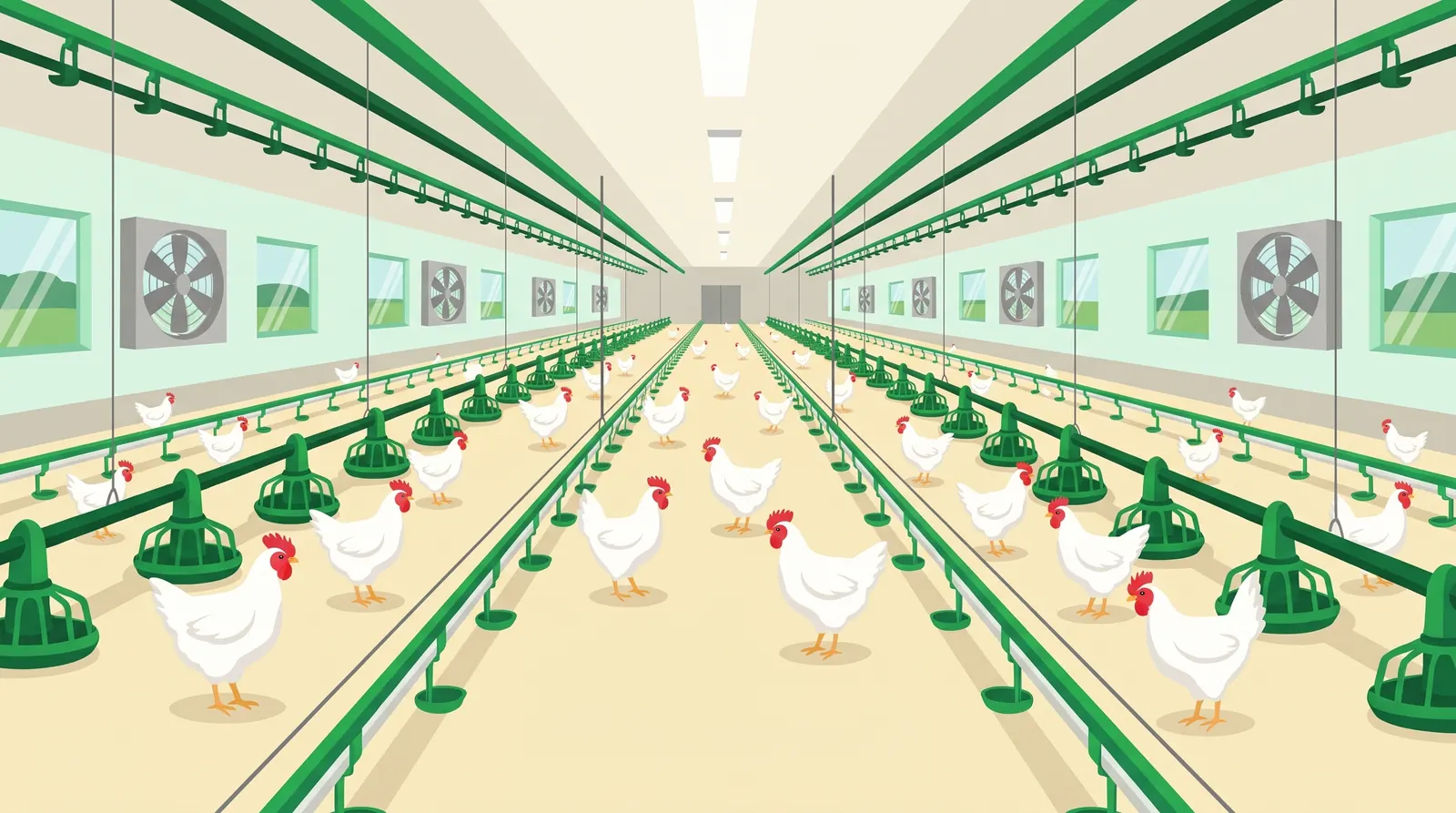
A wooden coop is a building where timber forms the frame and walls, while ventilation, insulation and a dry floor decide how comfortable the birds are. A well-built wooden coop costs less in materials and is easy to repair, but it needs more attention than a masonry one, because wood absorbs moisture and rots over time near the ground. Always choose the size for the species and number of birds, not for the free space on your plot. Before building, check with your municipal office (urząd gminy) whether the building needs a notification or a permit, because this depends on its size and local rules. We cover permits and technology rules separately.
Matching size to the number of birds
You calculate coop floor area from stocking density, meaning the number of birds per square meter. This value depends on the species, the production type and the age of the flock, so you will choose different dimensions for laying hens than for broilers. When designing, also allow for perches, nests, feed and water, because they take up part of the space. For a smaller flock we describe ready solutions in a separate guide on a coop for a few dozen hens. Agree the exact stocking density with a vet or an adviser, in line with the welfare requirements that apply to your case.
What the cost depends on
The cost of a wooden coop has several parts: structural timber and boarding, wood preservative, foundation, roofing, insulation, and the electrical, ventilation and heating installations. Ventilation and heating usually take the most money, not the frame itself. Material prices change often, so compare offers from several wholesalers and check current timber prices before you buy. We describe heating spending in our overview of coop heating costs.
Foundation and timber frame
Foundation and raised floor
Put the coop on a foundation that lifts the walls above ground level. That way the timber sill does not stand in water and does not rot after the first thaw. Lay the floor with a slight fall so that wash water and rain do not collect inside. On clay soil, make sure water drains away around the building. Before pouring the foundation or laying blocks, check that the level is even, because a crooked floor makes later cleaning and equipment harder.
Posts, walls and preservative
The frame is made of posts and horizontal rails, and the walls are filled with boarding or panels. Timber that will touch moisture is worth treating with a preservative made for livestock buildings, one that leaves no substances harmful to birds. The bottom beams and boards near the floor are the most exposed to damp, so treatment matters most there. Treat the wood before assembly, because afterward it is hard to reach every surface.
Roof and eaves
The roof should have eaves that protect the walls from rain and snow. Build the ridge so that free space is left above the birds, because warm, humid air collects there. Choose the roofing to suit the structure and the climate, and make sure the joints with the walls are tight. A well-planned roof also makes ventilation easier later, because it needs no rework in the worst spot.
Indoor climate in a wooden building
Moisture and ammonia
Birds release moisture through breathing and droppings, and that moisture stays in the building if the air is not exchanged. Air and litter that are too damp promote ammonia, which irritates the airways. Design ventilation so that the air inlet is in the upper part of the building and the outlet is near the floor or at litter level. You will find the principles of airflow and solutions for broilers in our guide on coop ventilation. If in doubt, ask an adviser for a measurement or assessment.
Insulating walls and ceiling
Insulation protects against cooling in winter and overheating in summer. In a wooden coop, use vapor-barrier materials on the inside so that water vapor does not get into the wall and settle in the wood. The insulation must be closed tightly, but the building must still breathe through its ventilation. We describe materials and installation in our guide on insulating a wooden coop.
Heating in winter
Heating in a coop mainly keeps the temperature steady on frosty days; it is not meant to warm the whole building from zero. Good insulation and airtightness cut energy use, and ventilation must not be switched off in winter, because moisture then builds up fast. Choose the heat source and its output after calculating the building's heat loss, not by eye. Place every heating unit so that birds cannot stay right next to a hot surface.
Coop interior and records
Perches and nests
Perches should be low and wide enough for birds to climb on and off safely, without injury from a fall. Place nests in a darker part of the building, away from drafts and the walkway. We describe the requirements for laying hens, including nests and perches, in our guide on coop requirements for laying hens. Install equipment so that it is easy to wash and disinfect.
Doors, windows and access
The entrance door should be wide enough to walk in with a cart or buckets without squeezing through. Windows light the building by day and let you check the flock without going in. Plan the entrance so that outdoor footwear and equipment do not carry dirt inside. Choose biosecurity rules to match the size of your farm and check the guidelines of the Chief Veterinary Inspectorate (Główny Inspektorat Weterynarii, GIW). Put on protective clothing and footwear before entering the coop, and change them each time you move to another building.
Record keeping from day one
From the day birds are placed, it is worth recording stocking, events and building performance. With several coops, memory soon runs out, so replace the paper notebook with a digital log. The Coop Records module in DlaFerm.pl lets you keep building and flock data in one place. Data entered as you go is easier to compare with the next cycle.
What the building cost depends on
Materials and transport
Most of the spending goes on timber, preservative, roofing and insulation materials. Prices depend on the wood species, the length of the pieces, the season and the transport distance. When buying a larger quantity of boards, a wholesale order collected with your own transport often pays off. Check current prices directly with suppliers or in building wholesalers' price lists.
Doing the work yourself or hiring it out
Building it yourself lowers costs, but it takes time, skills and tools. Hiring tradespeople speeds up the work and reduces the risk of mistakes in the frame and the installations. When deciding, count not only the rate but also the time by which the coop must be ready before the flock arrives.
Where to check prices
Prices of timber and building materials change often, so check several sources before you buy. You will find feed and farm equipment prices with distributors and in trade ads. For grants and investment support, look at information from ARiMR (the Agency for Restructuring and Modernisation of Agriculture), because the rules may change from year to year.
Most common building mistakes
No floor fall and no drainage
A flat floor without a fall collects water after washing and rain. After a few weeks the wood near the floor starts to rot and the litter turns sticky. Before you lay the floor, check the level and plan the drainage, even if it seems unnecessary.
Sealed walls without ventilation
The most common mistake is sealing every gap and forgetting about air exchange. The birds then breathe polluted air, and moisture settles on the ceiling and walls. Design the ventilation together with the insulation, not after it is done.
Untreated wood near the ground
Lower frame parts without preservative and without separation from the ground fail fastest. Repair usually means replacing whole elements, which costs more than protection at the building stage. Before assembly, check that all the lower boards are treated and do not touch the soil directly.
Frequently asked questions
Does a wooden chicken coop need a building permit?add
It depends on the size of the building, its purpose and the rules in your municipality. Before starting work, contact the municipal office (urząd gminy) or an architect who knows the local rules. You can also check the rules for livestock buildings in Poland's Internet System of Legal Acts (ISAP).
What wood is best for a chicken coop?add
Use dry, straight structural timber without deep cracks for the frame. Parts that touch moisture and the ground need a preservative made for livestock buildings. Choose the species and grade at a wholesaler that knows the requirements of farm construction.
How do you ventilate a wooden chicken coop?add
Ventilation should exchange air all year round, including winter, when the coop is closed up tight. Put the inlet in the upper part of the building and the outlet closer to the floor or litter. The exact solution depends on building size and stocking density, so ask an adviser or a vet for an assessment.
How much space do chickens need in a coop?add
Floor area depends on species, age and production type, and on equipment such as perches and nests. Check welfare requirements and stocking density in the current rules and with a vet. Do not set dimensions based only on free space on your plot.
Can you insulate a wooden chicken coop?add
Yes, insulating walls and ceiling is common. Use a vapor-barrier material on the inside so that water vapor does not get into the structure. The insulation must not block ventilation, because moisture then builds up fast.
How much does a wooden chicken coop cost?add
Cost depends on building size, wood species and amount, preservative, roofing, insulation, and the ventilation and heating installations. It also matters whether you build it yourself or hire tradespeople. Check current prices with suppliers, because they change often.
Sources & resources
- linkChief Veterinary Inspectorate (Główny Inspektorat Weterynarii) — gov.pl/web/wetgiw
- linkARiMR — gov.pl/web/arimr
- linkMinistry of Agriculture and Rural Development — gov.pl/web/rolnictwo
- linkInternet System of Legal Acts — isap.sejm.gov.pl
Prepared by: DlaFerm Team based on data from the sources listed · Publisher: INSTA-TECH sp. z o.o.
Running a coop and want your building data in one place?
The Coop Records module in DlaFerm.pl stores building parameters, stocking and flock events. Create a free farm account and start with your own coop, or get in touch and we will show you how it works in practice.
Phone
+48 796 258 151