What Do Cows Eat? Daily Ration, Forage and Concentrates
Beef cows eat mostly forage: pasture, hay, straw, silage and haylage. We add concentrates, meaning cereal grain, meal and beet pulp, in limited amounts, especially when the cow's needs rise or forage quality is poor. Below we describe the feeds, the limits and the order of feeding.
verifiedFrom the team that has organised work on poultry farms for years.
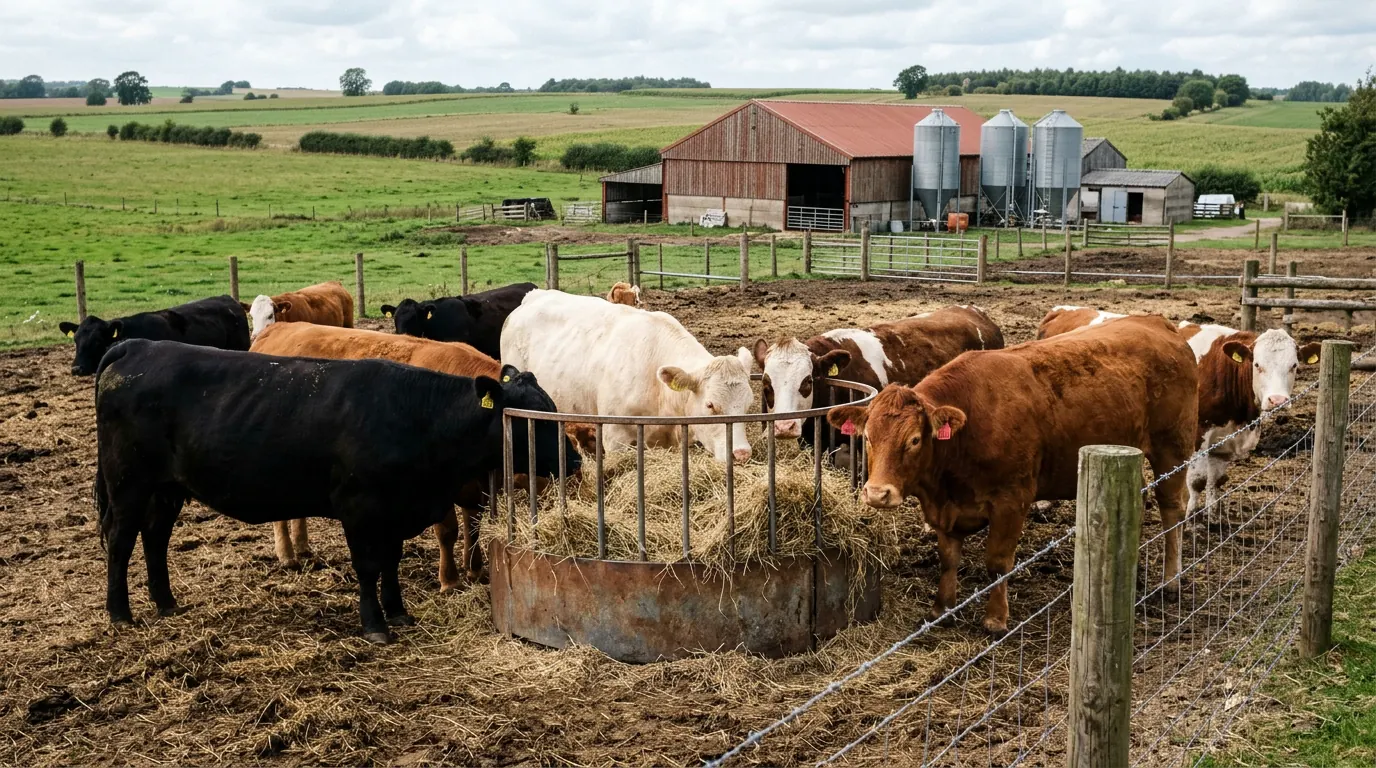
Beef cows eat mostly forage: pasture, hay, straw, silage and haylage. We add concentrates in smaller amounts, mainly when the cow's needs are high or forage quality is poor. The base is good silage and good hay, not a lot of grain. According to a leaflet from OODR Łosiów (a Polish agricultural advisory center), the best forages are hay, straw, silage and haylage, which animals eat willingly because they taste good. We also choose feeds with the herd's health in mind, so it pays to keep feeding notes in your treatment records.
Why feeding shapes herd results
According to IZ PIB (Poland's Institute of Animal Production), the basic job of a beef suckler cow is to give birth to a healthy, well-developed calf once a year and give it enough milk. Teagasc and AHDB point out that good feeding affects cow condition, fertility, the number and weight of calves at weaning, and production costs. So we build the ration for a specific group: lactating cows, dry cows, calves and finishing bulls. Each group needs different amounts of energy and protein, and you need to check cow condition all year.
Forage: the base of the ration
Hay, haylage and silage
The best forages are hay, haylage and silage. According to IZ PIB, farms with suckler cows use pasture, hay, spring straw, haylage and distillery stillage, and calves and heifers get good-quality hay. We judge silage by smell, color and dry matter content, not by how much is in the clamp. Good silage lets you cut back on concentrates. When silage is poorer, you need more concentrates, which raises the cost of the ration. Feed silo monitoring makes it easier to track stocks and their quality.
Straw as a supplementary feed
Straw is a forage with low energy value. According to IZ PIB, lower-quality forage is fed when nutritional needs are low, for example at the start of the dry period. Do not give straw as the only feed to lactating cows, because it does not cover their needs for milk and reproduction. Always provide constant access to clean water and good hay, as IZ PIB stresses in its description of feeding beef herds.
Concentrates and the single-feed limit
Limit for a single feeding
According to the OODR Łosiów leaflet, a single feeding of concentrate, for example meal or beet pulp, should not exceed 1.5 kg per animal. Too much concentrate acidifies the microflora in the digestive tract and leads to many health problems, including acidosis. If you need more energy, split the concentrate into several portions through the day instead of raising a single portion. Choose the amount to suit the ration and the needs of the group, and ask a vet or an agricultural advisor (ODR) for exact recommendations.
Cereals and how to feed them
Cereal grains differ in nutritional value. According to OODR Łosiów, cattle digest barley best crushed, as flakes or pellets. A small amount of whole grain is acceptable. Cereal grains are high in energy and starch and high in dry matter, so they can quickly upset the balance in the rumen if they suddenly appear in the ration. Change concentrates gradually, over several days.
How to build the daily ration for cows
Order of feeding
According to OODR Łosiów, it matters to feed in the right order. In practice, give forage first and add concentrate after it, in smaller portions. This keeps the rumen working more steadily, and animals eat forage more willingly. Fixed feeding times also help keep a steady rhythm of feed intake in the herd.
Ration and cow condition
According to AHDB, body condition scoring (BCS) is an important tool for the farmer: it helps you set feeding, health and fertility better, and it reduces calving difficulty. Check condition all year, and especially in the last three to four months of pregnancy. Adjust rations when cows are too thin or too fat. Fat cows do not need extra concentrate, and thin cows need better silage or extra energy under a vet's supervision.
Feeding suckler cows through the year
Lactation and pasture
Teagasc (the Irish agriculture and food authority) describes feeding cows after autumn calving: during lactation animals need to cover maintenance, milk production and rebuilding the body reserves used up in winter. According to Teagasc, cows turned out to good pasture usually need no concentrate. If cows with calves at foot are housed on good-quality silage and are in good condition, Teagasc recommends feeding silage ad libitum for 4–6 weeks after calving, and adding 1–2 kg of concentrate when silage is poor. These values come from the Irish feeding system, so check them with an advisor before using them in Poland.
Dry period and good-quality feed
According to IZ PIB, good-quality forage with a small amount of concentrate should be kept for the breeding period, when cows have the highest nutritional needs. The amount and type of concentrate, for example cereal grain, oilseed cake or legume seeds, depends on the protein and energy in the ration. In the dry period, when needs are low, you can use poorer-quality forage. Always remember mineral feed for cows before calving, as Teagasc recommends.
Young cattle and finishing bulls
Finishing bulls and daily gain
According to IZ PIB in 2011, finishing bulls were fed so that daily gains stayed between 950 g and 1100 g. The result depends on breed, age and feed quality. In finishing, the share of concentrate rises sharply, so watch the single-feed limit especially closely. Extensive and intensive finishing differ in length, and you should always match feeding to the production goal.
Calves and access to feed
According to IZ PIB, calves up to half a year old had constant access to concentrate, plus good hay and water. Calves learn to eat solid feed from the first weeks, so access to fresh feed and clean water matters. Set the amount and makeup of the calf ration with a vet, and record development using the IRZplus integration (IRZplus is ARiMR's online animal register) if you keep an animal register.
Water, salt and minerals
Water and salt
A cow needs constant access to clean water, whatever the feed. According to IZ PIB, good water and good hay are the basis of feeding bulls and cows. Mineral salt is given as licks, following the feed maker's and vet's advice. Do not guess the salt, because too much or too little can worsen herd results.
Minerals before calving
Teagasc recommends a good-quality mineral mix before calving, and in an autumn calving system a bucket with a mineral mix is often used. This supplement fills in nutrients that may be deficient in forage. Choose the mix and dose based on feed analysis and the age of the cows. Medicines, vitamins and preparations on top of the feed are given only on a vet's advice, with withdrawal periods taken into account.
Frequently asked questions
What do beef cows eat in winter?add
In winter the ration is built on hay, silage and haylage, and some farms also use straw and distillery stillage. We add concentrate in limited amounts, depending on forage quality and the cows' needs. According to IZ PIB, good hay and constant access to water matter as much as the feed itself.
How much concentrate can you give a cow at one time?add
According to the OODR Łosiów leaflet, a single feeding of meal or beet pulp should not exceed 1.5 kg per animal. Split more energy into several portions through the day. Too much concentrate can lead to acidosis, so always plan it with a vet.
Can a beef cow live on pasture alone?add
Yes, especially when the pasture is good and the cows are in good condition. According to Teagasc, cows on good pasture usually need no concentrate. In winter and in the high-need period after calving, pasture has to be topped up with silage or hay.
What should you feed a cow after calving?add
After calving the need for milk and energy rises, so good-quality silage and hay matter most. Teagasc recommends feeding good silage ad libitum for 4–6 weeks, and adding concentrate when silage is poor. Set the exact ration after assessing the cow's condition.
Do cows need a mineral supplement?add
Yes. Teagasc recommends a good mineral mix before calving, and we give salt and minerals as the feed maker and vet advise. Choose the mix to fit the feeds, because forage alone does not always cover the need.
How much should a cow eat per day?add
We do not give a number here, because the daily amount depends on the cow's weight, body condition, feed quality and whether she is nursing a calf. Ask a vet or an ODR advisor, and base the ration calculation on analysis of feed from your own farm.
Sources & resources
- linkIZ PIB — Wiadomości Zootechniczne — Breeding work in a beef cattle herd (Z. Choroszy et al.), WZ L(2012)1:11–20
- linkIZ PIB — WZ — Feeding beef cattle in organic farming (K. Bilik et al.)
- linkIZ PIB — WZ — 60 years of IZ work on beef cattle (J. Trela et al.), WZ XLIX(2011)4:11–56
- linkOODR Łosiów (gov.pl) — Feeding beef cattle (leaflet)
- linkTeagasc (Ireland) — Teagasc Beef Manual — Section 6: Nutrition
Prepared by: DlaFerm Team based on data from the sources listed · Publisher: INSTA-TECH sp. z o.o.
Do you run a beef herd and work out rations?
The feed silo monitoring module in DlaFerm helps you record stocks and their drawdown in one place. Create a free farm account and see how it works on your farm.
Phone
+48 796 258 151