Weaner pig prices: Polish, Danish and imported
The price of a weaner depends mainly on weight, origin, the health status of the source herd and the pick-up date. We give no price quotes, because they change from week to week. Instead we show what moves the price and how to work it out on your own farm. See how to plan your pig intakes in DlaFerm.
verifiedFrom the team that has organised work on poultry farms for years.
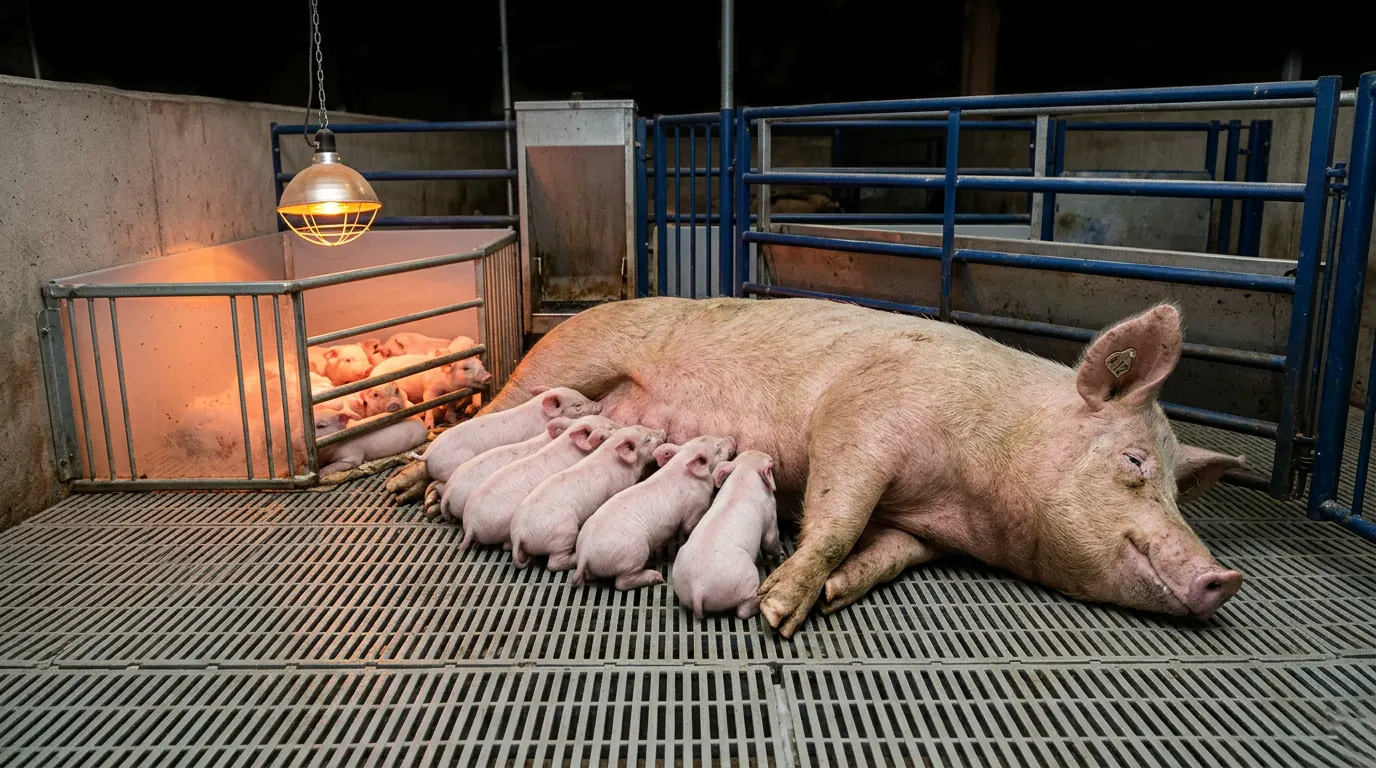
There is no single national price for a weaner. It depends on weight on the delivery day, where the animals come from, the health status of the source herd, how even the litter is and the cost of transport. Polish, Danish and imported weaners differ not only in price but also in risk and in what you must do when placing them in finishing. Prices of individual batches change every week, so we give no amounts here. We show what drives them and how to compare them.
Why there is no single price
Weaner quotes change weekly, and every batch is priced differently. When you compare offers, check weight on delivery day, age, evenness of the batch, health status, date and transport method. Two offers with the same price per head can cost very different amounts if one covers clearly lighter piglets or a long haul.
What determines the price of a weaner
Weight and age at purchase
Weight is the most common reason for price differences. According to EFSA, weaners of about 30 kg are often moved across Europe to nurseries and further rearing, so this weight is the usual reference point in offers. Lighter piglets can be cheaper per head, but they need longer and more careful rearing, which means more labor and feed. When you compare, convert the price to live weight per kilogram, not just per head.
Health status and documents
The health of the source herd affects both the price and the risk to your own herd. Ask the supplier about herd health, vaccinations and any recent events, and check the veterinary documents before loading. Decisions on prevention and testing belong to your vet. Record the origin of each batch and compare it with your plan in the biosecurity plan generator before the animals reach the barn.
Polish, Danish and imported weaners
Polish weaners
Weaners from Polish farms usually travel a shorter way, which cuts transport stress and losses at unloading. The herd history is often easier to get, and contact with the supplier is simpler. The price of a Polish batch depends on local demand and the number of offers in your region, so compare several farms for the same pick-up date. On a short route, transport cost per head is usually lower.
Danish and other imported weaners
Weaners from abroad, including Denmark, often need longer transport and extra paperwork. If the price per head is higher, check whether it is justified by batch evenness, a known breeding program and the health status of the source herd. The longer the trip, the more the condition of the piglets on arrival matters, because EFSA notes that young piglets have smaller body reserves. Before importing, agree the pick-up with your vet and check the requirements at the border.
How to calculate the cost of restocking
Step by step
The KPODR Minikowo handbook (a regional agricultural advisory center) describes the finishing calculation in several stages. First you work out the value of production: the final weight of the finishing pigs multiplied by the price the farmer gets. From that you subtract direct costs, meaning feed, veterinary costs, medicines and cleaning products, which gives direct surplus I. Only then do you subtract the estimated cost of weaners, which is the cost of restocking, to get direct surplus II. This shows that the entry price into finishing affects the result of the whole cycle.
Data for your own calculation
A sample calculation of income from pork, prepared by ODR Lubań (an agricultural advisory center), assumes buying in a piglet and compares different levels of finishing intensity. In your own calculation, enter average feed use, rearing time and indicators such as FCR and EPEF. This shows whether a higher weaner price comes from better performance or from overpaying. Keep sales invoices for finishing pigs up to date, for example with invoicing in KSeF (Poland's national e-invoicing system).
Stress in transport and in the first days
Why transport raises the cost
Freshly weaned piglets have smaller body reserves and cope worse with cold, which EFSA lists as a challenge in transport. In low temperatures you need to protect the animals in the vehicle and shorten the time on the road. Losses at loading and unloading do not show in the price per head, but they lower the result of the batch. When you negotiate, ask how the supplier arranges transport and how long the animals will be on the road.
The first days in the new group
According to KPODR Minikowo, on their first day in the nursery weaners spend about 40% of their time moving. Over time, daily activity drops to as little as 25%, and weaners lie down for about 18 hours a day. In summer activity takes up to 60% of the day, in winter up to about 46%. These figures help you judge whether the animals are resting or restless after arrival, and whether bedding and temperature suit the season.
Import, ASF and rules when buying
African swine fever
The Regulation of Poland's Minister of Agriculture (MRiRW) of 12.03.2026 on measures to control African swine fever (Dz.U. 2026 poz. 344, Poland's Journal of Laws) sets the rules for moving pigs in restricted areas. We describe the legal state as of 22.11.2026. Before buying, check that the place of origin and the route are not in a restricted zone, and confirm your obligations with the district veterinarian. The EFSA analysis of ASF in the EU in 2025 is a reference point for risk assessment, so do not base your buying plan only on last season's data.
Buying and the rules
Minimum standards for the protection of pigs are set by Council Directive 2008/120/EC. Agree the documents needed for purchase and import with your vet, and check the text of the acts in Poland's Internet System of Legal Acts (isap.sejm.gov.pl). For imports, agree with your vet how the batch will be received on the farm and whether the animals should be isolated after arrival.
Buying weaners within your cycle plan
Dates and stocking
Plan intakes ahead so that a batch goes into a room that has been disinfected, at a time when you have free capacity. Every day of an empty barn brings fixed costs, even when no feed is eaten. Record planned intakes and sale dates for finishing pigs in intake and cycle planning, and compare your finishing calculation with the real result of each batch.
Records as a basis for comparison
Keep the origin, weight at purchase, intake date and result of each batch in one place. After a few cycles you have your own data for comparing suppliers, not just a feel for the market. The app for pig farmers lets you keep such records from intake to sale, and you can set FCR and EPEF against the cost of the piglets you bought.
Frequently asked questions
How much does a weaner pig cost?add
The price changes weekly and depends on weight, origin, herd health status and pick-up date. We give no amounts, because outdated quotes can mislead. To get a current price, ask several suppliers for batches with the same date and weight.
What is the difference between Polish and Danish weaners?add
Most often the difference is the length of transport, the paperwork and the history of the source herd. Weaners from a longer route need more attention at pick-up, because young piglets cope worse with cold and travel. Always compare prices after converting to the same weight and delivery date.
Are imported weaners cheaper?add
There is no single answer, because the price of an imported batch depends on the cost of transport, paperwork and the market situation in the country of origin. A lower price per head can be wiped out by losses on the road and longer rearing. Work out the full cost up to placing the pigs in your barn, not just the purchase price.
What weight of weaner should I choose for finishing?add
In European practice, weaners of about 30 kg are often moved on for further rearing, according to EFSA. The choice depends on your barn, your feeding system and your rearing capacity. Lighter piglets need more careful care in the first weeks.
How do I compare weaner pig offers?add
Convert each offer to price per kilogram of live weight and add the cost of transport and paperwork. Check batch evenness, the health status of the source herd and the pick-up date. Record the results so that after a few cycles you can compare batches on your own data.
Do I need documents when buying weaner pigs?add
Yes, veterinary documents are always needed when animals are moved, and their scope depends on the origin and on restricted areas. Agree the details with your vet and check them in Poland's Internet System of Legal Acts. Confirm the current legal state before the deal.
Sources & resources
- linkKPODR Minikowo (PROW 16 Cooperation) — A quality system as a guarantee of good pork
- linkODR Lubań (PODR publication) — Sample calculation of farm income from pork production (piglet bought in, different intensity levels)
- linkEFSA AHAW Panel — Welfare of pigs during transport (EFSA Journal 20(9):7445)
- linkKPODR Minikowo — Pig behavior and welfare (P. Dorszewski et al.)
- linkMRiRW / Journal of Laws — Regulation of the Minister of Agriculture of 12.03.2026 on measures to control African swine fever (Dz.U. 2026 poz. 344)
Prepared by: DlaFerm Team based on data from the sources listed · Publisher: INSTA-TECH sp. z o.o.
Want to plan your weaner purchases around your cycle?
The intake and cycle planning module in DlaFerm.pl helps you set delivery dates and finishing stocking. Create a free farm account or get in touch, and we will show you how it works for your cycle.
Phone
+48 796 258 151