Turkey prices: live turkey quotes in Poland
Live turkey quotes show the price paid for toms and hens, but they do not tell you whether a flock pays. The price depends on the bird category, the weight at delivery and the sale date. We explain how to read the quotes and turn them into a flock result. The rules are described as of 22.11.2026.
verifiedFrom the team that has organised work on poultry farms for years.
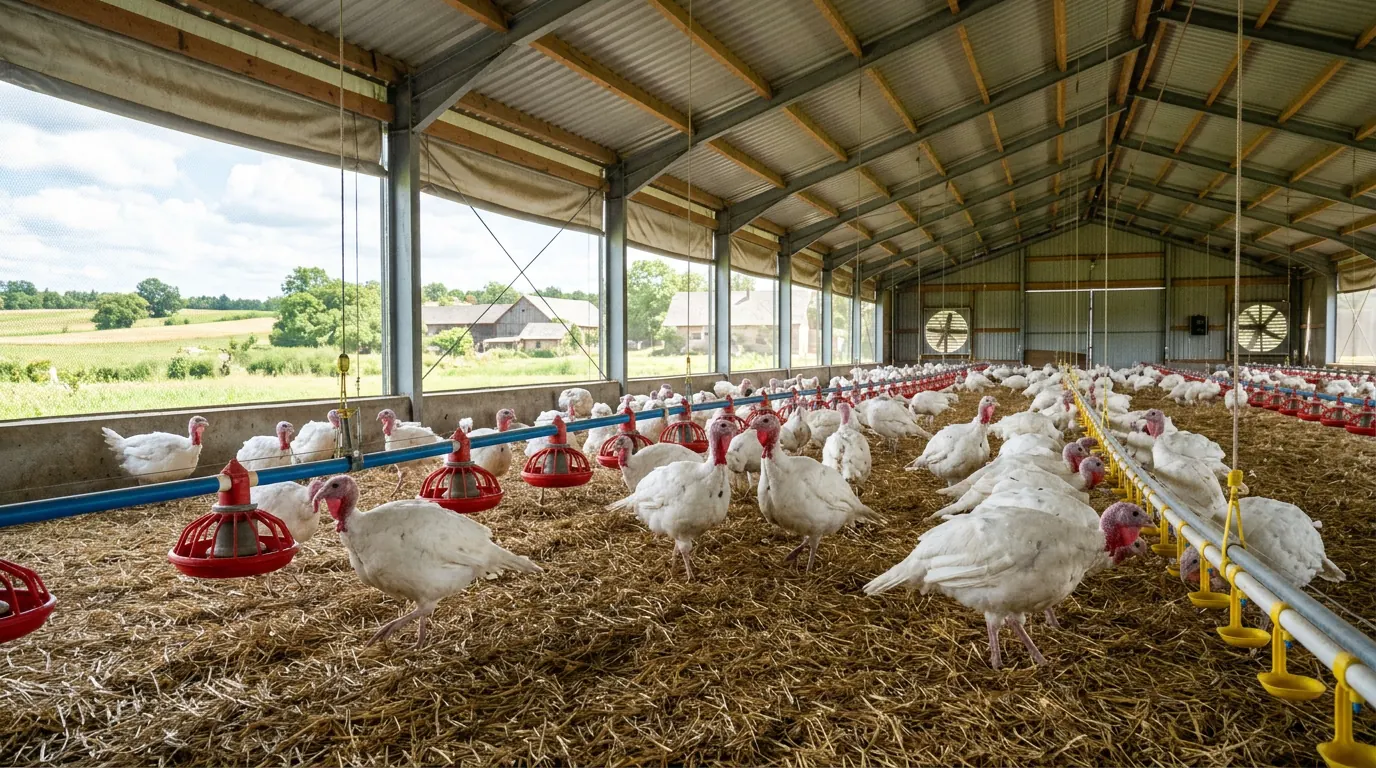
There is no single price for turkeys. Market reports list toms and hens separately, and the price also depends on live weight, the delivery date and the slaughterhouse that takes the flock. Below we describe how to read quotes rather than give specific amounts, because prices change every week. Check the current level at the sources listed in this guide.
Why quotes differ
Live prices are driven by demand from processors and retail chains, the supply of birds in a given week and feed costs. Before holidays and in barbecue season demand is often higher and fewer birds are available. The plant prices a flock by weight, uniformity and slaughter results, so two flocks at the same rate can end with different results after mortality and transport are deducted. A number from a report is a starting point, not a result.
Quote versus contract price
Some farmers sell under a contract with a slaughterhouse. The price in such a contract is often calculated from the quote on a set day or over a set period, with surcharges or deductions for flock parameters on top. Before you sign, check which index is the reference, when the price is fixed and what rules apply to weight deviations. These clauses decide the gap between the price in the report and the amount that reaches your account.
Toms, hens and live weight
Sex of the bird
Toms and hens differ in final weight and growth rate, so they are quoted and settled separately. A hen reaches a lower weight at the end of fattening, while a tom is heavier and stays longer in the house. When you compare prices, check whether the report covers toms or hens and at what live weight. Mixing the two categories in one calculation distorts the result, either up or down.
Live weight at delivery
Slaughterhouses often pay a premium for flocks close to the weight required on a given market and cut the price for birds that are too light or too heavy. Before delivery, weigh a sample of the flock and check the spread of weights. A uniform flock sells more easily as a whole, while a wide spread means more sorting. Uniformity starts with feeding, so when you plan fattening, look at the turkey feeding standards.
Timing and season
Quotes move in cycles and react faster at demand peaks. Placing chicks and finishing the flock to hit a sales window can matter more than a small difference in the rate. The flock placement planning module in DlaFerm helps you build a cycle so that the pickup date fits the delivery calendar.
From live price to flock result
Cost of 1 kg of live weight
To judge whether a price pays, compare it with the cost of producing a kilogram of live weight. That cost includes feed, poults, energy, litter, medicines and vaccinations, labor and depreciation of the house. The most common mistake is counting feed only, which makes the result look better than it is. You can run the numbers in the cost per kg of live weight calculator using your own flock data.
Feed efficiency
The result depends strongly on FCR, the feed used per unit of weight gain. The lower the FCR, the less feed per kilogram of live weight and the higher the profit at the same price. Compare FCR for flocks of a similar slaughter age, because at a later age the feed conversion usually gets worse. We cover the economics of the whole enterprise in the guide to turkey farming profitability.
Mortality and losses
Every dead bird is a bird you will not be paid for, while the feed spent on it stays in your costs. In the flock result, use the number of birds at pickup, not the number placed. Good house conditions and a quick reaction to first symptoms limit losses. For any health problem, treatment decisions are made by a veterinarian.
Sources of price data
Ministry and agricultural market
Information on the agricultural market and sector analyses are published by Poland's Ministry of Agriculture and Rural Development (Ministerstwo Rolnictwa i Rozwoju Wsi) on gov.pl. Use the reports as background for talks with the slaughterhouse, because they do not account for the weight, uniformity or date of your delivery. Note the publication date and the period the data covers before you compare them with your own costs.
Veterinary situation
The disease situation can quickly change demand and the availability of birds in a region. Notices on poultry disease outbreaks and rules for moving birds are published by the Chief Veterinary Inspectorate (Główny Inspektorat Weterynarii). Before you sell, check whether restrictions apply in your county, because they affect where and when you can deliver the flock.
Payments and support
The rules of aid for poultry producers, including deadlines and application requirements, are described by ARiMR (Agency for Restructuring and Modernisation of Agriculture). Payments do not change the quote, but they affect the farm's result, so show them separately in your calculation. Before you apply, check the current conditions on the agency's website, because rules change.
What lowers the result at the same price
Temperature and humidity
Turkeys tolerate overheating and drafts badly. Heat stress lowers gains and raises losses. The right temperature range depends on the age of the birds, so see the turkey temperature table. Record deviations daily so you can later link them to the flock result.
House requirements
Space per bird, ventilation and dry litter affect flock health and the economic result. Before you change stocking density, check the building requirements in house requirements for turkeys. Overcrowding raises the risk of disease and worsens weight uniformity.
Disease and withdrawal periods
Diseases such as salmonella can raise costs and lower the price of a flock through findings at slaughter. A veterinarian chooses the treatment and the medicine, and for every treatment the withdrawal period before slaughter applies. Record that period in the treatment log. For more on prevention, read salmonella in turkeys.
Flock and quote records in one place
What to record for each flock
Record the placement date, the number of birds, the planned and actual pickup date, the weight at delivery, mortality and feed use. Add the date of the quote you compare the price with. Without this data you cannot rebuild the result a month later, and in a settlement check it is hard to show where an amount came from.
Flock data in the software
In DlaFerm you keep flock data in the poultry farm management software. FCR and EPEF are compiled from recorded data, with no retyping. That makes it easier to see which flock gave the best result and whether a change in feeding or stocking changed the numbers.
Quote status as of 22.11.2026
How to read the date
A price report has a publication date and a period it covers. Check both each time you read one. A quote from last week does not describe today's market, and a contract price may be calculated from a different day than the one given in trade media.
When to recalculate
Recalculate the flock result after any change in the quote, feed prices or weight at delivery. Compare the result with the cost of 1 kg of live weight from your own records, not with outside data. If the result falls while the price is stable, look for the cause in FCR, mortality and weight before you change stocking density.
Frequently asked questions
How much is a turkey per kg of live weight?add
We give no amount, because quotes change every week. The price depends on the bird category, weight at delivery, timing and slaughterhouse. Check current reports at the sources listed here, and work out your result in the calculator with your own data.
Is the price of a turkey hen the same as a tom?add
Do not assume so. Toms and hens are settled separately because they differ in final weight and growth rate. When you compare, check which category the report covers.
Why does my contract price differ from the quote?add
A contract may set the price on a different day and add surcharges or deductions for flock parameters. Before you sign, check which index is the reference. Also ask about the rules for weight deviations.
Where can I check current live turkey prices?add
Poland's Ministry of Agriculture and Rural Development publishes agricultural market information on gov.pl. Note the publication date and the period the data covers. Use the reports as background for talks with the slaughterhouse.
How do I know if turkey farming pays at a given price?add
Compare the price with the cost of producing 1 kg of live weight from your own records. Include mortality, feed use and the actual weight at pickup. Start with the cost calculator, then check the result across the whole production cycle.
Do quotes change during the week?add
Reports are published in cycles and change over time, especially before demand peaks. Check the date each time you read one. Record the price with its date so you can later tell which day a flock result came from.
Sources & resources
- linkMinistry of Agriculture and Rural Development — gov.pl/web/rolnictwo
- linkChief Veterinary Inspectorate — gov.pl/web/wetgiw
- linkARiMR — gov.pl/web/arimr
- linkNational Research Institute of Animal Production — izoo.krakow.pl
- linkInternet System of Legal Acts — isap.sejm.gov.pl
Prepared by: DlaFerm Team based on data from the sources listed · Publisher: INSTA-TECH sp. z o.o.
Want to work out your turkey flock result at the current price?
The poultry farm management software in DlaFerm keeps your flock data in one place. Create a free farm account or get in touch, and we will show you how it works in practice.
Phone
+48 796 258 151