Texas Quail: Breed, Egg Laying and Keeping
Texas quail is a trade name for quail from selected lines, not an officially described breed standard. So before you buy, check where the birds come from and ask for their egg-laying data. Below we describe what to expect and how to run the flock from day one.
verifiedFrom the team that has organised work on poultry farms for years.
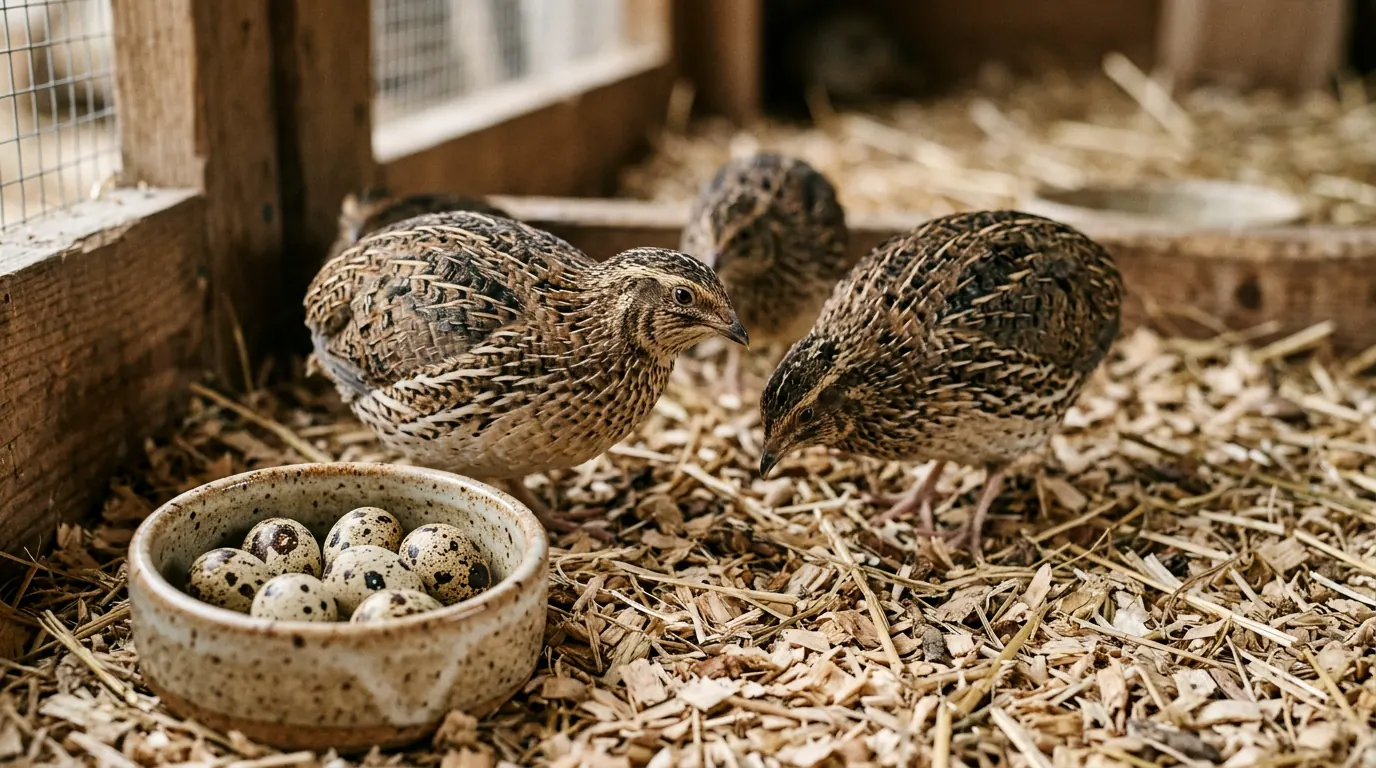
Texas quail is the name under which quail from selected lines are sold in the trade and among breeders. There is no single, internationally agreed standard, so what you get depends on the breeder and the specific line. Before you buy birds, ask about the origin of the flock, the weight at a given age and the egg-laying data from the previous cycle. These answers tell you how many eggs you can realistically expect and how to plan the pen.
Why the line matters
Two quail sold under the same name can differ in body weight, laying rate and sensitivity to stress. A good seller will tell you the source of the birds and which parent flock they come from. If the answers are vague, treat promises about laying with caution. Compare the flock with your own records, not with an advert. Start keeping records on day one, because only then do you have a baseline. You can keep them in a poultry house record system.
Where the name Texas comes from
The term Texas appears in breeders' adverts to label quail selected for certain production traits. It is not a name you can verify in one public register. So a keeper buying birds should treat the name as a starting point for more questions. Ask who bred the birds, which line they come from and whether the seller keeps their own records for the parent flock.
How to check what you are buying
Ask for documents showing where the birds come from, or written information about the flock they came from. Ask about the flock's health status and whether a veterinarian has examined it. Compare the body weight of young quail with what the seller states for that age. Big differences are a signal to ask more questions or look for another source. At purchase, write down the date, the number of birds and the seller's details.
Egg laying and eggs
Quail start laying young, much earlier than utility chicken breeds, so the production cycle in the flock is shorter. The eggs are small, and the laying rate depends on the line, day length, temperature, feed composition and stress. Do not take a figure from an advert as certain. First set your own baseline, then compare results with expectations.
Records that show a drop
Record eggs laid, deaths and feed use every day for several weeks. Only this kind of data shows whether the flock is on plan. A drop in laying caught early often has a simple cause: a feed change, noise, a draft or a health problem. If the drop continues, talk to a veterinarian, because the drop alone is not a diagnosis.
Pen and housing conditions
Quail react sharply to stress: they panic, hit the walls and can injure themselves. An overcrowded pen raises the risk of injuries and stress, which shows in egg production. Plan stocking density according to the line breeder's recommendations and the current poultry rules. You will find the current text of the rules in the list of laws and regulations for poultry keepers.
Light, temperature and ventilation
Day length and light intensity affect the laying rhythm, so change them gradually, not in jumps. Keep the pen temperature stable, with no drafts or sudden swings. Ventilation should remove moisture and ammonia but must not create cold zones near the floor. Record temperature and humidity at the same spot and at the same time each day, so the data can be compared.
Feeding and prevention
Feed for laying quail must match the stage of life and the laying rate. Ask the feed mill about the composition of the mix and which additives it contains. When you change feed, introduce the new mix gradually and watch intake and results. Record feed use together with egg output, because their ratio tells you more than either number alone.
Treatment and withdrawal periods
The medicine and dose are always chosen by a veterinarian, not by the keeper based on an opinion from the internet. After each treatment, record the date, the product name and the withdrawal period, because eggs and meat can be pulled from sale if the withdrawal period was not observed. A treatment and withdrawal period record makes this easier. The rules of biosecurity, meaning limiting the entry of disease onto the farm, are covered by the biosecurity plan generator.
Records and keeper's duties
Keep one consistent flock record: placement date, number of birds, egg laying, deaths, treatments and medication. For a small flock a simple notebook is enough, but the entries must be complete and legible. With several groups, it is better to use farm management software that collects the data in one place.
Rules and authorities
Your duties depend on whether you sell eggs or birds, or keep them for your own use. Check with the county veterinarian (powiatowy lekarz weterynarii) whether your flock needs to be notified or entered in a register. You will find information on other authorities, including the inspectorate and the sanitary inspection (sanepid), in the overview of keeper's authorities. Breaking the rules can bring penalties, which we describe in penalties for keepers.
Frequently asked questions
Do Texas quail lay a lot of eggs?add
Laying quail give a high laying rate compared with chickens, but the eggs are small. The exact rate depends on the line, light, temperature and feed. It is best to judge it from your own records over several weeks.
How much does a Texas quail cost?add
The price depends on the line, the age of the birds and whether you buy chicks, young quail or laying birds. Prices change over time, so check directly with breeders and in adverts with a current date.
Do Texas quail need to be hatched in an incubator?add
Many breeders use an incubator because it lets them control temperature and humidity. Choose the hatching method together with the breeder and record the results of each batch. Ask the line seller about technical details.
How do I start keeping quail?add
Start by assessing the place: a pen with control of light, temperature and ventilation. Buy birds from a known source and keep records from day one. Before you stock more birds, talk your plan over with a veterinarian.
What should I feed laying quail?add
Feed a mix made for laying quail, matched to the stage of life and the laying rate. Change feed gradually and record intake. Agree the composition and additives with the feed mill or a veterinarian.
Do I have to register a quail flock in Poland?add
The duty to notify depends on the size and purpose of the flock, and on whether you sell birds or eggs. Check with the county veterinarian and in the current text of the rules before you start selling.
Sources & resources
- linkChief Veterinary Inspectorate (Główny Inspektorat Weterynarii) — gov.pl/web/wetgiw
- linkMinistry of Agriculture and Rural Development — gov.pl/web/rolnictwo
- linkNational Research Institute of Animal Production (Instytut Zootechniki PIB) — izoo.krakow.pl
- linkInternet System of Legal Acts (ISAP) — isap.sejm.gov.pl
- linkARiMR (Agency for Restructuring and Modernisation of Agriculture) — gov.pl/web/arimr
Prepared by: DlaFerm Team based on data from the sources listed · Publisher: INSTA-TECH sp. z o.o.
Do you keep quail alongside other poultry?
The DlaFerm farm management module lets you keep records for different poultry species in one place. Create a free farm account or get in touch, and we will show you how it works in practice.
Phone
+48 796 258 151