Swan goose: breed and care
The swan goose is an Asian breed with an upright build and a long neck, kept for meat and eggs. It uses pasture well, but needs access to water, a dry house and careful prevention. We explain what sets it apart and how to keep it in practice.
verifiedFrom the team that has organised work on poultry farms for years.
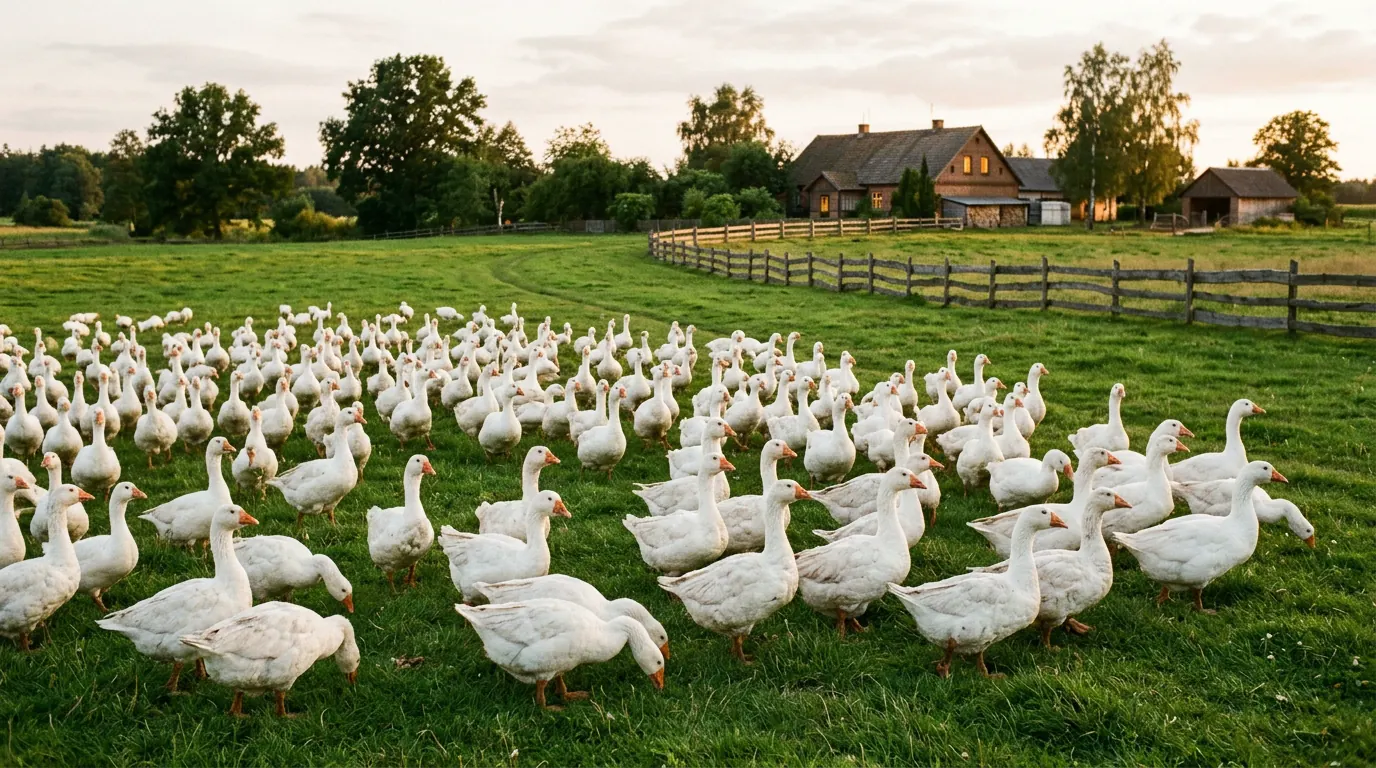
The swan goose (Anser cygnoides) comes from East Asia and has long been kept in China. It differs from the common goose by its upright build, long slim neck and a knob at the base of the bill. The breed combines meat and egg use with good use of grass, so farms that keep birds extensively often choose it. Below we describe its traits, its needs and what you must do as a keeper.
Who this breed suits
The swan goose suits a keeper who has a large pasture and can give the birds water every day. It is less suited to intensive keeping in a small pen with no run. Before you buy your first birds, check how much space you have, whether you can split the flock, and what the rules on registering poultry are in your county in Poland.
Where the swan goose comes from
Origin and past use
The breed arose in East Asia, where people kept it mainly for meat and eggs and to guard the yard. These geese are usually alert and loud with strangers, which was a plus on old farms. Farms with pasture still use this instinct today, as the birds give an early warning of danger. It does not mean they replace a dog, and the behavior of each bird depends on its line and upbringing.
Body build
The swan goose has an upright build and a long, slim neck. The knob at the base of the bill is usually more pronounced in ganders, though its size depends on the line and the age of the bird. The plumage comes in several color varieties. When you buy, check where the birds come from and ask the breeder for pedigree papers instead of relying on looks alone.
Meat and eggs in practice
Laying and season
Swan geese lay seasonally, usually in spring, and the number of eggs depends on the line, the age of the bird and the housing. We give no figure here, because it depends on the individual flock. When you plan hatches, allow for the laying period and the time birds need to mature. Placement and cycle planning helps you plan stocking for the next season.
Growth and fattening
The swan goose reaches slaughter weight more slowly than a broiler, so fattening takes much longer. In practice that means more feed per kilogram of gain and a longer stay on the farm. Weigh sample birds regularly and record the weights in poultry farm management software so you can compare gains between batches.
House, run and water
House and litter
Geese need a dry, airy house, free of drafts in winter and without overheating in hot weather. Wet litter encourages disease, so replace it regularly and keep it dry. Birds should have access to a run by day and be shut in a safe place at night. Record the state of the house and run in your poultry house records so you can see when you last disinfected.
Access to water
Geese are waterfowl and use water not only for drinking but also to clean their feathers and airways. Drinkers must always be available and clean, and water must not stand in mud around them. If you have a pond or other water body, keep it clean and do not let droppings from the whole flock foul it.
Pasture and feed
Pasture
In the growing season grass makes up a large part of the swan goose's diet. Divide the pasture into paddocks and rotate them so the grass can regrow and the birds do not foul the ground. Lower stocking density in each paddock reduces the risk of parasites and diseases spread by droppings. Write your rotation plan in the farm diary.
Supplementary feeding
Outside the grass season, and during fast growth, birds need complete feed. Match recipes to age and production stage, ideally with a nutrition adviser. Watch the condition of the birds and check feed stocks in the silos regularly. On larger farms, feed silo monitoring shows how much feed is left and when to refill.
Prevention and biosecurity
Contact with wild birds
The most important preventive step is to limit contact between your flock and wild birds, especially waterfowl. This covers water bodies where wild geese and ducks stop, and feed and water that free-living birds can reach. If you suspect disease or see sudden deaths, contact a vet and report it as the rules require. Set out your plan beforehand in the biosecurity plan generator.
Treatment and withdrawal periods
A vet always chooses the medicine and the dose, and the keeper follows the instructions. Record every treatment with the date and the withdrawal period, because it decides when birds can go to slaughter or be sold. You can keep these records in treatment and withdrawal records, which makes inspections easier.
Flock registration and documents
Registering the flock premises
You must register a poultry flock and report changes in numbers, as the current rules require. You can check the details with the Chief Veterinary Inspectorate (Główny Inspektorat Weterynarii) and with ARiMR (Poland's Agency for Restructuring and Modernisation of Agriculture). In practice, reports are made in IRZplus, ARiMR's online animal register. We describe the legal state as of 22.11.2026 and advise you to check it before you report. You can link IRZplus data with the system through IRZplus and sensor integrations.
Sales and documents
Selling birds and eggs requires documents that comply with the rules, and invoices must follow the current requirements. If you issue invoices in KSeF (Poland's national e-invoicing system), see how to link this with flock records in KSeF invoicing. When you sell, always record the batch number and dispatch date so you can easily show where the birds came from in an inspection.
Frequently asked questions
How is a swan goose different from a common goose?add
The swan goose has an upright build, a long neck and a knob at the base of the bill, which the common goose does not have. The breed comes from East Asia and is less common on Polish farms. Differences in performance depend on the line and the keeping conditions.
How many eggs does a swan goose lay?add
Swan geese lay seasonally, usually in spring. The number of eggs depends on the line, the age of the bird and the housing, so we do not give it as a universal norm. It is best to record data from your own flock and compare it with the breeder's.
Are swan geese good for pasture?add
Yes, the breed uses grass well and is chosen by farms with pasture. You still need to rotate the pasture so the grass regrows and the birds do not foul the ground. The birds always need access to clean water.
How much does a swan goose cost?add
The price depends on the bird's origin, its line, its age, and whether you buy goslings, young birds or adults. Poultry prices change over time, so we give no amounts. Check current offers with breeders and in adverts, and ask about the flock's origin before you buy.
Do you have to register a goose flock in Poland?add
Yes, you must register a poultry flock, geese included, and report changes in numbers as the rules require. Reports are made in IRZplus, and you can check details with the Chief Veterinary Inspectorate and ARiMR. Rules can change, so check the current legal state.
How do you protect geese from avian flu?add
The key is to limit contact with wild birds, especially waterfowl, and to follow biosecurity rules at the house entrance. If you suspect disease or see sudden deaths, contact a vet at once. Keep your prevention plan in writing and update it every season.
Sources & resources
- linkChief Veterinary Inspectorate (Główny Inspektorat Weterynarii) — gov.pl/web/wetgiw
- linkARiMR — gov.pl/web/arimr
- linkMinistry of Agriculture and Rural Development — gov.pl/web/rolnictwo
- linkNational Research Institute of Animal Production (Instytut Zootechniki PIB) — izoo.krakow.pl
Prepared by: DlaFerm Team based on data from the sources listed · Publisher: INSTA-TECH sp. z o.o.
Keeping geese alongside other poultry?
The <a href="/program-do-zarzadzania-ferma-drobiu">poultry farm management program</a> lets you run groups of different species in one place, from records to treatment. Create a free farm account and see how it works on your farm.
Phone
+48 796 258 151