Poultry red mite: how to control it in the coop and whether it bites people
The poultry red mite (Dermanyssus gallinae) feeds on hens at night and can bite a person who works in the coop after dark. Work in this order: identify the mite, clean and seal the cracks, and only then apply a treatment prescribed by a vet. We explain how to check the house, how to protect people and how to manage withdrawal periods.
verifiedFrom the team that has organised work on poultry farms for years.
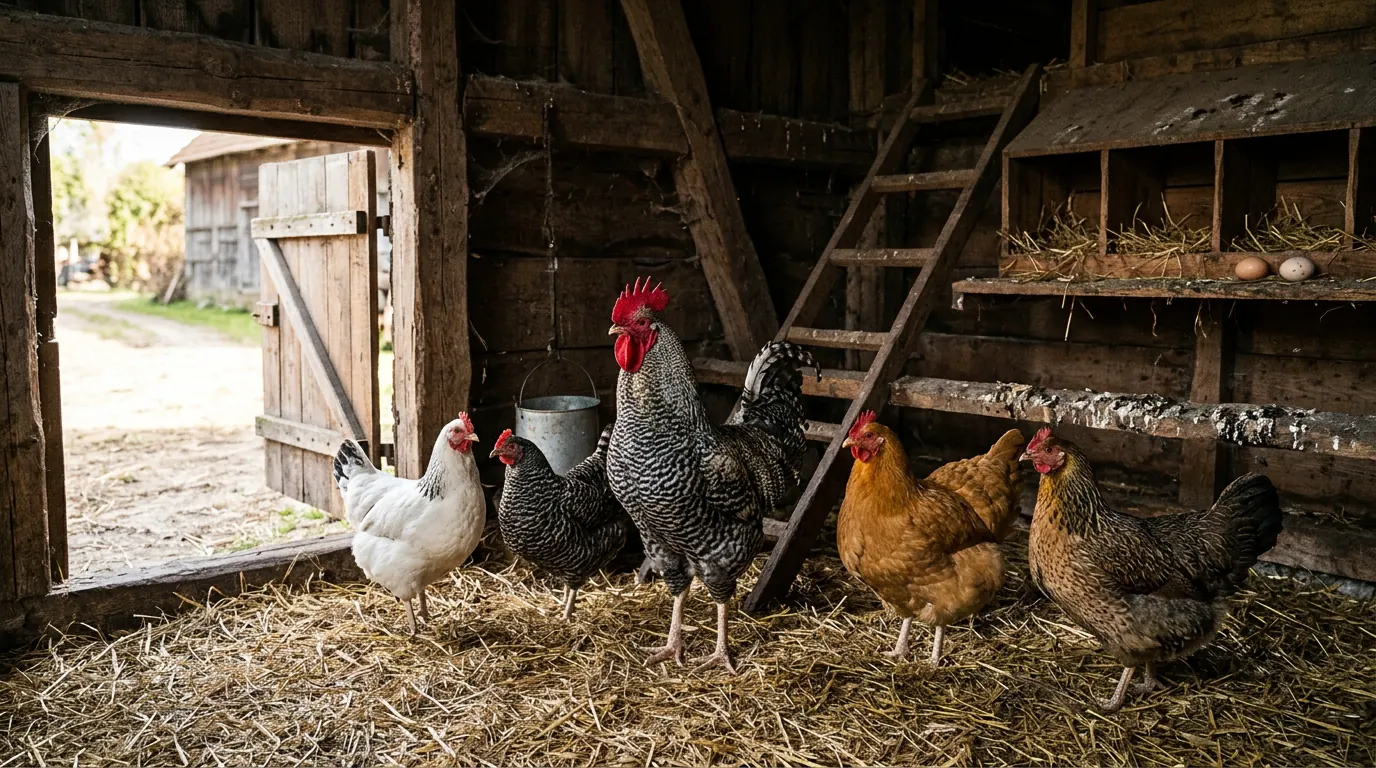
Yes, the poultry red mite can bite people, especially if you work in the coop after dark or touch infested nests and perches. But the mite does not live on people. It needs birds to reproduce. For a farmer the flock matters most: the mite feeds on hens at night, weakens them and can lower egg production. Below we describe how to identify it, how to protect people and how to control it in the coop.
Why waiting does not pay
The mite does not kill birds right away, but it keeps drawing blood and burdens the flock for a long time. Hens become restless, eat less and lay fewer eggs, and the farm loses time searching for the parasite by hand. The problem grows from season to season, because the mite returns to the building with wild birds, equipment and people if there is no protection.
How to recognize red mites in the coop
Appearance and habits
The poultry red mite is tiny. After a blood meal it is dark red, and when hungry it is grayish. You can hardly see it with the naked eye without a magnifying glass. It feeds at night and hides by day in cracks in slats and beams, in corners of nests and on perch structures. That is why a daytime check often shows nothing. Inspect the cracks after dark with a flashlight, or lay a white piece of paper against a perch and watch whether anything moves on it.
Signs in the birds
Hens are restless, jump off the perches at night, eat less and lose weight. Feathers may be pulled out around the neck and on the back, and the comb can be pale because the birds lose blood. With a heavy infestation egg production falls and eggs may be dirty. These signs are not specific, because other diseases can look similar. If you suspect mites, have a vet examine the flock and confirm the diagnosis.
Does the poultry red mite bite people?
What the bites look like
Bites cause itchy red bumps, often in groups. They appear most often on the forearms, the neck and where clothing fits tight to the skin. The itching can last several days. The mite bites people mainly when there are not enough birds and the person happens to touch an infested spot.
What to do after working in the coop
After work, change your clothes and wash your skin thoroughly. Wash work clothes at a high temperature. If redness spreads, you get a fever or the symptoms do not go away, see a doctor. Do not treat people with products meant for animals.
Children and visitors
Visitors to the farm, especially children, should not enter the coop without protective clothing and footwear. Limit entry to areas where mites are present and keep a record of entries. A QR entry and exit log helps with this.
Controlling red mites in the coop step by step
Cleaning and removing litter
Start by taking all bedding and droppings out of the building. The mite survives in organic residue and in bedding material, so spraying the floor alone is not enough. We cover the rules for removing and drying manure in a separate guide: removing and drying poultry litter.
Cracks, perches and nests
The mite hides in cracks, under nests, in joints and in wooden parts. Scrape off dirt, seal cracks and take nests apart if you can. Smooth metal surfaces are easier to disinfect than porous wood. When you rebuild a coop, choose smooth surfaces that are easy to clean. The basics are in our guide: how to set up a chicken coop.
Product and treatment
A vet chooses the product against mites, or you follow the label of an approved product, in line with the rules on biocides and veterinary medicines. Apply the treatment in an empty coop, following the manufacturer's instructions. You usually have to repeat it at intervals, because one application does not act on all life stages. Do not mix products on your own.
Checking after treatment
After treatment, keep checking the cracks after dark. If mites reappear, repeat the procedure as your vet advises. Write down the results of each check so you can see whether the problem is fading.
Treating the flock and withdrawal periods
Who decides on treatment
Any product used in the coop, especially one given to birds, needs a vet's recommendation. The vet chooses the substance and the way of giving it, and judges whether the flock can stay in production. The keeper does not set doses or swap products based on forum advice.
Withdrawal period: the principle
The withdrawal period is the time from the last dose of a medicine until the products, meaning eggs or meat, can be sold. The product leaflet and your vet's advice give its length. During the withdrawal period you do not sell eggs from the batch that was treated. Write down the date of administration and the end of the withdrawal period so you do not mix up dates at collection.
Treatment records
Keep a record of every treatment: date, product name, batch number, the person who applied it and the end of the withdrawal period. In the Treatment and withdrawal module you record the administration and the withdrawal end date in one place, and the flock's documentation stays in order.
How to prevent reinfestation
Wild birds and rodents
Mites can be brought in by wild birds that sit on the roof, fans and vents, and by rodents. Cover ventilation inlets with mesh and keep feed in sealed containers. Limit free-living birds' access to the building and the run.
Moisture and ventilation
The mite likes warmth and moisture in the litter and in cracks. Good ventilation and the right humidity limit its development. Check the conditions in the coop and do not let litter stay wet. More on this in our guides: temperature and humidity in the coop and coop ventilation.
Biosecurity
New birds, equipment and people can carry mites into the coop. At the entrance, change footwear and clothing and follow rules for vehicle entry. A ready-made protection plan is easier with the biosecurity plan generator.
Frequently asked questions
Do poultry red mites bite humans?add
Yes, the mite can bite a person, especially when working in the coop after dark. The bites itch, but people are not a permanent host for the mite. Once the mites are cleared from the coop, the bites stop.
How do you identify red mites in a chicken coop?add
You see mites most easily at night, with a flashlight, in cracks in perches and nests. After a blood meal the mite is dark red, and when hungry it is grayish. Signs in the birds are restlessness, eating less and pulled-out feathers.
What do you use to get rid of red mites?add
A vet chooses the product and method, or you follow the label of an approved product. Treatment follows cleaning, removal of litter and sealing of cracks. You usually have to repeat it as advised.
Can you sell eggs after treatment?add
Not during the withdrawal period of the product used. The leaflet and your vet's advice give its length. Record the date of administration and the end of the withdrawal period.
Is cleaning alone enough to get rid of red mites?add
Usually not, because the mite hides in cracks you cannot see, and its eggs are resistant. You need a combination of cleaning, sealing and a treatment prescribed by a vet.
Do red mites only affect chickens?add
The mite feeds mainly on birds and is sometimes found in other poultry species in the same building. Control it across the whole building, not just on one perch.
Sources & resources
- linkGłówny Inspektorat Weterynarii (Chief Veterinary Inspectorate): gov.pl/web/wetgiw
- linkInstytut Zootechniki PIB (National Research Institute of Animal Production): izoo.krakow.pl
- linkInternetowy System Aktów Prawnych (Online System of Legal Acts): isap.sejm.gov.pl
- linkEFSA: efsa.europa.eu
Prepared by: DlaFerm Team based on data from the sources listed · Publisher: INSTA-TECH sp. z o.o.
Treating your flock and want withdrawal periods under control?
The Treatment and withdrawal module in DlaFerm records every dose, the end date of the withdrawal period and the treatment documents in one place. Create a free farm account and see how it works when you control mites.
Phone
+48 796 258 151